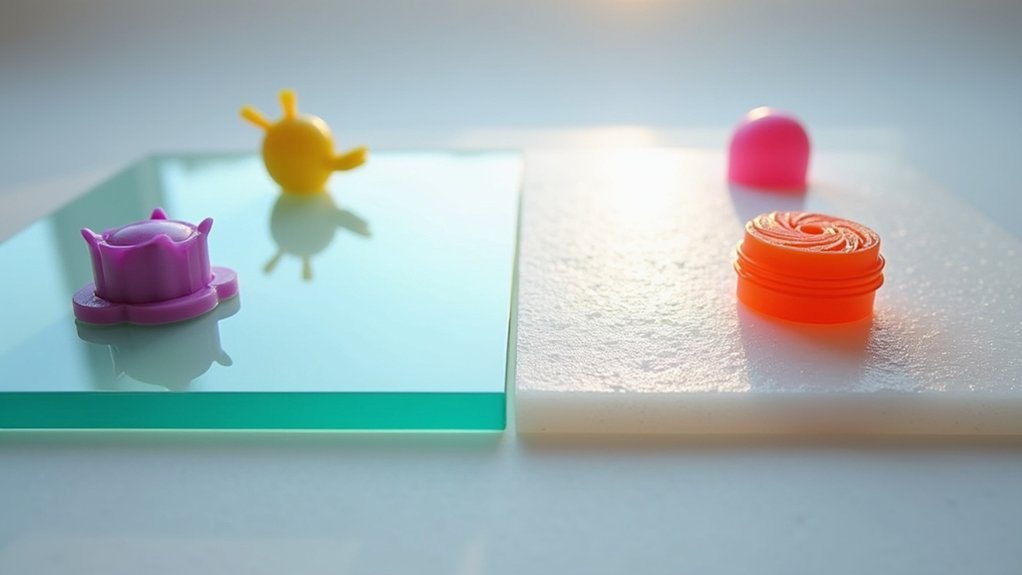
When choosing between glass and PEI build surfaces, you’ll find PEI offers superior adhesion for PLA, PETG, and TPU without messy adhesives, while glass requires glue sticks or hairspray but provides better durability against metal tools. PEI needs isopropyl alcohol cleaning and eventual replacement, whereas glass withstands dish soap cleaning and lasts years. Both surfaces offer excellent temperature stability and easy print removal once cooled, though your specific material choices will ultimately determine the best option for your setup.
Adhesion Performance and Material Compatibility

Two distinct approaches define how PEI and glass build surfaces handle material adhesion, and understanding their differences will help you choose the right surface for your printing needs.
PEI delivers superior adhesion performance across diverse printing materials like PLA, PETG, and TPU without requiring additional adhesives. You’ll find textured PEI varieties provide exceptional grip, preventing warping and securing prints throughout the process.
PEI’s exceptional grip across multiple filament types eliminates the need for messy adhesives while preventing warping issues.
Glass surfaces often struggle with certain materials unless you apply glue sticks or hairspray, potentially causing print failures. While glass offers smooth finishes, PEI excels with flexible filaments and provides better heat resistance under extreme conditions.
Both surfaces demand regular cleaning—PEI requires isopropyl alcohol maintenance while glass needs simple soap cleaning to maintain ideal print quality.
Maintenance Requirements and Surface Durability
While both surfaces demand regular upkeep, PEI and glass build plates present distinctly different maintenance challenges that’ll impact your long-term printing experience.
PEI build surfaces require isopropyl alcohol cleaning to maintain ideal adhesion, while glass surfaces need only dish soap and warm water. The textured surface finish of PEI demands careful attention to prevent buildup, whereas glass’s smooth surface resists such issues.
- Glass plates withstand metal tools for print removal without damage
- PEI surfaces degrade over time and may need replacement
- Avoid abrasive materials on PEI to prevent surface wear
- Glass offers superior durability, lasting several years with proper care
- PEI may require light sanding when adhesion decreases
Glass cleaning restores full functionality, ensuring consistent high-quality prints with minimal degradation concerns.
Temperature Stability and Print Removal Ease

Beyond maintenance concerns, temperature performance and print removal capabilities create another essential distinction between glass and PEI build surfaces that’ll directly affect your printing workflow.
Glass build plates excel with temperature stability, providing even heat distribution across your heated bed. This prevents warping when you’re working with high-temperature filaments like ABS. However, you’ll often need adhesives for proper adhesion with certain materials.
PEI build plates maintain consistent adhesion across various temperatures, working reliably with PLA, PETG, and TPU without additional aids. Both surfaces offer easy part removal once prints cool and contract naturally.
| Feature | Glass | PEI |
|---|---|---|
| Temperature Range | Excellent stability | Consistent performance |
| Print Removal | Tool-free after cooling | Self-releasing surface |
| Bed Leveling | Critical for adhesion | Requires proper calibration |
Frequently Asked Questions
Is PEI Better Than Glass?
PEI’s generally better than glass because you’ll get superior adhesion without needing glue sticks, easier print removal when cooled, and less risk of breaking your prints during removal.
What Is the Key Benefit of Using a Print Surface Made of Glass or Mirror Tiles?
Glass or mirror tiles give you excellent heat distribution across your print surface, maintaining consistent temperatures that prevent warping. You’ll also get superior adhesion for PLA and PETG prints.
What Is the Best Build Plate for 3D Printing?
You’ll find PEI build plates offer the best overall performance for most filaments, providing excellent adhesion without adhesives and easy print removal. Glass plates work well if you prioritize durability and smooth finishes.
What Is the Difference Between PEI and Garolite Build Plate?
You’ll find PEI offers superior general adhesion with smoother finishes but degrades over time, while Garolite excels at high-temperature printing with rougher texture and greater durability for specialized applications.