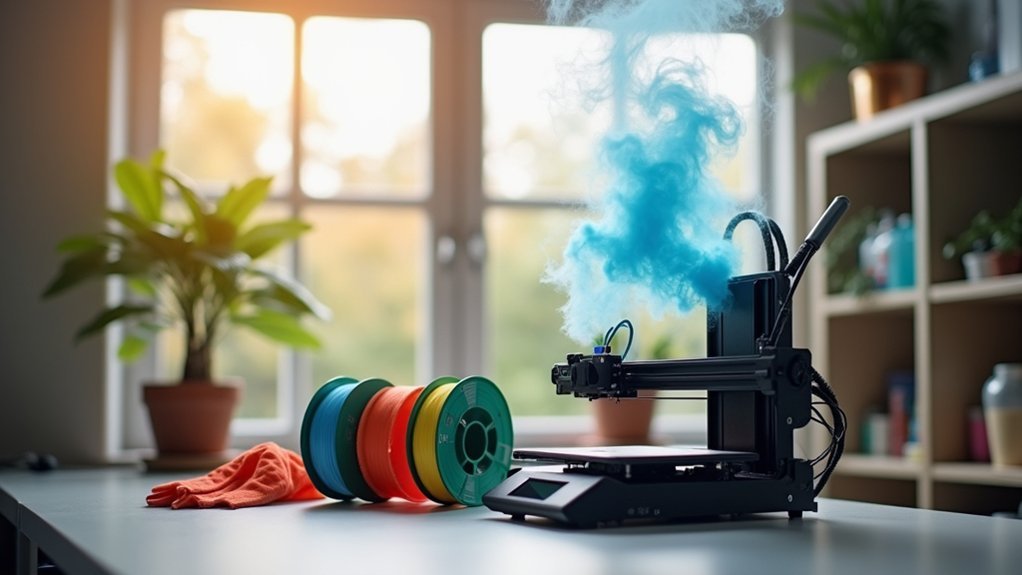
When 3D printing with ABS versus PLA, you’ll face considerably higher health risks from ABS due to its 200-300 times greater ultrafine particle emissions and harmful VOCs like styrene. You should use organic vapor masks with ABS, maintain proper ventilation with 6+ air changes per hour, install HEPA and activated carbon filters, control temperatures precisely, consider enclosed printer setups, and monitor air quality regularly to stay below 50 ppm styrene exposure. These thorough safety measures will protect your respiratory health and workspace environment.
Understanding VOC Emissions: PLA Vs ABS Material Differences
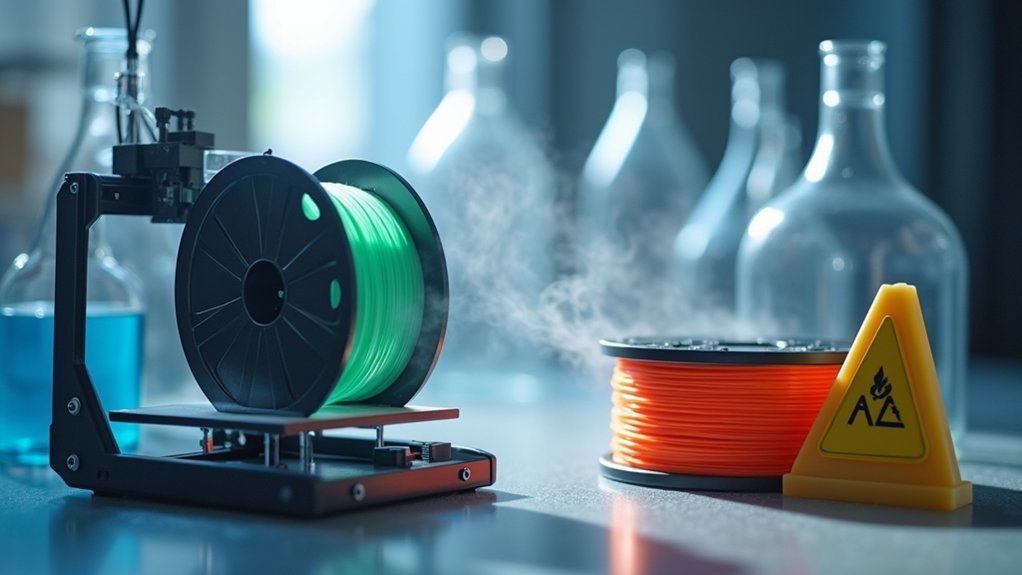
When you’re choosing between PLA and ABS for your 3D printing projects, understanding their VOC emission profiles becomes essential for maintaining a safe workspace.
PLA produces considerably fewer volatile organic compounds compared to ABS, making it the safer choice for indoor environments.
PLA’s significantly lower VOC emissions make it the superior choice for safe indoor 3D printing environments.
ABS releases harmful VOCs like styrene and ethylbenzene, which can irritate your respiratory system and pose serious health risks.
During printing, ABS generates 200-300 times more ultrafine particles than typical air pollution. These fumes can cause headaches, nausea, and dizziness with prolonged exposure.
While both materials emit particles, PLA’s fume profile remains more benign.
Your material selection directly impacts safety measures needed, with ABS requiring enhanced ventilation systems.
Proper Ventilation Systems for Safe 3D Printing Environments
You’ll need three key ventilation approaches to protect yourself from 3D printing fumes: exhaust fans, HEPA filtration, and enclosed printer designs.
Each system targets different aspects of fume management, from removing contaminated air to capturing particles before they reach your breathing space.
Let’s examine how to set up each ventilation method effectively for your specific printing materials and workspace conditions.
Exhaust Fan Setup
Three critical components form the foundation of an effective exhaust fan setup for your 3D printing workspace.
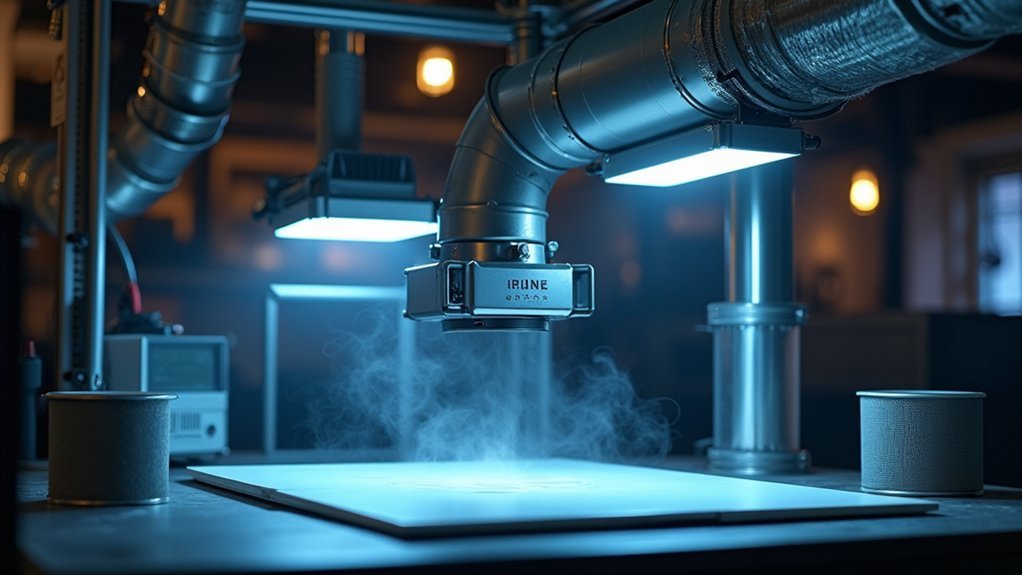
First, position your exhaust fan near the printer’s emission source to maximize airflow and reduce volatile organic compounds (VOCs) concentration. This strategic placement prevents harmful fumes from spreading throughout your workspace.
Second, install ducting that directs emissions outside, preventing buildup of dangerous particles. This becomes especially important when printing with ABS materials that release higher VOC levels than PLA.
Third, combine HEPA filters and activated carbon filters with your exhaust system for thorough filtration systems. HEPA filters capture particulate matter while activated carbon filters absorb gaseous emissions.
Regular maintenance guarantees peak air quality and proper ventilation, creating a safer working environment for all your 3D printing projects.
HEPA Filter Systems
HEPA filter systems capture ultrafine particles as small as 0.3 microns with 99.97% efficiency, making them essential for removing the microscopic emissions that 3D printers release during operation.
These systems effectively target volatile organic compounds (VOCs) that traditional ventilation can’t handle alone. You’ll achieve superior fume extraction by combining HEPA filters with activated carbon filters, creating an extensive ventilation solution that removes both particulates and odors from your printing environment.
Install your system so airflow directs away from the printer toward the exhaust for peak performance.
Replace filters regularly to maintain filtration efficiency and guarantee a safe printing atmosphere.
Consider using an enclosed setup with integrated HEPA filtration to contain emissions at the source, dramatically reducing exposure risks while you work.
Enclosure Ventilation Design
When designing an effective enclosure ventilation system, you’re creating a controlled environment that captures emissions at their source while maintaining ideal printing conditions.
Your enclosure should feature sealed chambers with dedicated air intake and exhaust points to prevent VOCs from escaping into your workspace. Install inline duct fans to maintain continuous airflow, directing contaminated air through HEPA and activated carbon filtration before expulsion.
This design becomes critical when printing ABS, which produces considerably more harmful emissions than PLA. You’ll need adjustable airflow controls to balance ventilation with temperature stability.
Strategic placement of intake vents guarantees fresh air circulation while exhaust positioning prevents fume accumulation. Regular filter maintenance preserves air quality and minimizes health risks from prolonged exposure.
HEPA and Activated Carbon Filtration Solutions
Although both PLA and ABS release concerning particles and chemicals during printing, you can greatly reduce your exposure by implementing proper filtration systems in your workspace. HEPA filters excel at capturing ultrafine particles released by both filament types, dramatically improving indoor air quality. Activated carbon filters tackle volatile organic compounds (VOCs) like styrene and formaldehyde that create those characteristic printing fumes.
| Filter Type | Removes | Maintenance |
|---|---|---|
| HEPA | Ultrafine particles | Replace every 6-12 months |
| Activated Carbon | VOCs and odors | Replace every 3-6 months |
| Combined Systems | Both particles and chemicals | Follow manufacturer schedule |
Air purifiers equipped with both filtration systems provide extensive protection against health risks from prolonged exposure. Regular filter replacement guarantees peak performance in removing airborne contaminants.
Temperature Control and Its Impact on Fume Generation
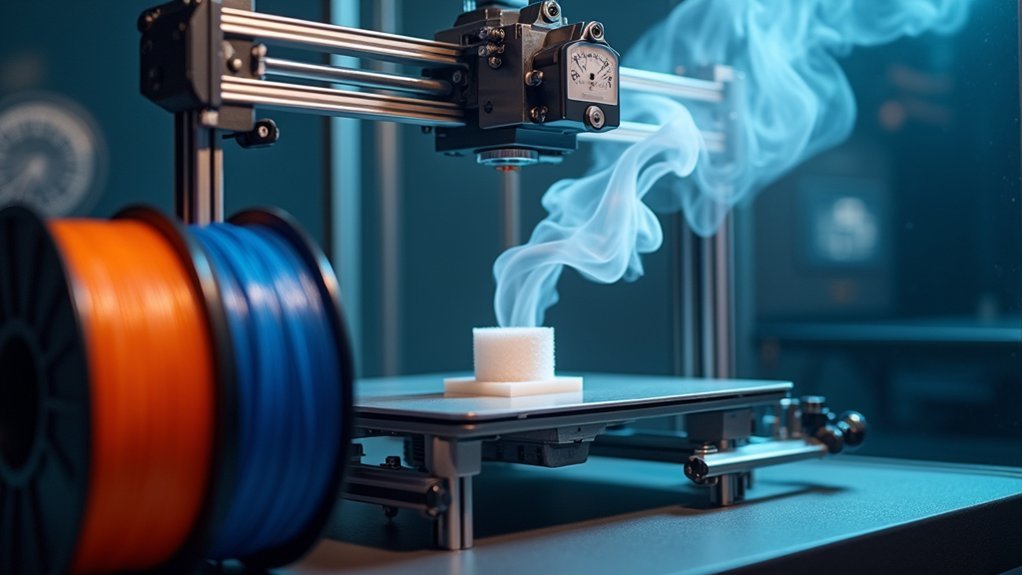
Because temperature directly influences the chemical breakdown of 3D printing filaments, understanding how heat affects fume generation becomes essential for protecting your health.
ABS requires higher printing temperatures (250°C-300°C) compared to PLA (180°C-220°C), resulting in dramatically increased harmful emissions.
Temperature control directly impacts your exposure to dangerous substances:
Temperature control directly determines how many toxic fumes you inhale while 3D printing at home.
- Volatile organic compounds (VOCs): ABS releases over 100 times more VOCs than PLA due to elevated temperatures
- Ultrafine particles: Higher heat generates more respiratory-damaging particles that penetrate deep into your lungs
- Thermal degradation: Excessive temperatures cause filament breakdown, amplifying toxic fume release
You’ll need more robust safety measures when printing ABS, including effective ventilation systems.
Maintaining precise temperature control prevents unnecessary thermal degradation while minimizing respiratory risks from both materials.
Personal Protective Equipment for 3D Printing Operations
You’ll need specific protective equipment when 3D printing to safeguard against harmful fumes and particles from both PLA and ABS materials.
Essential gear includes organic vapor masks for ABS printing, safety glasses to protect your eyes from irritants, and nitrile gloves to prevent skin contact with filaments.
Proper usage of this equipment requires understanding when each type is necessary and how to wear it correctly for maximum protection.
Essential Protective Gear Types
Five essential types of protective gear can greatly reduce your exposure to health risks during 3D printing operations.
When working with ABS fumes and PLA filament, you’ll need extensive protection beyond basic ventilation and filtration systems.
- Respiratory Protection: Use properly fitted masks designed for organic vapors to minimize inhalation of harmful VOCs and ultrafine particles released during printing.
- Eye and Face Protection: Wear safety glasses or goggles to prevent eye irritation from particulates emitted when heating filament materials.
- Hand and Skin Protection: Select chemical-resistant gloves to avoid skin contact with heated filaments and potential irritants.
Additional protective gear includes hearing protection for multi-printer environments and long-sleeve clothing with closed-toe shoes to prevent burns from hot components or injuries from moving parts.
Proper Equipment Usage Guidelines
While protective equipment provides essential defense against 3D printing hazards, its effectiveness depends entirely on proper usage and maintenance protocols.
You’ll need organic vapor masks when printing ABS since it releases higher levels of volatile organic compounds (VOCs) than PLA. Your safety glasses must remain clean and properly positioned to protect against airborne particles from both filament types.
Always wear gloves during printing operations to prevent direct skin contact with residues. Remember that personal protective equipment works best alongside adequate ventilation systems—masks alone won’t eliminate health risks from poor airflow.
You should inspect and replace your gear regularly, especially in high-use environments where exposure to printing fumes occurs frequently throughout daily operations.
Enclosed Printer Setups to Contain Harmful Emissions
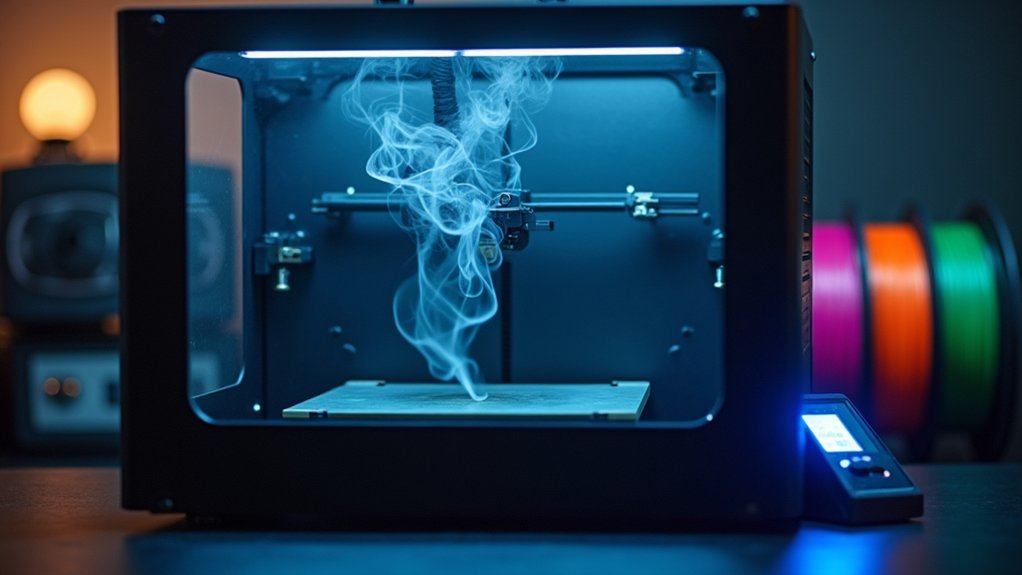
How can you effectively contain the harmful emissions that escape during 3D printing? Enclosed printer setups are your best defense against harmful emissions, preventing fumes and ultrafine particles from contaminating your workspace.
These systems dramatically improve air quality by containing volatile organic compounds (VOCs) that would otherwise disperse throughout your room.
Key benefits of enclosed 3D printers include:
- Built-in ventilation systems that actively extract toxic emissions while maintaining ideal printing temperatures
- HEPA+ activated carbon filters that capture both particles and harmful gases for cleaner air
- Temperature stability that reduces material warping, especially with ABS filaments
Monitoring Air Quality and Exposure Limits During Printing
Even with enclosed printer setups, you’ll need to actively monitor air quality to confirm harmful emissions stay within safe exposure limits. ABS vs PLA comparisons show ABS releases considerably more volatile organic compounds (VOCs), creating higher risks in poorly ventilated spaces. You should track styrene levels, which OSHA limits to 50 ppm for continuous exposure.
| Parameter | Safe Level | Monitoring Method |
|---|---|---|
| Styrene (VOCs) | 50 ppm TWA | VOC detector |
| Ultrafine particles (UFPs) | Baseline +200x | Particle counter |
| General air quality | AQI <50 | Air quality monitor |
| Ventilation rate | 6+ air changes/hour | Airflow meter |
| Filter efficiency | >99.97% | HEPA+ activated carbon air purifiers |
Continuous printer emissions monitoring prevents respiratory irritation and confirms safety during extended printing sessions with ultrafine particles (UFPs) detection.
Frequently Asked Questions
Is ABS More Toxic Than PLA?
Yes, you’ll find ABS more toxic than PLA. ABS releases higher VOC levels, contains possible carcinogens like styrene, and generates considerably more ultrafine particles that can cause respiratory irritation and health issues.
Does PLA Give off Harmful Fumes?
You’ll experience some harmful fume emissions from PLA, including lactide and other VOCs that can irritate your respiratory system. However, you’re exposed to considerably lower levels compared to ABS filaments.
How Harmful Are ABS Fumes?
ABS fumes are markedly harmful to your health. You’ll face respiratory irritation, headaches, and dizziness from VOCs and ultrafine particles. Styrene emissions are potentially carcinogenic, making proper ventilation absolutely essential.
Is PLA Safe to Be Around?
You’ll find PLA generally safer than ABS since it emits fewer harmful compounds. However, you should still use proper ventilation because PLA can release ultrafine particles that might irritate your lungs.


Leave a Reply