
You’ll achieve professional-quality finishes on your 3D miniatures faster and with less effort when you switch from traditional brushes to airbrush techniques. Airbrushes create consistently smooth surfaces without visible brush strokes, excel at seamless gradients and color blending, and provide precise control for intricate details. They eliminate tedious overlapping strokes while delivering uniform coverage on complex surfaces through fine mist application. The techniques below will transform your miniature painting results completely.
Traditional Painting Methods Vs Airbrush Technology for 3D Miniatures
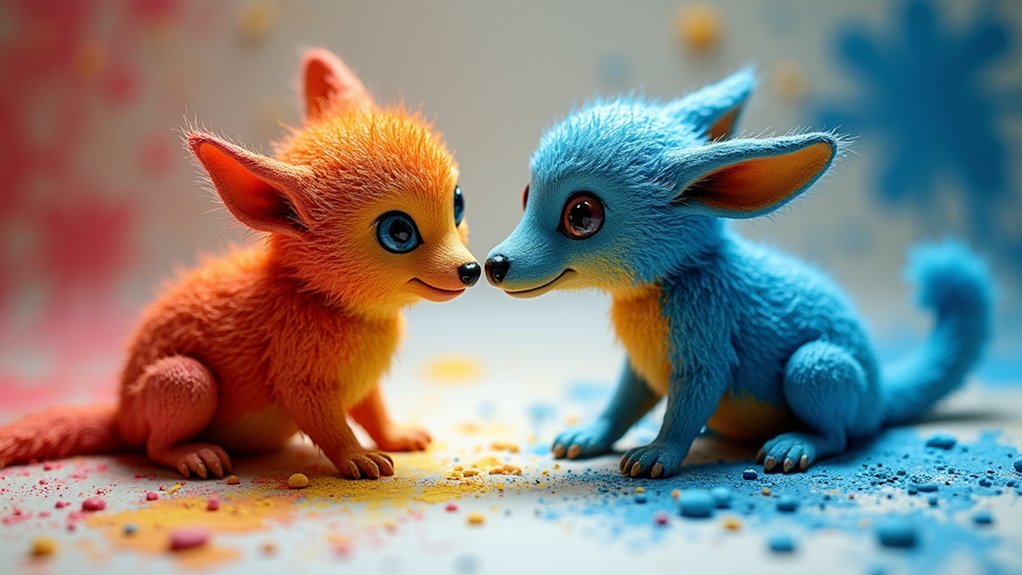
When you’re deciding between traditional brushes and airbrush technology for painting 3D miniatures, the differences in application quality become immediately apparent.
Traditional methods require multiple thin coats and careful brush control to avoid visible strokes, while airbrushes deliver a consistently smooth surface with minimal effort. You’ll find airbrush technology excels at creating seamless gradients and color shifts that would take hours to achieve manually.
The precision control of spray pressure makes airbrushes suitable for fine detailing work on intricate miniature features. You can quickly cover large areas while maintaining consistent coverage, eliminating the tedious process of overlapping brush strokes.
Pre-shading techniques become effortless with airbrushes, allowing you to enhance depth and visual impact that traditional methods struggle to match efficiently.
Essential Equipment: Understanding Airbrush Components and Compressor Systems
Before you can harness these advantages, you’ll need to understand the fundamental components that make airbrush painting possible. Your system consists of two main parts: the airbrush gun that applies paint and the air compressor that provides necessary pressure for operation.
For printed models requiring fine details, gravity-fed airbrushes offer superior control over paint flow.
You’ll want a high-quality air compressor with pressure calibration and low noise features for consistent performance. Select a compressor that includes a cylinder to maintain steady airflow, preventing interruptions during painting sessions.
When choosing entry-level equipment, balance affordability with performance.
This approach encourages practice and skill development while delivering quality results on your miniatures without breaking your budget.
Pre-Shading Techniques: Creating Depth and Shadow Foundation
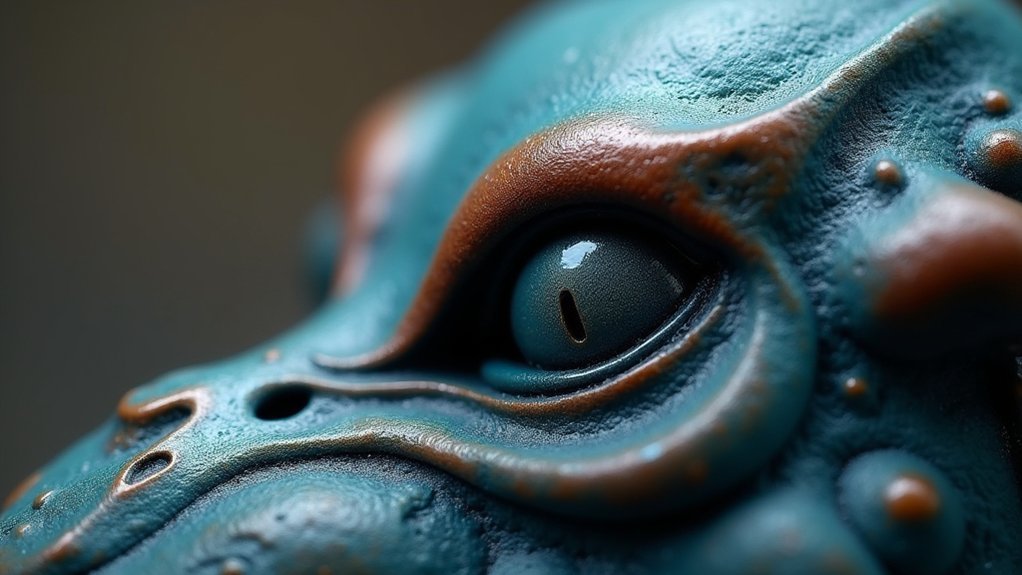
You’ll start your pre-shading foundation by applying a uniform black primer base layer across your entire miniature.
Next, you’ll spray white primer from above at a 45-degree angle, letting it naturally highlight the raised surfaces while preserving the black in recessed areas.
This technique creates dramatic shadow enhancement effects that’ll guide your color placement and give your miniature incredible depth before you even begin painting.
Black Primer Base Layer
Foundation work sets the stage for exceptional miniature painting, and black primer creates that crucial starting point for pre-shading techniques.
You’ll establish the deepest shadows and recesses by applying this uniform base layer across your entire miniature. This dark foundation becomes your reference point for understanding where natural shadows would fall, making subsequent highlighting steps more intuitive and effective.
Key benefits of black primer base layers:
- Creates natural shadow placement – You’ll immediately see where darkness should remain in recesses and undercuts.
- Establishes contrast foundation – The dark base guarantees your highlights will pop dramatically against the background.
- Simplifies decision-making – You won’t second-guess shadow placement since the black primer guides your lighting choices.
Your pre-shading technique starts here, setting you up for a professional finish.
White Primer Highlighting
Three strategic passes of white primer from above transform your black base into a dramatic foundation with natural light direction.
You’ll create smooth shifts by gradually building up the white primer, focusing on raised areas and surfaces that would naturally catch light. This technique works well because it establishes your highlight zones before you apply any base color, making subsequent painting much easier to plan and execute.
The white primer acts as your roadmap, showing exactly where to place your brightest tones and mid-range colors.
You’ll achieve much better depth perception as the white highlights contrast against the black shadows. This pre-shading foundation guarantees your final base color applications will have built-in dimensionality that’s impossible to replicate with brush techniques alone.
Shadow Enhancement Effects
While white primer establishes your highlights, the black primer foundation creates the critical shadow work that gives your miniature its three-dimensional depth.
You’ll find that pre-shading transforms flat surfaces into convincing contours by establishing natural shadow patterns before you even begin painting.
When applying this technique, you’re creating a roadmap that guides your color placement and enhances the final visual impact. The black base layer works beneath subsequent colors, subtly darkening recessed areas while allowing raised surfaces to appear brighter.
Essential Shadow Enhancement Steps:
- Apply uniform black primer coverage using a small amount to avoid obscuring fine details
- Work in a well-ventilated environment while wearing appropriate protective equipment for safety
- Build highlights gradually from the established shadow foundation to maximize dimensional contrast
Gradient Effects and Color Blending With Precision Control
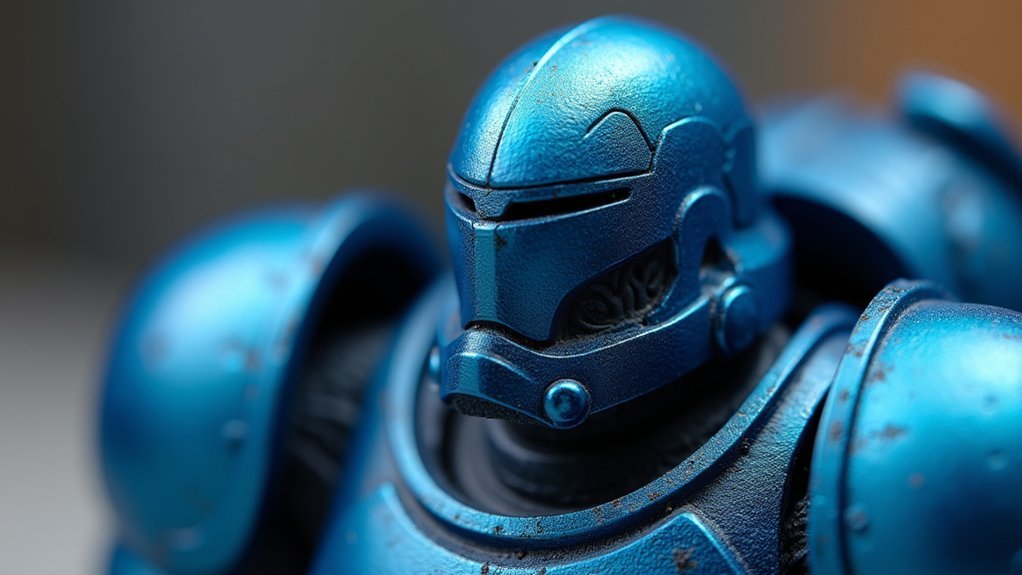
Since airbrushes deliver paint in controlled, fine droplets, you’ll achieve gradients that would be nearly impossible with traditional brushes. The precise control lets you vary paint thickness seamlessly, creating smooth color shifts that add remarkable depth to your miniatures.
You can blend multiple hues effortlessly, moving from dark shadows to bright highlights without harsh lines or brush marks. The airbrush’s ability to handle different paint viscosities means you’ll mix custom colors and effects that standard brushes can’t replicate.
For detailed work, you can use a cotton swab to clean specific areas while maintaining crisp edges elsewhere. This precision control eliminates overspray concerns, allowing intricate color work on complex miniature surfaces without affecting surrounding details.
Primer Application: Achieving Uniform Base Layers on Complex Surfaces
Building on that foundation of precise control, proper primer application becomes your gateway to professional-quality results.
You’ll achieve uniform coverage on complex surfaces and intricate details that traditional spray cans or brushes simply can’t match. The fine mist eliminates pooling and running while applying thinner coats that preserve your miniature’s finest features.
Key advantages of airbrush priming:
- Pre-shading technique – Apply black primer followed by white from above to enhance shadows and natural depth on complex shapes
- Precise control – Adjust air pressure and paint viscosity to reduce overspray and target specific areas accurately
- Detail preservation – Thin, even coats maintain crisp edges and fine textures without obscuring surface details
You’ll create a solid foundation that makes subsequent painting layers perform better.
Detail Enhancement Through Variable Spray Patterns
Mastering your airbrush’s spray pattern versatility transforms how you approach miniature detailing.
You’ll discover that swapping nozzles and needles creates entirely different effects, from broad base coverage to pinpoint precision work. When you adjust air pressure and paint viscosity, you’re controlling exactly how much paint hits your miniature’s surface, preventing unwanted overspray on delicate features.
You can seamlessly blend colors across armor plates, weapons, and fabric textures that would prove nearly impossible with traditional brushes.
Your airbrush produces smooth gradients and soft color shifts that add realistic depth through strategic shading and highlighting. This versatility supports every painting stage, whether you’re laying down base coats or adding final accent details, ensuring professional-quality results on your 3D printed models.
Paint Types and Viscosity Considerations for Miniature Projects
Your airbrush’s performance capabilities depend heavily on the paint you’re feeding through its system. Acrylic paints are your best choice for miniature work because they’re water-based, non-toxic, and easy to clean.
The quality of paint you choose directly determines whether your airbrush will deliver smooth, professional results or frustrating clogs.
However, you can’t simply pour paint straight from the bottle into your airbrush. Proper viscosity is vital for achieving professional results. You’ll need to thin your paint by 10-30% using appropriate thinners to prevent clogging and guarantee smooth flow.
Consider these essential factors when selecting and preparing paint:
- Brand experimentation – Different manufacturers require varying amounts of thinning.
- Technique matching – Use thinner paint for details, slightly thicker for base coats.
- Consistency testing – Properly mixed paint creates smoother layers and reduces overspray.
Selecting Gravity-Fed Airbrush Models for Optimal Performance
You’ll want to choose gravity-fed airbrush models over siphon-fed alternatives since they provide superior paint flow control and precision for miniature work.
Avoid pistol-grip designs that can feel unwieldy when working on small, detailed surfaces where steady hand control is essential.
While entry-level gravity-fed models can produce quality results, investing in mid-range options typically offers better build quality and more consistent performance for your miniature projects.
Gravity-Fed Design Benefits
When you’re selecting an airbrush for miniature painting, gravity-fed models offer distinct advantages that directly impact your painting quality and efficiency.
The gravity-fed design uses natural force to deliver paint from the cup directly into the nozzle, creating consistent flow without relying on complex feeding mechanisms.
Key benefits you’ll experience include:
- Superior Control – You’ll achieve better paint flow regulation and atomization, enabling softer gradients and precise detail work on your miniatures.
- Reduced Waste – The design produces less overspray, improving finish quality while conserving expensive miniature paints.
- Extended Sessions – Higher cup capacity means fewer interruptions for refills during larger projects.
Many models feature adjustable nozzle sizes, giving you versatility for different paint types and techniques essential for intricate miniature work.
Avoiding Pistol Models
While gravity-fed airbrushes provide these performance advantages, pistol-style models present significant challenges that can compromise your miniature painting results.
Unlike gravity-fed designs, pistol models don’t utilize gravity’s natural force to draw paint into the nozzle, creating inconsistent paint delivery that affects detail work. You’ll experience less reliable flow control, making it difficult to achieve the precise coverage miniatures demand.
Pistol models typically feature smaller paint reservoirs, forcing you to refill frequently during longer painting sessions. This constant interruption disrupts your workflow and can create visible seam lines on larger miniature surfaces.
Additionally, these models are harder to clean thoroughly, leading to paint buildup that clogs internal mechanisms. Professional painters consistently avoid pistol models because they can’t deliver the smooth gradients and fine detail control essential for high-quality miniature finishes.
Entry-Level Quality Considerations
Since gravity-fed airbrushes offer superior performance for miniature painting, selecting the right entry-level model requires balancing affordability with essential features that won’t compromise your results.
You’ll find excellent options in the $30-$100 range that deliver professional-quality performance without breaking your budget.
The downward paint feed system in gravity-fed models guarantees efficient paint flow while minimizing clogs and maintaining consistent spray patterns. This translates to smoother application and fewer frustrating interruptions during your painting sessions.
Key specifications to prioritize:
- Nozzle size between 0.2mm-0.5mm for versatility in both detail work and broader coverage
- Reliable trigger mechanism that provides precise control over paint flow
- Easy disassembly design for thorough cleaning and maintenance
These features facilitate precise application while reducing overspray, helping you achieve professional finishes consistently.
Compressor Features: Pressure Control and Noise Reduction
The compressor you choose will make or break your miniature painting experience, and two features stand above all others in importance: pressure control and noise reduction.
You’ll need consistent airflow to achieve uniform paint application across your miniatures’ intricate details. Look for compressors with pressure gauges that let you monitor and adjust settings based on your specific airbrush and technique requirements.
Tank-equipped models provide steady air supply while eliminating pressure fluctuations that can ruin delicate work.
Don’t overlook noise levels—compressors operating around 50-60 dB create comfortable workspaces perfect for extended painting sessions. Quieter operation reduces distractions and fatigue, letting you focus entirely on bringing your miniatures to life with professional-quality results.
Maintenance Requirements and Troubleshooting Common Issues
Proper airbrush maintenance separates frustrated hobbyists from painters who achieve consistent, professional results on their miniatures.
You’ll need to establish routine cleaning habits and understand basic troubleshooting to keep your equipment performing at its best.
Essential Maintenance and Troubleshooting Steps:
- Clean the nozzle regularly – Remove dried paint and debris that cause clogs and disrupt spray patterns through thorough disassembly and cleaning.
- Monitor air pressure settings – Adjust pressure to troubleshoot uneven paint application and maintain consistent performance during painting sessions.
- Control paint viscosity – Balance thickness to prevent clogging from overly thick paint while avoiding overspray and poor coverage from paint that’s too thin.
You’ll greatly extend your airbrush’s lifespan and maintain painting quality through routine checks and proper storage practices.
Cost Analysis: Initial Investment Vs Long-Term Quality Benefits
You’ll face an upfront investment of $80 to $300+ for a quality airbrush setup, which might seem steep compared to traditional brushes.
However, this initial cost pays dividends through reduced paint waste, fewer mistakes, and the ability to achieve professional-quality results that can increase your miniatures’ market value.
The precision and efficiency of airbrush application means you’ll save money on materials while producing higher-quality work that would otherwise require expensive professional services.
Initial Equipment Costs
When considering airbrush equipment for miniature painting, you’ll face an initial investment ranging from $100 to $300 for a complete kit including compressor and airbrush gun.
While this upfront cost might seem substantial, understanding the cost breakdown helps you make informed decisions about your equipment purchases.
Here’s what drives your initial investment:
- Entry-level airbrushes cost $50-$100, while higher-quality models provide markedly better painting experiences and results for serious hobbyists.
- Quality compressors start around $80 but deliver consistent pressure and airflow essential for professional-level finishes.
- Complete starter kits bundle equipment at better value points, though individual component selection offers more customization.
Your equipment quality directly impacts your painting results and skill development speed, making strategic investment choices vital for long-term satisfaction.
Long-Term Value Returns
While airbrush equipment represents a significant upfront expense, the investment pays substantial dividends through reduced material costs and enhanced miniature values over time.
You’ll save money through efficient paint application and minimal overspray, stretching your material budget further than traditional brushing methods. The professional-quality finishes you’ll achieve make your miniatures more valuable to collectors and fellow hobbyists.
Your airbrush’s versatility eliminates the need for multiple specialized tools, consolidating your equipment costs.
If you’re painting frequently or competing, the improved efficiency and quality becomes especially valuable. High-quality equipment proves more cost-effective long-term through superior durability and performance, requiring fewer replacements and repairs than cheaper alternatives that’ll break down quickly.
Skill Development: Learning Curve and Practice Techniques
As you begin your airbrush journey with 3D miniatures, expect to encounter a steep learning curve that demands patience and consistent practice.
You’ll need to master air pressure and paint viscosity fundamentals, as these factors directly impact your airbrush’s performance and finish quality.
To accelerate your skill development:
To accelerate your skill development, focus on consistent practice with guided tutorials, master essential techniques, and experiment with different equipment configurations.
- Leverage online tutorials – Use guided resources to make your practice sessions more effective and structured
- Master core techniques – Focus on pre-shading and color blending through regular practice sessions
- Experiment with equipment – Try different nozzles and needles to develop versatility and control
Your consistency in practice will greatly improve your miniature painting quality over time.
Don’t rush the process—each session builds upon previous skills, creating a solid foundation for advanced techniques.
Frequently Asked Questions
What Are the Advantages of Airbrushing?
You’ll achieve smooth gradients and professional finishes while saving time on base coats. You can control spray pressure for precise details, create uniform thin layers, and use advanced techniques like pre-shading effectively.
Is It Worth Getting an Airbrush for Warhammer?
You’ll find an airbrush worthwhile if you’re painting multiple miniatures regularly. It’ll save time, provide smoother base coats, and create professional-looking gradients that’ll greatly improve your models’ overall appearance.
What Is the Point of an Airbrush?
You’ll achieve smoother gradients, faster base coating, and professional-quality finishes with an airbrush. It gives you precise paint control, reduces waste, and creates effects that’re nearly impossible with traditional brushes alone.
Should I Get an Airbrush for Miniatures on Reddit?
You should consider getting an airbrush if you’re serious about miniature painting. Reddit users consistently praise airbrushes for achieving smooth basecoats, gradients, and professional-looking results that traditional brushes can’t match easily.

Leave a Reply