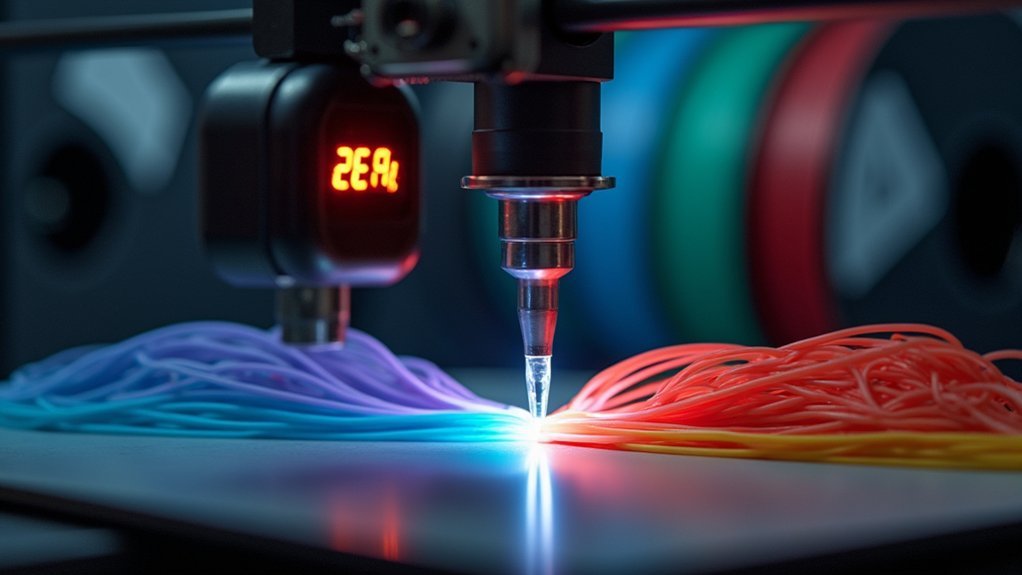
Start your PETG prints with a nozzle temperature between 230-240°C, then adjust based on your specific needs. For stronger layer adhesion and functional parts, increase toward 260°C, while visual models benefit from lower temperatures around 230°C for smoother surfaces. Monitor for overheating signs like excessive stringing or oozing, and increase temperature if you notice poor layer bonding or under-extrusion. Master these fundamentals to access consistent, professional-quality PETG printing results.
Finding the Optimal Temperature Range for Your PETG Filament
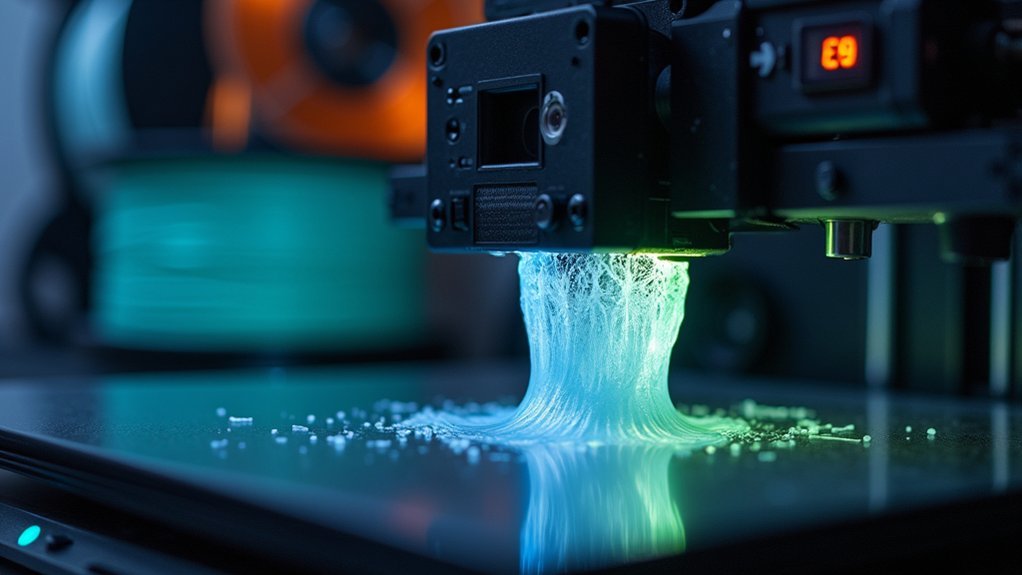
When you’re looking to achieve ideal PETG print quality, finding the right nozzle temperature range becomes your most critical first step.
PETG filament typically requires temperatures between 220°C and 260°C, with 230°C recommended for your first layer and 240°C for subsequent layers. Higher temperatures near 260°C enhance layer adhesion and create stronger prints, while lower settings produce better surface finishes.
Different brands have specific requirements—Atomic suggests 240-265°C while Prusament recommends 250°C ± 10°C.
You’ll need to monitor for overheating signs like excessive oozing and stringing, which indicate your temperature’s too high.
Consistent temperature control throughout printing guarantees ideal layer adhesion and prevents quality issues that compromise your final results.
Adjusting Nozzle Temperature Based on Print Requirements
Once you’ve established your baseline temperature range, you’ll need to adjust these settings based on your specific print requirements.
For functional parts requiring strong layer bonding, increase your nozzle temperature toward 260°C to enhance mechanical strength.
Visual models benefit from lower printing temperature settings around 230-240°C for improved surface finish.
Lower temperatures in the 230-240°C range deliver superior surface quality for display pieces and aesthetic applications.
When experiencing stringing issues, reduce your temperature while maintaining adequate layer adhesion.
Your first layer adhesion improves with slightly higher temperatures, typically 5-10°C above your standard setting.
Consider your print speed when adjusting temperature – faster speeds often require higher heat for proper flow.
Different PETG filament brands may need fine-tuning, so maintain temperature consistency throughout your print while monitoring for oozing or under-extrusion.
Troubleshooting Common Temperature-Related PETG Issues
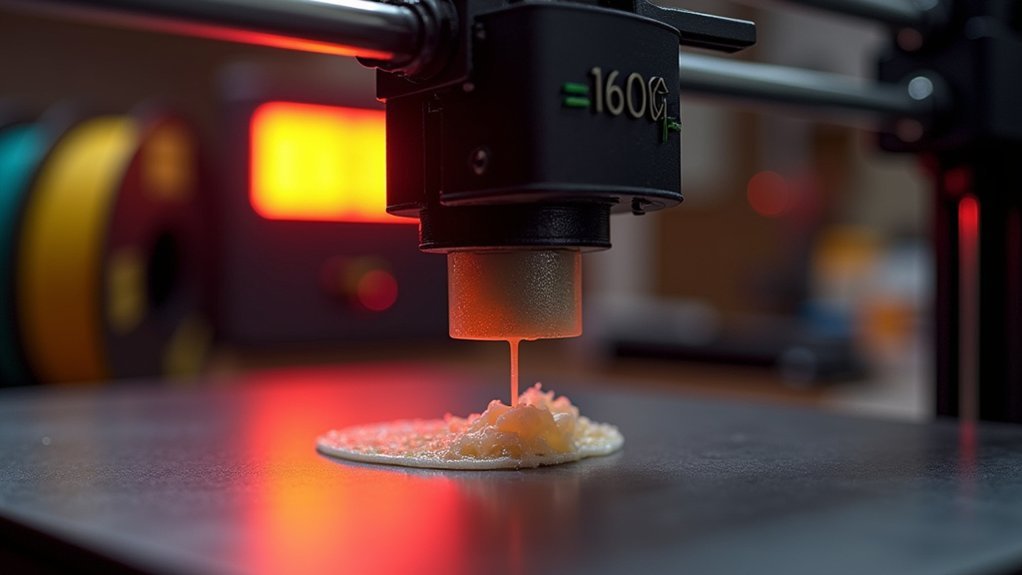
Even with careful temperature calibration, you’ll encounter specific issues that require targeted troubleshooting approaches.
If you’re experiencing under-extrusion or poor layer adhesion, increase your nozzle temperature toward the upper 240-260°C range to improve flow and bonding.
When stringing becomes problematic, lower your temperature settings slightly to reduce material flow and enhance print quality.
Watch for overheating signs like filament discoloration or burnt odors, which indicate excessive heat that can degrade your PETG.
Warping issues often resolve with higher temperatures that promote better adhesion between layers.
Most importantly, maintain consistent temperature throughout your print—fluctuations create unpredictable results and compromise overall quality.
Frequently Asked Questions
What Is the Best Nozzle Temperature for PETG?
You’ll find 230-240°C works best for most PETG prints. Start at 230°C for your first layer, then increase to 240°C for better layer adhesion. Test different temperatures since your printer’s characteristics affect ideal results.
What Are the Best Settings for PETG?
You’ll want 230°C first layer, 240°C subsequent layers, heated bed at 65-90°C. Adjust retraction settings if you’re experiencing stringing, and monitor temperatures carefully to prevent oozing or poor layer bonding.
What Temperature Should I Load My PETG?
You should load your PETG at around 220-230°C to start. This temperature range guarantees proper filament flow without overheating. You can adjust higher if needed for better adhesion.
What Is the Optimal Temperature for a PETG Enclosure?
You’ll want to maintain your PETG enclosure between 70°C and 90°C for ideal results. This temperature range guarantees proper adhesion without over-sticking while reducing warping and maintaining consistent ambient conditions throughout printing.

Leave a Reply