
3D food printing revolutionizes personalized nutrition by creating meals tailored to your exact health profile, using precision nutrient delivery systems that optimize vitamin and mineral absorption for your unique needs. You’ll experience customizable food structures that adapt in real-time to environmental changes, while multi-material extrusion enables distinct nutritional zones within single foods. This technology minimizes waste through precise ingredient dosing and employs smart materials that respond to your body’s physiological states. Discover how this transforms healthcare and performance nutrition.
Precision Nutrient Delivery for Individual Health Profiles
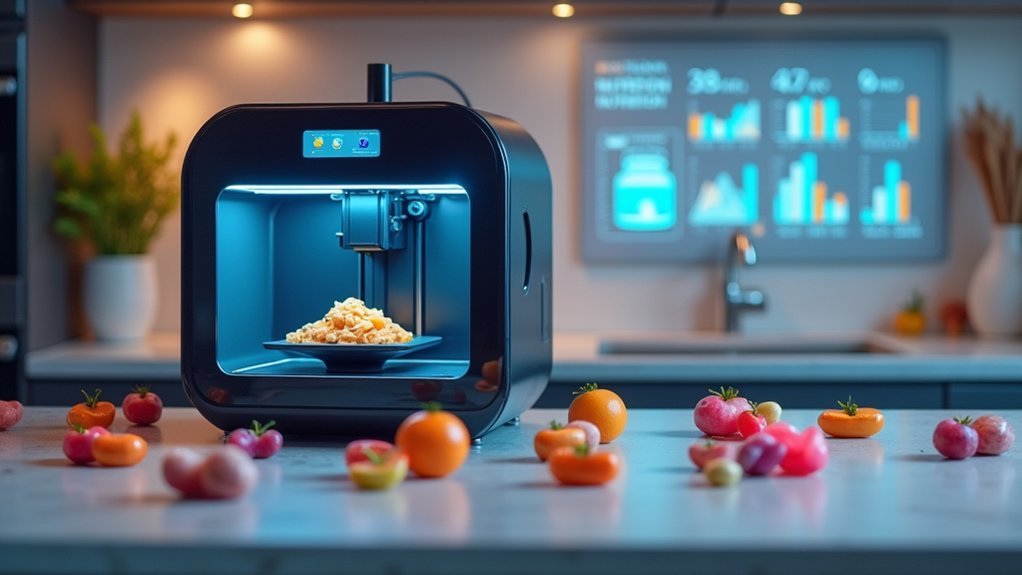
While traditional nutrition treats everyone the same, 3D food printing revolutionizes how you receive nutrients by creating meals that match your exact health profile.
This personalized nutrition approach uses advanced techniques like extrusion and selective sintering to achieve precision nutrient delivery tailored specifically to your body’s requirements.
You’ll receive customized meals containing exact vitamins, minerals, and macronutrients your health demands.
Whether you’re an athlete needing enhanced performance nutrition or managing chronic illness, 3D food printing addresses your unique dietary needs.
The technology optimizes nutrient release and absorption during consumption, ensuring your body receives maximum benefit.
This precise customization means you’re not getting generic nutrition—you’re receiving meals engineered for your specific health goals and metabolic requirements.
Customizable Food Structures That Transform With Environmental Stimuli
Beyond static nutrient customization, 4D food printing takes personalized nutrition further by creating smart food structures that actively respond to environmental changes around you.
These customized foods transform their texture, flavor, and nutrient release based on environmental stimuli like temperature and humidity, delivering precisely what your body needs when it needs it.
Smart foods that adapt their texture, flavor, and nutrient release to environmental conditions, delivering targeted nutrition exactly when your body needs it most.
This technology offers three key benefits:
- Dynamic adaptation – Foods adjust their properties to match your preferences and dietary requirements in real-time.
- Enhanced bioavailability – Nutrients release effectively based on surrounding conditions.
- Extended freshness – Adaptive properties maintain quality longer, reducing food waste.
Unlike traditional 3D printing that creates static structures, this advancement in personalized nutrition guarantees your meals continuously evolve to support your health goals through intelligent responsiveness.
Sustainable Production Methods That Minimize Food Waste
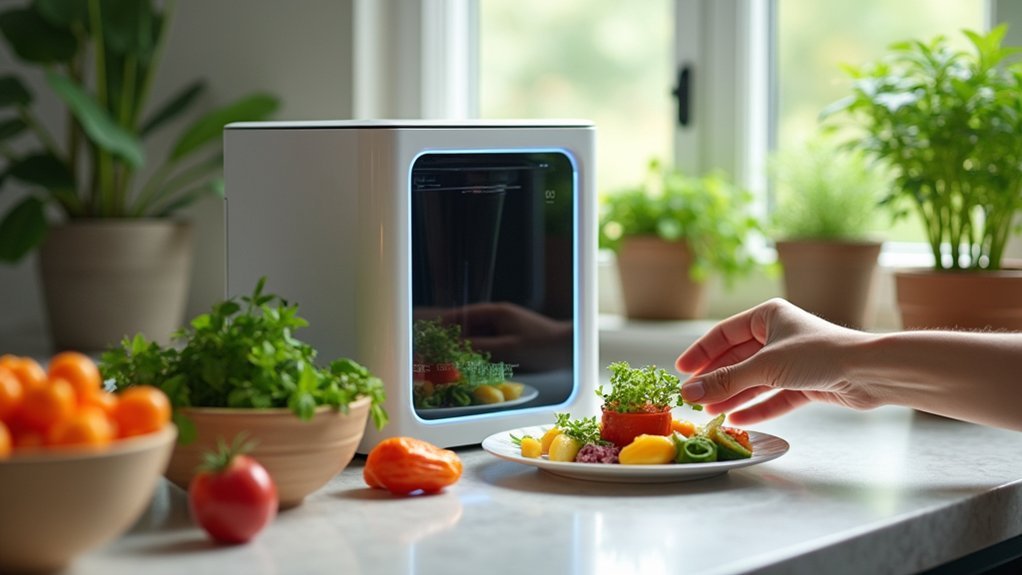
You’ll find that 3D food printing revolutionizes sustainability through precise ingredient dosing systems that eliminate guesswork and excess.
The technology’s zero overproduction approach means you’re creating exactly what you need, when you need it, without leftover waste destined for disposal.
What’s more, you can integrate biodegradable materials directly into the printing process, ensuring that even packaging and structural components support your environmental goals.
Precise Ingredient Dosing
Every gram matters when it comes to creating nutritionally optimized meals, and 3D food printing delivers unprecedented precision in ingredient dosing that transforms how we approach personalized nutrition.
This revolutionary technology allows you to receive exactly what your body needs, eliminating guesswork in traditional food manufacturing.
Here’s how precise ingredient dosing optimizes your nutritional needs:
- Exact nutrient targeting – You’ll get meals with precisely calculated vitamins, minerals, and macronutrients tailored to your specific health requirements.
- Zero ingredient waste – The layer-by-layer process uses only necessary amounts, supporting sustainable food production.
- Enhanced nutrient preservation – Controlled dosing maintains higher nutritional quality compared to conventional methods.
You’ll experience better health outcomes while contributing to sustainable food production through this innovative approach to personalized nutrition.
Zero Overproduction Systems
When 3D food printing eliminates traditional mass production models, it creates zero overproduction systems that manufacture only what’s actually consumed.
You’ll experience precise ingredient usage through additive manufacturing techniques that customize food items to your exact dietary requirements. This food printing technology produces layer-by-layer structures that optimize recipes and ingredient combinations, ensuring efficient resource utilization.
You can minimize waste considerably since the technology only creates what you need for each meal or serving.
These sustainable production methods reduce your carbon footprint by eliminating energy waste associated with large-scale manufacturing. The integration allows you to develop food repositories that select ingredients based on nutritional profiles, preventing excess production while enhancing sustainability through targeted customization.
Biodegradable Material Integration
While traditional food packaging contributes to environmental pollution, biodegradable material integration in 3D food printing transforms how you approach sustainable food production.
You’ll utilize plant-based polymers that create edible structures, reducing environmental impact while maintaining nutritional quality. This technology enables precise ingredient control, minimizing food waste by using only necessary quantities for your personalized nutrition needs.
Three key benefits of biodegradable materials in 3D printing include:
- Waste Reduction – You can decrease overall food waste by up to 50% through precise portion control.
- Circular Economy Support – Your compostable by-products contribute to eco-friendly practices.
- Enhanced Functionality – You’ll create functional foods with improved nutritional profiles using sustainable production methods.
This integration aligns with global efforts to combat plastic pollution while delivering customized, environmentally responsible food solutions.
Advanced Material Deposition Techniques for Complex Food Design
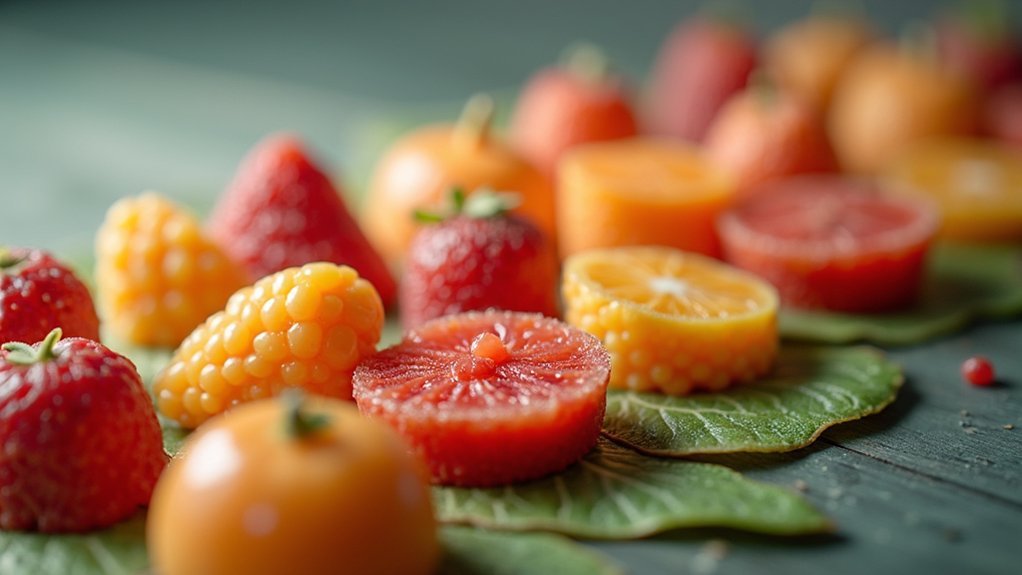
You’ll find that multi-material extrusion systems revolutionize how you create personalized nutrition by simultaneously depositing different ingredients through multiple nozzles. This allows you to build foods with distinct nutritional zones and flavors in a single print.
These systems give you precise control over where proteins, vitamins, and other nutrients are placed within your food structure. With layer-by-layer precision control, you can customize the exact placement and concentration of ingredients to match your specific dietary requirements and taste preferences.
Multi-Material Extrusion Systems
As personalized nutrition demands become more sophisticated, multi-material extrusion systems represent a breakthrough in 3D food printing technology that enables the simultaneous deposition of multiple ingredients through precision-controlled nozzles.
These systems use food-grade syringes to create complex food structures with varied textures and flavors tailored to your specific dietary needs.
You’ll benefit from three key innovations:
- Stimuli-responsive materials that create 4D printed foods changing shape or properties based on environmental factors
- Personalized nutrition products targeting individual health requirements like immunity boosting or gut health improvement
- Intricate culinary designs that enhance your eating experience while meeting nutritional goals
However, you should know that ingredient rheology complexity still challenges ideal printing speed and accuracy in current applications.
Layer-by-Layer Precision Control
Building on multi-material capabilities, layer-by-layer precision control transforms how you can engineer food at the microscopic level, enabling manufacturers to orchestrate exactly where each nutrient, flavor compound, and textural element gets deposited within your customized meal. This revolutionary approach uses advanced deposition techniques like extrusion and inkjet printing to construct complex shapes that optimize nutrient release for your specific dietary needs.
| Health Focus | Nutrient Placement | Your Benefit |
|---|---|---|
| Immunity Boost | Vitamin C core layers | Sustained energy release |
| Digestive Health | Probiotic pockets | Enhanced gut function |
| Heart Health | Omega-3 microspheres | Cardiovascular protection |
| Cognitive Support | Brain-boosting compounds | Improved mental clarity |
| Anti-Aging | Antioxidant gradients | Cellular repair optimization |
Through layer-by-layer precision, 3D printing creates personalized nutrition that’s tailored exclusively for you.
Real-Time Adaptation to Dietary Requirements and Preferences
While traditional meal planning requires you to guess your nutritional needs hours or days in advance, 3D printing technology adapts to your body’s requirements in real-time.
This revolutionary approach to personalized nutrition transforms how you receive tailored nutrition by responding instantly to your physiological state.
Real-time adaptation through 3D printing delivers three key advantages:
Real-time 3D food printing revolutionizes nutrition by delivering three critical advantages that transform how your body receives personalized dietary solutions.
- Environmental responsiveness – 4D food printing modifies food shape and properties based on current stimuli, enhancing nutrient release for your immediate needs.
- Mission-specific customization – Wearable sensors integrate with printing systems to include targeted nutrients like caffeine or creatine based on your activity demands.
- Dynamic nutrient profiling – Advanced algorithms adjust both macro and micronutrient compositions according to your real-time dietary requirements, ensuring peak health management.
Smart Food Materials That Respond to Body Needs
When your body temperature rises during exercise, smart food materials printed through 4D technology can automatically release cooling nutrients or electrolytes to help regulate your internal systems. These revolutionary materials respond to environmental stimuli, creating personalized nutrition that adapts to your unique physiological needs in real-time.
| Stimulus | Response | Benefit |
|---|---|---|
| pH changes | Targeted nutrient release | Enhanced absorption |
| Temperature shifts | Electrolyte activation | Better hydration |
| Digestive enzymes | Structure modification | Improved bioavailability |
Advanced printing techniques enable manufacturers to embed various responsive ingredients within food structures. These dietary solutions offer nutrient adjustments based on your body’s current state, whether you need enhanced immunity support or improved gut health. This technology transforms static meals into dynamic, health-optimized experiences.
Revolutionary Applications in Healthcare and Military Nutrition
As military operations demand peak physical performance under extreme conditions, the US Department of Defense has turned to 3D printing technology to revolutionize soldier nutrition with personalized rations tailored to specific mission requirements.
You’ll see enhanced performance through nutrients like caffeine and creatine precisely formulated for each operation.
Healthcare applications are equally transformative, where you can receive customized meals addressing specific dietary restrictions and medical conditions.
Researchers at the University of Copenhagen focus on improving food texture and appearance for elderly patients, ensuring better nutritional intake.
Key applications include:
- Real-time military rations adjustments using wearable sensor data
- Disease management through precision nutrient formulations
- Enhanced immunity and gut health targeting individual healthcare nutritional needs
Frequently Asked Questions
How Is 3D Printing Revolutionary?
You’re witnessing technology that creates customized food structures matching your exact dietary needs. It controls nutritional content precisely, produces intricate shapes, enables rapid ingredient experimentation, and develops smart foods that adapt to optimize your health benefits.
How Can 3D Printing Contribute to Personalized Medicine?
You can receive custom-printed meals designed specifically for your medical conditions, dietary restrictions, and nutritional needs. Healthcare providers create personalized food that’s easier to swallow, digest, and enjoy while supporting your treatment goals.
What Is the Primary Advantage of 3D Food Printing?
You’ll find 3D food printing’s primary advantage is creating customized meals tailored to your individual dietary needs, giving you precise control over ingredients and nutritional profiles for ideal health outcomes.
Could the 3D Printing Technology Be a Useful Strategy to Obtain Customized Nutrition?
You’ll find 3D printing technology extremely useful for customized nutrition since it precisely adjusts ingredients, macronutrients, and flavors to match your specific dietary needs, health goals, and personal requirements.

Leave a Reply