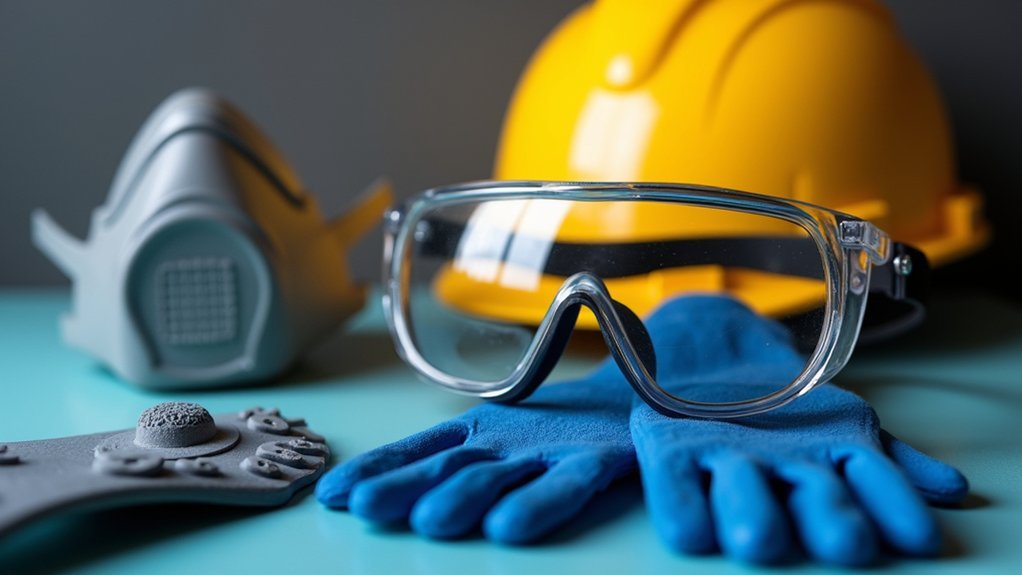
You’ll need seven essential PPE items for safe 3D printing: fit-tested respirators to protect against volatile organic compounds and ultrafine particles, chemical-resistant gloves made from neoprene or nitrile, safety goggles with adjustable fits for airborne particles, protective coveralls offering 95-99% particle filtration, heat-resistant gloves rated for 500°F temperatures, face shields with PETG visors for chemical splash protection, and ventilation equipment with HEPA filtration systems. Each piece addresses specific hazards you’ll encounter during printing operations.
Fit-Tested Respirators and Masks
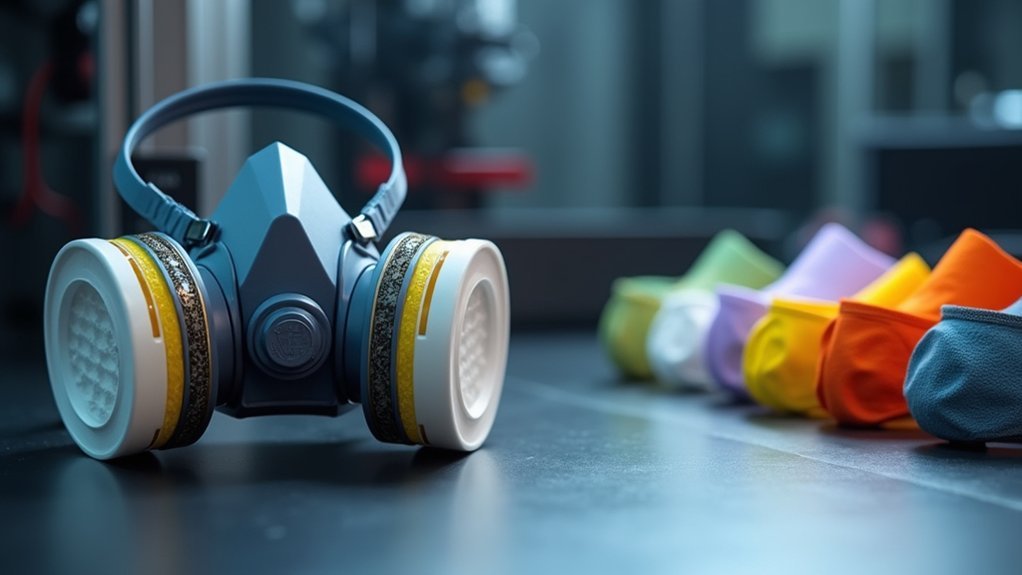
When operating 3D printers, you’ll face exposure to volatile organic compounds and ultrafine particles that can pose serious respiratory risks.
Fit-tested respirators are your most effective defense against these hazardous emissions. You must verify each respirator is individually fitted to provide maximum protection, as poor fit dramatically reduces effectiveness against harmful particulates and gases.
Consider pairing neoprene masks with your respirator system to enhance comfort during extended printing sessions.
You’ll need to maintain your equipment by regularly replacing filters and following manufacturer guidelines for peak performance.
Proper training is essential for understanding your respirator’s limitations and correct usage procedures.
Without adequate knowledge, you can’t maximize protection or identify when equipment needs replacement or adjustment.
Chemical-Resistant Gloves
When you’re working with 3D printing materials and solvents, you’ll need chemical-resistant gloves that match the specific hazards you’re facing.
The material you choose—whether neoprene, nitrile, or another chemical-resistant option—directly impacts your protection level against different substances.
You must guarantee proper fit and sizing to maintain both safety and the dexterity needed for precise 3D printing operations.
Material Types Matter
Since different 3D printing materials and processes expose you to various chemical hazards, you’ll need gloves specifically designed to resist the substances you’re handling. Your protective gear choice directly impacts your safety against chemical burns and skin exposure.
| Material Type | Best For | Resistance Level | Key Benefits |
|---|---|---|---|
| Neoprene | Wide chemical range | Excellent | Versatile protection |
| Nitrile | Sharp objects/punctures | High durability | Puncture resistance |
| Vinyl | Light chemical contact | Moderate | Cost-effective |
| Latex | General handling | Basic | Flexibility |
You can’t use one-size-fits-all protection. Neoprene gloves excel against diverse solvents, while nitrile provides superior puncture resistance when handling heated components. Consider your specific printing materials and choose gloves that’ll protect against those particular chemical hazards.
Proper Fit Requirements
Beyond choosing the right material, you’ll need gloves that fit properly to maintain both protection and functionality. A proper fit is essential for chemical-resistant gloves to effectively shield you from hazardous chemicals while preserving your dexterity.
Gloves that fit too tightly will restrict your movement and cause fatigue, while loose-fitting ones create gaps that allow chemicals to enter and increase the risk of accidental contact with dangerous materials.
You should guarantee your gloves fit snugly but comfortably around your hands and wrists. This balance allows you to handle feedstock and heated components safely without compromising grip strength.
Remember to regularly inspect your gloves for wear or damage, as compromised protection can expose your skin to harmful solvents and other hazardous substances during 3D printing operations.
Chemical Protection Levels
While proper fit guarantees your gloves stay secure, understanding chemical protection levels helps you select the right barrier against specific hazards you’ll encounter during 3D printing. Chemical-resistant gloves must match your specific 3D printing processes to guarantee adequate protection.
| Glove Material | Chemical Resistance | Best Applications |
|---|---|---|
| Neoprene | Excellent against solvents, oils | Feedstock handling, cleaning agents |
| Nitrile | Superior puncture/tear resistance | Sharp tools, heated components |
| Natural Rubber | Good general protection | Basic material handling |
You’ll need to evaluate chemical protection levels based on your materials. Neoprene excels with cleaning solvents, while nitrile provides durability when handling sharp objects. Always verify that your chosen chemical-resistant gloves meet appropriate resistance standards for your specific chemicals and maintain proper dexterity for safe operation.
Safety Goggles and Eye Protection
Eye protection stands as a critical component of 3D printing safety, shielding you from hazardous emissions, airborne particulates, and potential chemical splashes that can occur during the printing process.
When selecting safety goggles for 3D printing operations, you’ll want designs that offer thorough eye protection while maintaining comfort and functionality.
Effective safety goggles should incorporate these essential features:
- Adjustable fit systems that accommodate different head sizes for secure, comfortable wear during extended printing sessions
- Durable materials like PET-G frames with CNC-cut plexiglass lenses for flexibility and clear vision
- Easy sanitization capabilities allowing repeated cleaning and use across various environments, including healthcare settings
Choose safety goggles designed specifically for 3D printing materials to guarantee adequate protection against the unique hazards present in additive manufacturing environments.
Protective Coveralls and Clothing
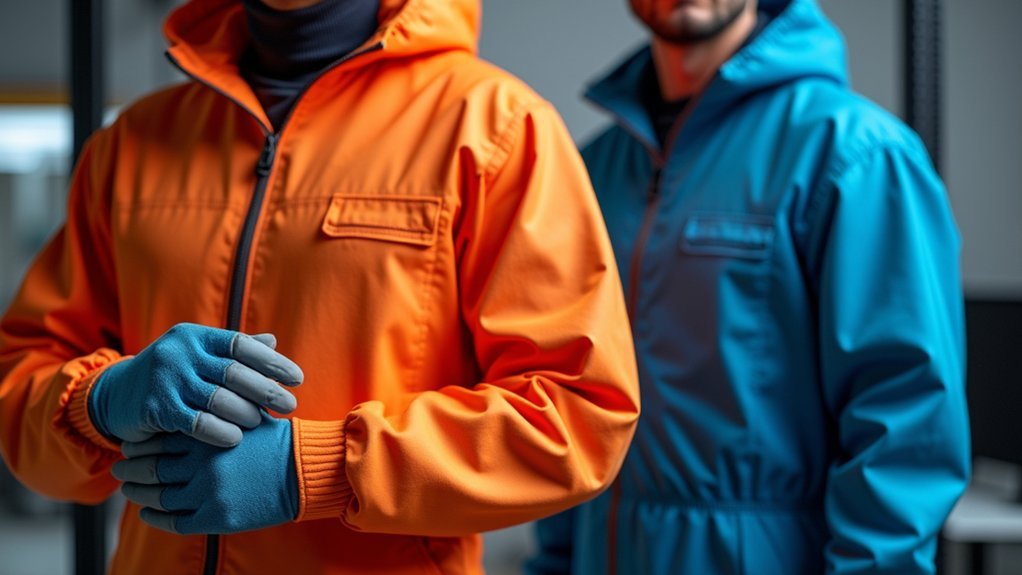
Just as your eyes require protection, your entire body needs shielding from the various hazards present in 3D printing environments. Protective coveralls serve as your primary defense against chemical splashes, ultrafine particles (UFPs), and thermal hazards during printing operations.
| Coverall Type | Protection Level | Key Features |
|---|---|---|
| Body Filter 95+® | 95%-99% particle filtration | UFP protection, 0.3-micron filtering |
| ChemSplash® 1 | Light chemical splash | Taped seams, leakage prevention |
| ChemSplash® 2 | Enhanced acid/caustic protection | Aggressive chemical resistance |
| PyroGuard FR® | Fire-retardant protection | ASTM D6413, NFPA 2113 compliance |
| Standard Chemical-Resistant | Basic protection | Flame-retardant, chemical-resistant |
Fire-retardant coveralls meeting industry standards provide dual protection against flames and chemicals, ensuring thorough safety during your 3D printing operations.
Heat-Resistant Gloves for Hot Components
Hot extruders, heated beds, and freshly printed components pose serious burn risks that demand specialized hand protection.
You’ll need heat-resistant gloves when maintaining your printing equipment, as temperatures often exceed 200°C (392°F). Quality gloves made from Kevlar or silicone provide superior protection while maintaining the dexterity you need for precise work.
When selecting heat-resistant gloves, consider these essential features:
- Temperature rating of at least 500°F (260°C) for adequate protection
- Proper fit that doesn’t compromise your ability to handle small components
- Materials like Kevlar or silicone that offer both heat resistance and durability
You should inspect your gloves regularly for wear and tear that could compromise their effectiveness.
While these gloves don’t provide particulate protection, they’re vital for safely handling hot components during maintenance and operation.
Face Shields for Chemical Splash Protection
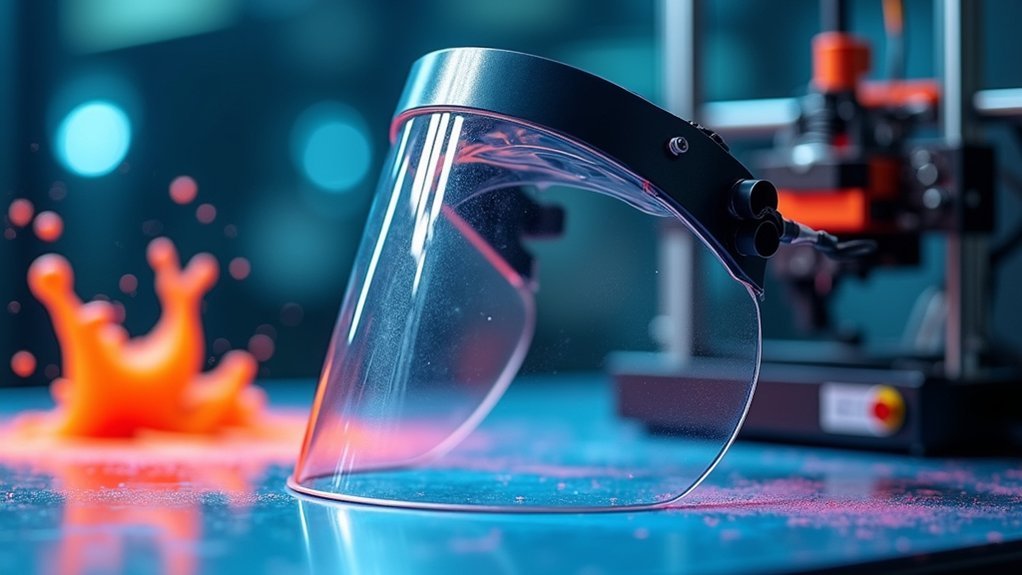
When you’re 3D printing with chemicals like resins or solvents, you’ll need face shields that meet specific chemical resistance standards to protect against splashes and vapors.
Your shield’s design should provide full facial coverage while maintaining clear visibility, typically featuring a wraparound style that seals around your face perimeter.
You’ll also want to contemplate how easily you can sterilize and reuse your face shield, as frequent cleaning is essential when working with hazardous materials.
Chemical Resistance Standards
Although face shields provide an essential barrier against chemical splashes in 3D printing environments, they’re only effective if they meet rigorous chemical resistance standards.
You’ll need protective equipment that complies with ASTM specifications to guarantee adequate defense against hazardous chemicals commonly used in 3D printing processes.
When selecting face shields for chemical protection, consider these critical requirements:
- Material composition – Choose PET-G construction for superior durability and corrosion resistance against various chemicals
- ASTM compliance – Verify the face shields meet established chemical resistance standards for your specific applications
- Regular certification – Confirm ongoing testing validates effectiveness against the particular chemical hazards in your workspace
You can’t compromise on quality when it comes to chemical resistance standards.
Proper certification guarantees your face shields will perform reliably when you encounter unexpected splashes or exposure incidents.
Splash Protection Design
Since chemical splash incidents can occur without warning during 3D printing operations, you’ll need face shields specifically engineered with robust splash protection design features.
Printing face shields for chemical splash protection typically feature transparent PETG or PVC visors that create effective barriers against splashes and particulate matter. The design incorporates a forehead band with back strap for secure, comfortable long-term wear in hazardous environments.
You can manufacture these shields using recommended filament materials that withstand sterilization for repeated use.
Assembly utilizes a simple three-hole punch technique to secure visors to forehead bands, enabling bulk production. Proper cleaning and sanitization remain essential to maintain protective qualities when working with potentially hazardous chemicals during 3D printing operations.
Sterilization and Reusability
Beyond initial manufacturing considerations, maintaining your 3D printed face shields requires implementing proper sterilization protocols to assure safe reuse in chemical environments.
When you select PETG materials for your face shields, you’ll guarantee compatibility with medical autoclave sterilization processes that eliminate harmful contaminants effectively.
Your reusability strategy should include:
- Regular inspection schedules to check frame integrity and transparency sheet condition before each use
- Proper cleaning procedures using appropriate sanitization methods that won’t degrade the shield materials
- Systematic replacement protocols for worn components to maintain ideal protection levels
You’ll maximize the lifespan of your face shields by establishing consistent sterilization routines.
This approach assures reliable chemical splash protection while reducing long-term costs through effective reusability practices in demanding work environments.
Ventilation Equipment and Air Filtration Systems
When you’re operating 3D printers, establishing proper ventilation becomes critical for protecting yourself from volatile organic compounds (VOCs) and ultrafine particles (UFPs) that can compromise your health.
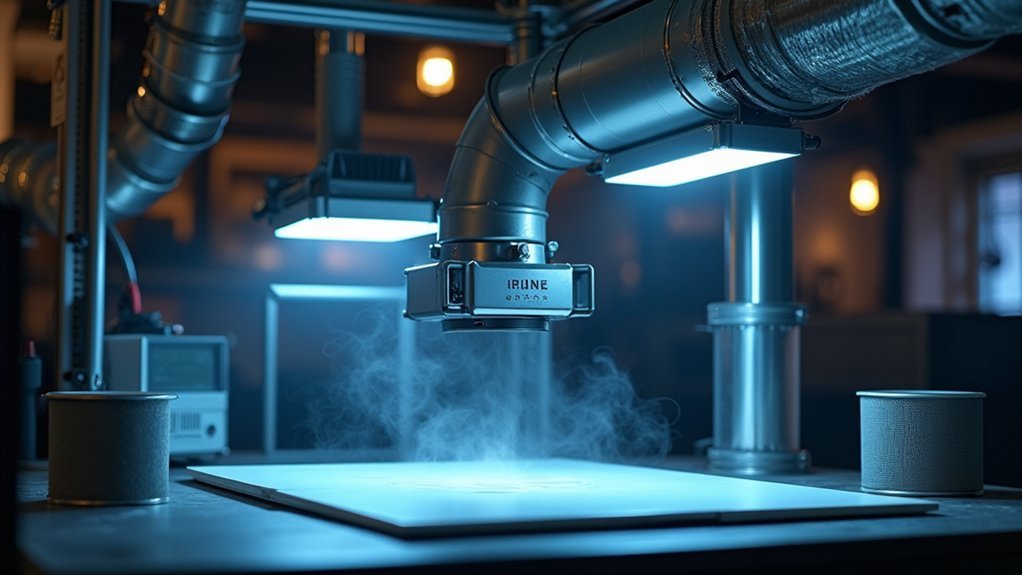
You’ll need ventilation equipment that includes local exhaust systems positioned near printers to capture emissions before they spread throughout your workspace.
Install air filtration systems equipped with HEPA filters to effectively trap ultrafine particles (UFPs) and reduce harmful particulate concentrations.
These systems work best when combined with proper airflow management.
You should regularly monitor air quality levels to ascertain your ventilation and filtration systems maintain effectiveness.
Consider choosing printers with MJM or SLS technologies, which naturally emit fewer particulates and reduce your reliance on extensive ventilation equipment while maintaining safer working conditions.
Frequently Asked Questions
What PPE Is Needed for 3D Printing?
You’ll need fit-tested respirators for VOCs and particles, neoprene gloves for handling materials, splashproof eye protection, flame-retardant coveralls like PyroGuard FR®, and regular training on proper PPE usage.
What Respirator Is Best for 3D Printing?
You’ll want a fit-tested N95 or P100 respirator with organic vapor cartridges for ideal protection. These filter 95-99% of particles and chemical fumes, ensuring you’re protected from VOCs and ultrafine particles during printing.
Is It Okay to Sleep in the Same Room as a 3D Printer?
You shouldn’t sleep in the same room as a 3D printer because it emits harmful VOCs and ultrafine particles that can cause respiratory issues, skin irritation, and cardiovascular problems over time.
What Is the 45 Degree Rule for 3D Printing?
You should keep overhangs and unsupported parts at 45 degrees maximum to prevent sagging and guarantee proper layer adhesion. Steeper angles typically require support structures, increasing material usage and print time.


Leave a Reply