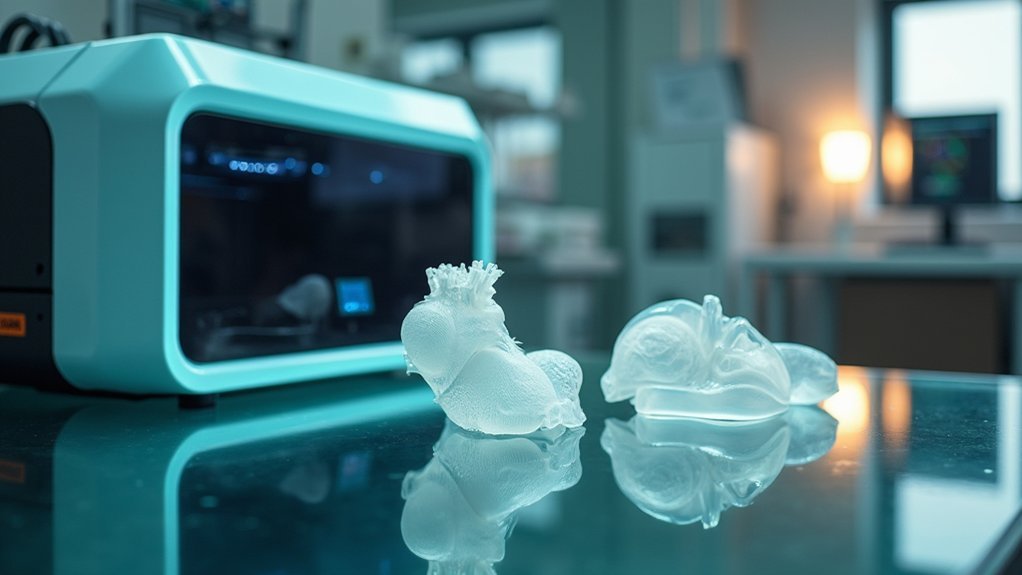
You’ll choose medical grade resin 3D printers because they deliver FDA-compliant biocompatible materials with exceptional 25-micron precision and sub-2-micron surface quality. They drastically cut custom prosthetic costs from $1,500-$8,000 to just $50-$100 while reducing production time from weeks to one day. These printers withstand autoclaving and gamma sterilization, resist bacterial adhesion, and accelerate prototyping cycles by 70%. Understanding these advantages will reveal how they’re transforming medical device manufacturing efficiency.
Superior Biocompatibility Standards for Patient Safety
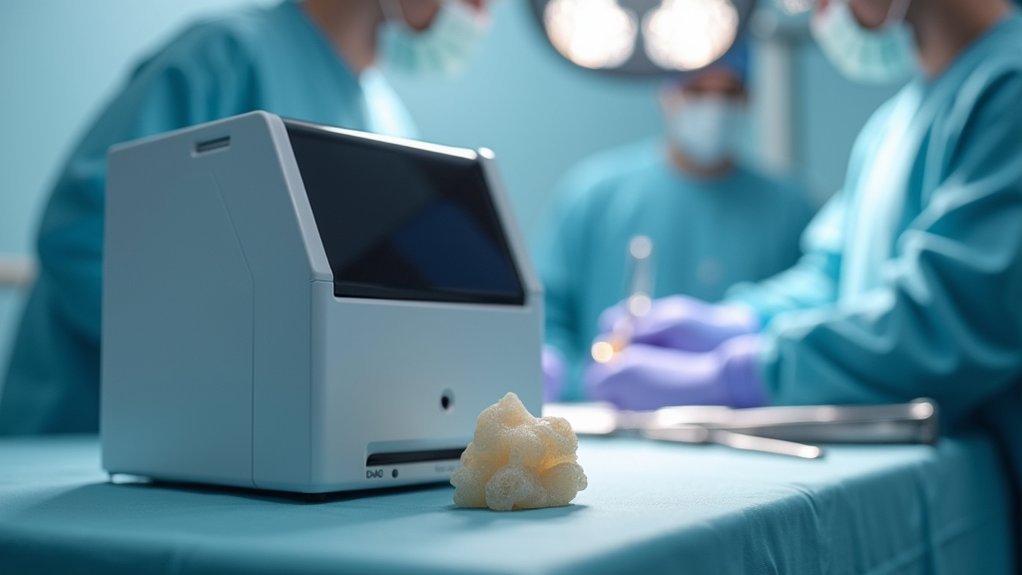
When you’re selecting medical grade resin 3D printers, you’ll find they utilize biocompatible materials specifically engineered to meet rigorous safety standards that guarantee compatibility with human tissues.
These medical grade resins undergo rigorous testing through certification processes like ISO 10993, which evaluates biocompatibility for healthcare applications. You’ll benefit from enhanced patient safety as these materials resist microbial growth and maintain structural integrity in biological environments, reducing inflammation and infection risks.
Advanced biocompatible resins can replicate natural tissue’s mechanical properties, creating realistic anatomical models essential for successful surgical outcomes.
The formulations continuously evolve, with researchers improving UV resistance and durability. When you choose these printers, you’re investing in materials that minimize adverse reactions during long-term implantation and clinical use.
Enhanced Precision and Surface Quality for Medical Applications
Precision becomes paramount in medical applications where even microscopic deviations can impact patient outcomes. Medical grade resin 3D printers deliver high-resolution outputs with 25-micron layer thickness, creating anatomical models that enhance surgical planning accuracy. You’ll achieve exceptional surface quality with less than 2-micron roughness, ensuring precision fit for dental and orthopedic devices.
| Specification | Medical Grade Performance |
|---|---|
| Layer Resolution | 25 microns |
| Surface Roughness | <2 microns |
| Dimensional Accuracy | ±0.1 mm tolerance |
| Biocompatibility | Regulatory compliant |
These biocompatible parts maintain dimensional accuracy within ±0.1 mm tolerances, replicating intricate anatomical features precisely. You’ll find that superior print quality improves patient satisfaction by enabling clearer communication during consultations. When patients understand procedures through detailed models, you’ll achieve better informed consent and enhanced surgical outcomes.
Regulatory Compliance and FDA-Approved Materials
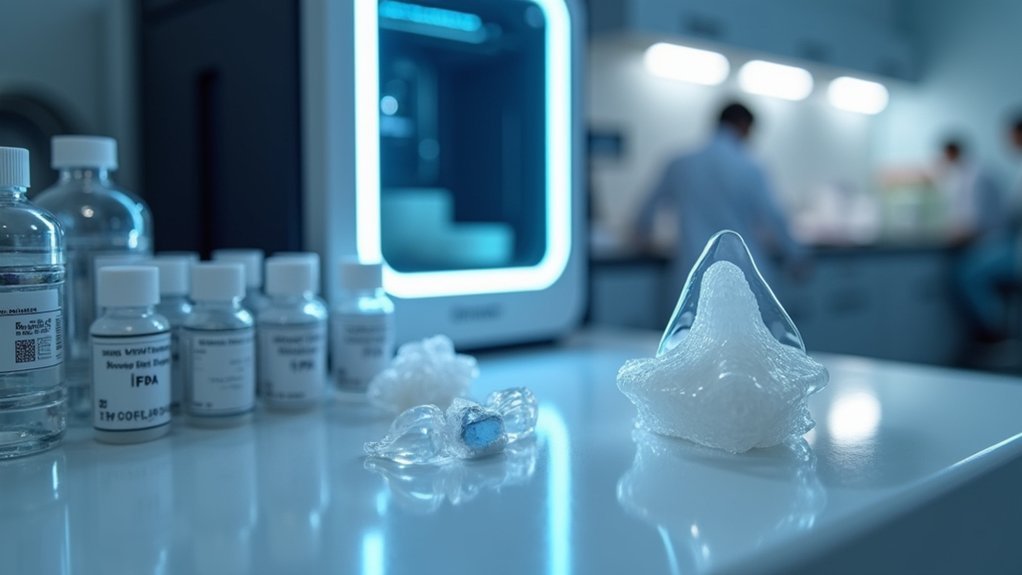
Medical grade resin 3D printers require materials that meet stringent FDA regulations and biocompatibility standards to secure patient safety. When you’re manufacturing 3D-printed medical devices, regulatory compliance isn’t optional—it’s vital for successful medical applications.
FDA-approved materials offer significant advantages for your manufacturing process:
FDA-approved materials streamline manufacturing while ensuring regulatory compliance and patient safety for medical 3D printing applications.
- Streamlined approval process – You’ll benefit from materials that’ve already undergone rigorous testing and evaluation.
- ISO 10993 standards certification – These biocompatibility assessments provide essential patient safety assurance.
- Validated performance – Materials are tested specifically for their intended medical use.
- Risk reduction – Compliance minimizes complications and liability concerns.
You can confidently produce patient-specific devices while meeting necessary regulations. This approach guarantees safety throughout the manufacturing process and contributes to enhanced patient outcomes, making medical grade resin 3D printers invaluable for healthcare applications.
Cost-Effective Production of Patient-Specific Devices
Beyond regulatory compliance, 3D printing dramatically transforms the economics of patient-specific medical devices by slashing production costs from thousands to mere hundreds of dollars.
You’ll find custom prosthetics now cost between $50-$100 compared to traditional options ranging from $1,500-$8,000. Medical grade resin guarantees biocompatibility while enabling cost-effective in-house production that minimizes material waste.
Your rapid turnaround time shrinks from weeks to just one day, allowing timely adjustments for growing children and urgent patient needs.
Healthcare providers benefit from streamlined workflows that cut device development times considerably. When you implement patient-specific devices through medical grade resin 3D printing, you’re accessing customized treatments faster while dramatically reducing production costs for both your facility and patients.
Streamlined Workflow for Rapid Prototyping and Manufacturing
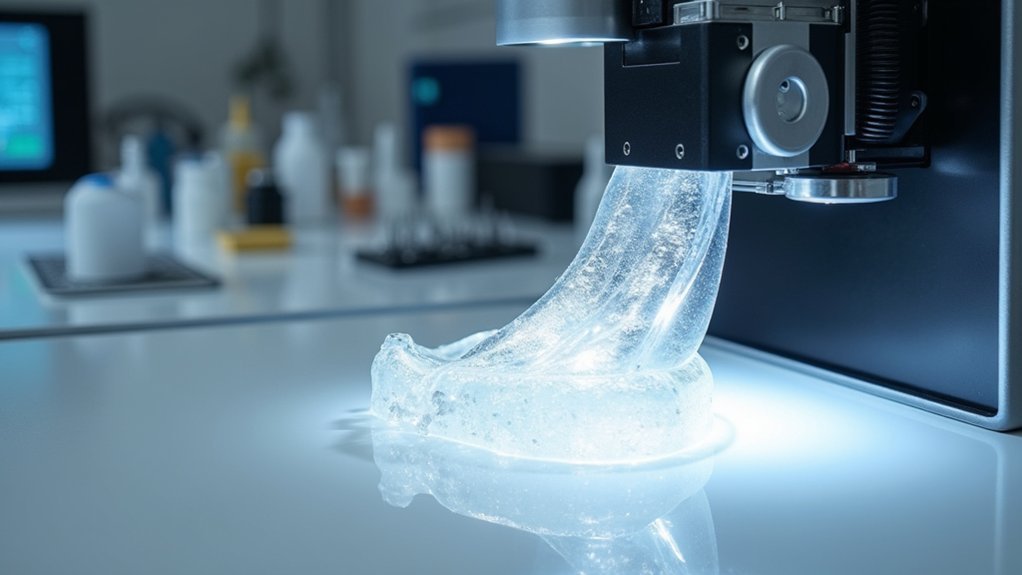
You’ll transform your medical device development process when you integrate medical grade resin 3D printers into your workflow, cutting prototyping time from weeks to mere hours.
Your team can iterate designs rapidly in-house without relying on external vendors, giving you complete control over production timelines and quality standards.
You’re looking at up to 70% cost reduction in prototyping expenses while maintaining the precision and biocompatibility requirements essential for medical applications.
Accelerated Development Cycles
When developing medical devices, traditional manufacturing methods often create bottlenecks that stretch timelines and inflate budgets.
Medical grade resins eliminate these constraints through rapid prototyping that transforms your development process. You’ll reduce iteration times from weeks to just days, enabling accelerated development cycles that keep pace with market demands.
Streamlined workflows deliver measurable advantages:
- Faster validation – Create biocompatible prototypes for enhanced preclinical testing and quicker regulatory approvals
- Design flexibility – Produce complex geometries without expensive tooling requirements
- Real-time adaptation – Leverage customization capabilities to incorporate surgeon feedback immediately
- Significant cost savings – Achieve up to 70% reduction in production costs through efficient medical device development
You’ll transform lengthy development cycles into agile processes that accelerate innovation while maintaining the highest quality standards.
In-House Production Capabilities
Since medical grade resin 3D printers bring manufacturing directly into your facility, you’ll eliminate external dependencies while gaining complete control over your production timeline.
This in-house 3D printing capability transforms your workflow efficiency by reducing design iteration time from weeks to mere days. You’ll create patient-specific models and surgical guides that enhance surgical planning accuracy while cutting operating room time by 30-40%.
Medical grade resin guarantees your biocompatible devices meet stringent safety standards without lengthy outsourcing delays.
You’ll achieve remarkable cost reductions—up to 70% lower prototyping expenses compared to traditional methods. This streamlined approach enables rapid design iterations based on surgeon feedback, fostering innovation that leads to improved patient outcomes.
You’ll develop customized solutions tailored to individual patient needs while maintaining complete quality control throughout your production process.
Cost-Effective Design Iterations
Although traditional prototyping methods can drain your budget and timeline, medical grade resin 3D printers revolutionize your design iteration process by delivering functional prototypes in days rather than weeks.
You’ll achieve cost reductions of up to 70% while maintaining the precision required for medical devices.
This rapid prototyping approach enables you to:
- Reduce production costs through in-house manufacturing capabilities
- Accelerate design iterations based on real-time feedback from healthcare professionals
- Minimize material waste with on-demand production of customized solutions
- Enhance patient outcomes through improved device precision and functionality
Medical grade resin technology eliminates the expensive delays of traditional prototyping, allowing you to refine designs quickly and cost-effectively while maintaining the quality standards essential for medical applications.
Advanced Material Properties for Sterilization and Durability
Because medical devices must endure rigorous sterilization cycles and maintain performance throughout their operational life, the material properties of medical grade resins become critical factors in device success.
Medical grade resin material properties directly determine whether devices will succeed or fail in demanding clinical applications.
You’ll find these specialized resins deliver exceptional biocompatibility while maintaining superior mechanical properties under demanding clinical environments. They’re engineered to withstand common sterilization methods like autoclaving and gamma radiation without compromising their structural properties.
You won’t need to worry about chemical degradation from harsh disinfectants and cleaning agents. The resins resist breakdown while maintaining their durability throughout repeated sterilization cycles.
Their non-porous surface characteristics greatly reduce device-related infections by minimizing bacterial adhesion. This combination of sterilization resistance and enhanced mechanical properties guarantees your medical devices maintain ideal performance and safety standards throughout their intended lifespan.
Frequently Asked Questions
What Are the Benefits of Medical 3D Printing?
You’ll benefit from highly customized prosthetics, faster surgical planning that reduces operating room time by 30-40%, rapid prototyping cycles, biocompatible materials meeting safety standards, and affordable solutions costing considerably less than traditional methods.
What Is the Primary Advantage of 3D Printing in Pharmaceutical Formulations?
You’ll find the primary advantage is creating custom dosage forms tailored to individual patient needs. This personalization enhances medication adherence and improves treatment outcomes by addressing each patient’s specific requirements.
What Are Medical Grade Materials for 3D Printing?
You’ll find medical grade materials are specially formulated biocompatible substances like PEEK, polycarbonate, and certified photopolymers that meet strict safety standards for creating implants, prosthetics, and surgical tools.
What Type of Resin Is Best for Detailed 3D Printing?
You’ll want photopolymer resins for detailed 3D printing since they offer exceptional resolution and precision. They capture fine details better than other materials, making them ideal when you need accurate, high-quality prints.


Leave a Reply