
Budgeting for medical device prototype development requires you to allocate $200,000 for Class I devices, $2-5 million for Class II, and tens of millions for Class III devices. You’ll need to reserve over 50% of your budget for regulatory compliance alone, with Class II 510(k) devices averaging $30 million total. Start with low-fidelity prototypes using affordable materials like resin or aluminum, then progress to high-fidelity versions. Strategic planning and early FDA engagement can reveal significant cost savings throughout your development process.
Understanding Medical Device Prototype Classification and Cost Implications

When you’re planning your medical device development budget, understanding the classification system becomes your foundation for accurate cost projections.
Class I prototypes cost up to $200,000, reflecting simpler medical device design requirements. Class II prototypes escalate to $2-5 million due to increased complexity and regulatory compliance demands. Class III prototypes can reach tens of millions, requiring sophisticated prototyping methods and extensive testing.
Medical device prototype costs span from $200,000 for Class I devices to tens of millions for Class III developments.
Your development process costs vary dramatically based on classification. Class II 510(k) devices average $30 million in total development, with $24 million dedicated to FDA-required activities.
The device’s complexity directly impacts your budget, as intricate designs demand more resources for development and testing. Since regulatory compliance consumes over 50% of your total budget, you’ll need early FDA engagement to manage costs effectively and avoid expensive late-stage modifications.
Material Selection Strategies for Cost-Effective Prototyping
When selecting materials for your medical device prototypes, you’ll need to balance biocompatibility requirements with cost constraints from day one.
You can’t simply choose the cheapest option available—FDA regulations demand that materials meet specific safety standards, which often means paying premium prices for medical-grade alternatives.
Your challenge lies in finding materials that satisfy regulatory requirements while keeping prototype costs manageable enough to allow multiple design iterations.
Biocompatible Material Considerations
Because biocompatibility requirements can dramatically inflate your prototype development costs, you’ll need strategic material selection to balance safety standards with budget constraints.
For early-stage prototyping, you can use cost-effective materials like resin or aluminum alloy that mimic biocompatible properties without premium pricing. This approach lets you validate designs before investing in expensive medical-grade materials.
| Development Phase | Material Type | Cost Impact |
|---|---|---|
| Early Prototype | Resin/Aluminum | Low cost |
| Functional Testing | 3D Print/CNC Hybrid | Moderate cost |
| Regulatory Compliance | Off-shelf Biocompatible | Controlled cost |
Off-the-shelf biocompatible materials streamline your prototyping process while maintaining regulatory compliance. Remember, non-compliant materials can trigger expensive redesigns, so ascertain your selected materials meet both performance requirements and health regulations from the start.
Cost-Performance Trade-offs
Strategic material choices determine whether your prototype development stays within budget or spirals into cost overruns.
You’ll face critical cost-performance trade-offs when selecting materials for prototyping. While biocompatible materials are essential for invasive devices, you can use affordable alternatives like resin or aluminum for initial models to minimize expenses.
3D printing offers excellent value for intricate plastic components, enabling rapid iterations at lower costs than traditional manufacturing methods.
For metal prototypes requiring precision, CNC machining provides the right balance between quality and affordability, especially for Class II and III devices.
You can dramatically reduce tooling costs through rapid prototyping techniques like vacuum forming or 3D printed molds.
Focus on essential functionality rather than aesthetic finishes by eliminating non-essential features during early development phases.
Low-Fidelity Vs High-Fidelity Prototyping Methods

While developing a medical device budget, you’ll face a critical decision between low-fidelity and high-fidelity prototyping methods that can dramatically impact your project’s financial trajectory.
Low-fidelity approaches like 2D sketches and cardboard models offer rapid prototyping capabilities with minimal costs associated, enabling quick iterations and immediate feedback collection.
Low-cost sketches and cardboard models accelerate development cycles while preserving precious budget resources for critical high-fidelity testing phases.
Consider these budgeting advantages of strategic prototyping:
- Early-stage validation – Low-fidelity prototypes cost pennies compared to high-fidelity alternatives, preventing expensive mistakes later.
- Iterative refinement – Rapid adjustments help clarify requirements before committing significant resources.
- Smart progression – Starting low-fidelity then advancing to high-fidelity 3D printing or CNC machining optimizes your development timeline.
High-fidelity prototypes for Class II and III devices can reach millions in costs associated with realistic functionality testing, making initial low-fidelity exploration essential for budget management.
3D Printing Technologies and Budget Considerations
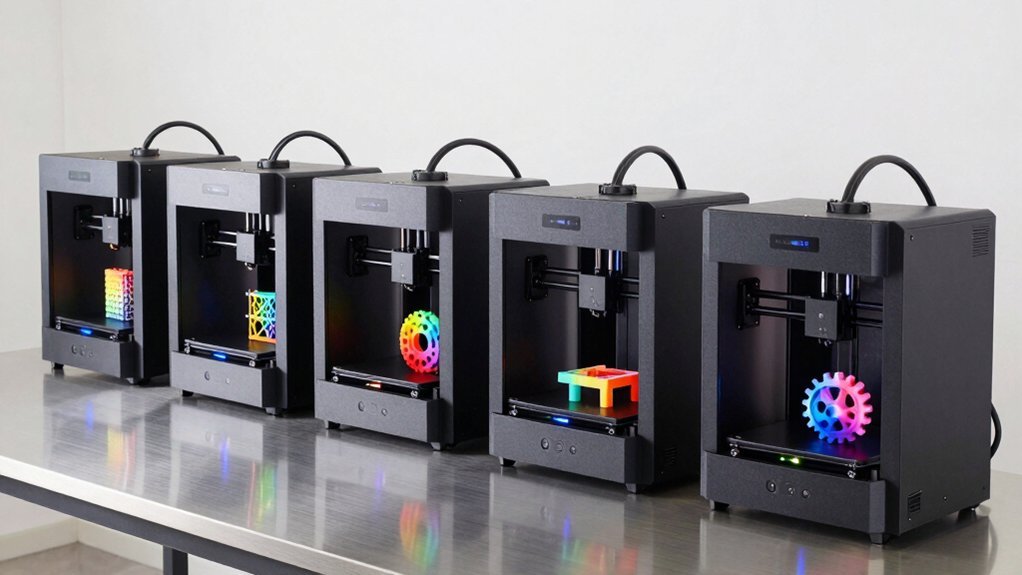
When you’re budgeting for medical device prototyping, you’ll need to compare FDM and SLA printing costs, as FDM machines start under $1,000 while SLA typically requires higher material investments.
Desktop printer budgets can greatly reduce your initial prototyping expenses, but you must factor in material costs and printing time for each iteration.
You should also evaluate whether outsourcing to specialized firms offers better value than purchasing in-house equipment, especially when considering access to advanced technologies like SLS and SLM for metal components.
FDM Vs SLA Costs
Understanding the cost differences between FDM and SLA 3D printing technologies can greatly impact your medical device development budget.
FDM printers start under $1,000, making them accessible for rapid prototyping and functional parts. SLA printers cost several thousand dollars but deliver superior resolution and surface finish for intricate medical components.
Key budget considerations include:
- Equipment costs – FDM offers lower initial investment while SLA requires substantial upfront capital.
- Material costs – FDM filament ranges $20-50 per kilogram versus SLA resin exceeding $100 per liter.
- Total ownership expenses – Factor in maintenance, ongoing material purchases, and operational costs.
You’ll find FDM ideal for cost-effective functional prototypes, while SLA excels for detailed aesthetic models requiring precision finishing in medical applications.
Desktop Printer Budgets
Desktop 3D printers represent one of the most cost-effective entry points for medical device prototyping, with FDM models available for under $1,000 and professional-grade options scaling appropriately with your project requirements.
When planning your desktop printer budgets, you’ll need to factor in ongoing material costs beyond the initial hardware investment. SLA printers offer superior resolution for detailed medical prototype work but require $3,000 to $5,000 upfront.
However, investing in desktop printing capabilities can reduce costs markedly through rapid prototyping iterations. You’ll identify design flaws early, avoiding expensive late-stage revisions.
Outsourcing Vs In-House
Beyond establishing your in-house printing capabilities, you’ll face strategic decisions about when to outsource versus keeping production internal. Your budget optimization depends on understanding when each approach serves you best.
Consider these key factors when deciding:
- Simple prototypes – Keep FDM printing in-house for basic parts under $1,000 equipment costs, enabling faster iteration cycles and greater process control.
- Complex geometries – Outsource SLA and SLS projects to specialized firms with advanced equipment, reducing errors and material waste.
- Hybrid strategy – Balance both approaches by handling routine 3D printing internally while outsourcing specialized prototype requirements.
Outsourcing delivers significant cost reductions through expert handling and quality equipment, while in-house capabilities provide speed and control.
You’ll maximize efficiency by strategically combining both methods based on your specific prototype complexity and timeline requirements.
Design for Manufacturing Principles in Prototype Development
One of the smartest moves you’ll make in medical device development is incorporating Design for Manufacturing (DFM) principles from the very start of your prototype phase.
By integrating DFM early in your design process, you’ll identify manufacturing constraints before they become costly problems. This proactive approach can slash your overall development costs by 20-30%.
Early DFM integration prevents costly manufacturing issues and can reduce development expenses by up to 30%.
You’ll want to leverage modern software tools like 3D CAD modeling and computational fluid dynamics simulation to assess manufacturability before building physical prototypes.
These tools help you visualize how your design will perform in the actual manufacturing process.
Most importantly, collaborate with manufacturing experts during design. They’ll help you avoid common pitfalls that lead to non-manufacturable designs, making your prototyping process more cost-effective and efficient.
Outsourcing Vs In-House Prototyping Cost Analysis
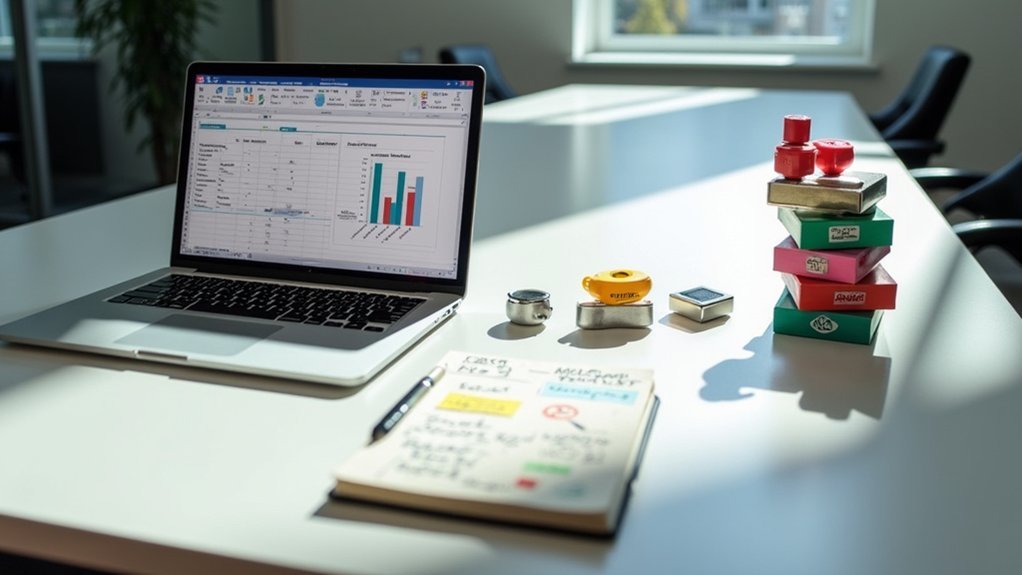
When you’re deciding between outsourcing and in-house prototyping, you’ll face one of the most critical budget decisions in your medical device development journey. The financial implications extend far beyond initial equipment purchases.
Consider these key cost factors:
- Hidden expenses – In-house prototyping requires equipment maintenance, skilled labor hiring, and ongoing training that greatly inflate your budget.
- Technology access – Outsourcing provides state-of-the-art technologies like selective laser sintering without prohibitive capital investments.
- Regulatory expertise – External specialists bring compliance knowledge that reduces costly redesigns.
Industry data shows outsourcing prototyping can save 20-30% in development costs for medical devices.
You’ll eliminate underutilized equipment investments while gaining faster turnaround times and specialized expertise, particularly valuable for complex Class II and III devices.
Regulatory Compliance Budget Planning for Prototypes
Regulatory compliance costs will dominate your medical device prototype budget, often consuming more than half of your total development resources.
You’ll need to allocate substantial funds upfront, especially for Class III devices requiring FDA’s rigorous Premarket Approval process with extensive clinical studies and documentation.
Early engagement with regulatory bodies can greatly reduce your redesign costs and streamline approval processes.
Don’t wait until prototypes are complete to take into account compliance requirements. Class II and Class III devices demand thorough testing and validation, driving up expenses considerably.
Integrate compliance tools and AI technologies to manage regulatory requirements efficiently.
This prevents unexpected expenses during prototype development.
Plan for documentation, clinical trials, and potential design modifications.
Your budget must account for iterative compliance cycles throughout the prototype phase.
Iterative Prototyping and Cost Management Strategies
Although regulatory compliance demands significant upfront investment, you’ll achieve the greatest cost savings through strategic iterative prototyping that catches design flaws early in development.
Strategic iterative prototyping delivers maximum cost savings by identifying design flaws early, preventing expensive late-stage regulatory compliance issues.
Smart cost management during your R&D phase—which typically runs $2.5-5 million—can dramatically reduce your development budget through multiple small-volume prototype iterations.
Implement these essential strategies for effective prototyping:
- Adopt lean development methodologies to streamline processes and eliminate wasteful design changes
- Monitor key performance indicators continuously throughout each prototype cycle to track spending
- Plan multiple small-batch iterations rather than single large runs to refine functionality efficiently
You’ll typically save 20-30% on your overall development budget by catching material and design issues early.
This approach prevents costly late-stage modifications while ensuring your device meets regulatory requirements efficiently.
Advanced Manufacturing Techniques and Budget Allocation
As your medical device moves from successful prototyping into advanced manufacturing phases, you’ll need to strategically allocate budget across cutting-edge production techniques that can dramatically impact your project’s financial trajectory.
Advanced manufacturing techniques like selective laser sintering (SLS) and selective laser melting (SLM) enable complex metal part production while eliminating extensive tooling costs. Investment casting provides cost-effective solutions for intricate Class II and Class III device prototypes across various materials.
Combining CNC machining with 3D printing optimizes your budget allocation by creating precise functional prototypes while minimizing material waste.
Incorporating rapid prototyping methods early in development saves 20-30% on overall costs by catching design flaws before mass production.
Modern design and simulation software streamlines prototyping processes, reducing costly redesigns and ensuring your budget targets manufacturable, feasible designs.
Frequently Asked Questions
What Is the Cheapest Way to Get a Prototype Made?
You’ll find low-fidelity cardboard or acrylic prototypes are cheapest for initial concepts. If you need functionality, buy a basic FDM 3D printer under $1,000 or use off-the-shelf development kits instead of custom components.
How Much Does It Cost to Develop a Prototype?
You’ll spend $200,000 for Class I prototypes, $2-5 million for Class II, and tens of millions for Class III devices. These costs don’t include FDA submissions or certifications you’ll need later.
How to Prototype a Medical Device?
Start with low-fidelity methods like cardboard models for initial concepts. Use 3D printing for detailed parts, then advance to functional prototypes with aluminum or resin. Collaborate with experts to guarantee your design’s manufacturable and cost-effective.
How Much Does It Cost to Develop a Medical Device?
You’ll spend $30+ million developing Class II devices, with $24 million for FDA studies. Class III devices cost around $94 million. Prototyping alone runs $2.5-5 million, while regulatory compliance consumes over 50% of your total budget.

Leave a Reply