
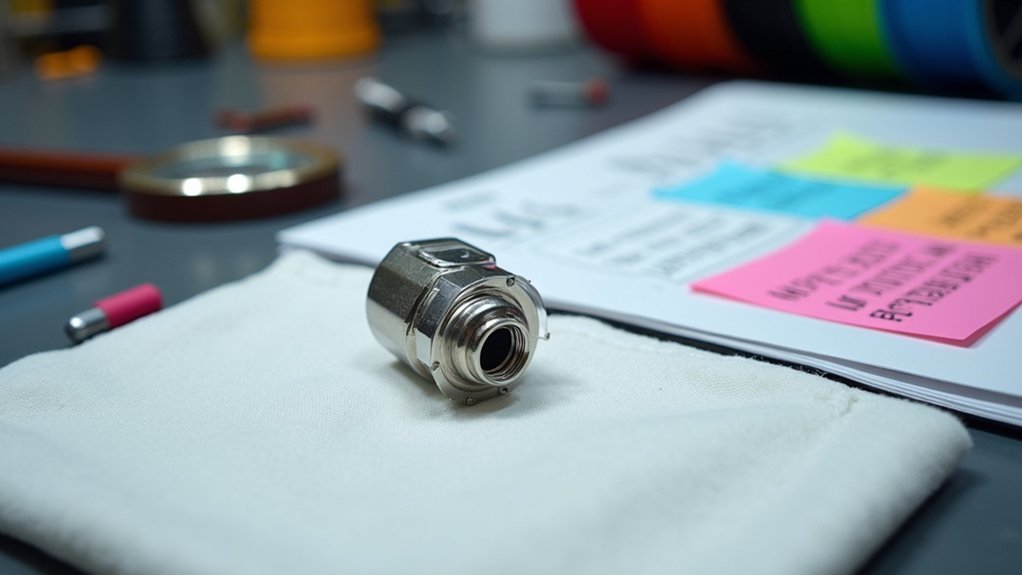
You’ll need to follow three essential hotend maintenance schedules to keep your 3D printer running smoothly. First, inspect and tighten all nozzle, heater cartridge, and temperature sensor connections weekly to prevent loose components and thermal issues. Second, replace your nozzles monthly based on material type—brass every 200 hours, hardened steel every 400 hours. Third, clean thoroughly with cleaning filament whenever you switch materials, extruding 500-800mm at proper temperatures. Master these intervals and you’ll discover advanced techniques for peak performance.
Weekly Component Inspection and Tightening Schedule
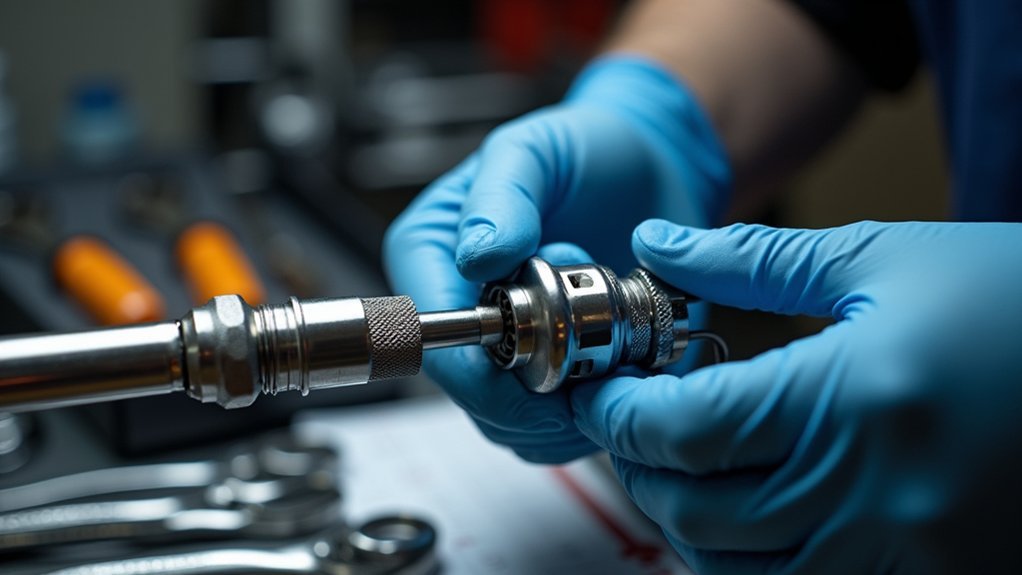
Every week, you should inspect your hotend’s critical components to catch potential issues before they derail your prints.
Start by examining your nozzle, heater cartridge, and temperature sensor connections to verify they’re secure and functioning properly. Check the heating block and heat break screws for looseness, tightening them as needed to maintain ideal thermal contact and prevent material leakage.
Inspect your heat break’s inner throat for wear or damage that could cause filament jams or inconsistent extrusion.
Verify your layer fan’s positioning to avoid cooling problems that might prevent your hotend from reaching target temperatures.
Finally, tighten all fasteners on the hotend assembly and surrounding components to counteract vibrations and maintain stability during operation.
Monthly Nozzle and Temperature Sensor Replacement Guidelines
While weekly inspections help maintain your hotend’s performance, monthly component replacements guarantee long-term reliability and print quality.
Your nozzle replacement schedule depends on material: brass nozzles need replacing every 200 hours, while nickel-coated brass or stainless steel last 1000 hours. Hardened steel nozzles require replacement after 400 hours, and ruby-tipped nozzles when you notice wear or detachment.
Inspect your temperature sensor wire connections regularly to prevent erroneous readings. Complete wire breaks cause fixed maximum temperature readings, so schedule thermistor replacements when readings become inconsistent.
Don’t forget your PTFE tube maintenance—replace heat break inserts every 500 hours for PLA, 300 hours for ABS/PETG, and 80 hours for abrasive filaments. Always ascertain component compatibility during replacements.
Material-Specific Cleaning and Calibration Intervals
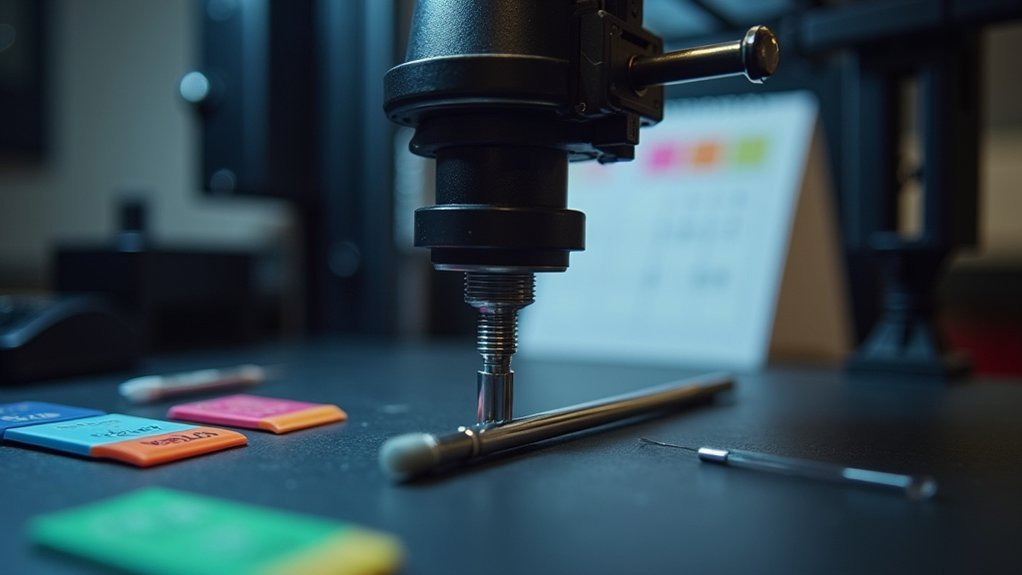
Different printing materials demand tailored cleaning and calibration schedules to maintain your hotend’s peak performance.
When printing PLA, replace PTFE inserts every 500 hours to guarantee ideal print quality. For ABS or PETG, change inserts every 300 hours to prevent filament jams from degradation. Abrasive filaments require the most attention—replace PTFE inserts every 80 hours to maintain smooth flow and prevent clogs.
After switching materials, you’ll need to clean thoroughly using cleaning filament. Extrude 500-800 mm at 10°C above your last material’s printing temperature to remove residues that cause jams.
Don’t forget to check and calibrate your temperature sensor and heater cartridge connections after material changes—this guarantees accurate readings and consistent extrusion for reliable results.
Frequently Asked Questions
How Often Should I Clean My Hotend?
You should clean your hotend every 100-200 hours of printing and after switching filament types. Use cleaning filament every 500-800mm extruded, and perform cold pulls every few weeks.
How Often Should I Do Maintenance on My 3D Printer?
You should perform general 3D printer maintenance weekly, checking belts, rods, and bed leveling. Do thorough inspections monthly, including lubricating moving parts, cleaning fans, and verifying all connections for peak performance.
How Long Does a 3D Printer Hotend Last?
Your hotend’s lifespan depends on components and materials used. Brass nozzles last 200 hours, while stainless steel reaches 1000 hours. With proper maintenance and timely part replacements, you’ll extend overall hotend life greatly.
How to Clean the Inside of a Hotend?
Heat your nozzle to 140°C, extract filament, use a 0.4mm cleaning bit to clear the nozzle, replace damaged Teflon tubing, then push cleaning filament through until it extrudes consistently white.

Leave a Reply