
You’ll achieve superior structural integrity and prevent collapse when printing complex geometries by using edible support materials that provide essential stability for overhangs and intricate features. These materials eliminate waste since they become part of your final product, reducing costs by approximately 20% while enhancing flavors and textures. You’ll streamline post-processing without manual removal steps and expand your printing capabilities to include high-moisture ingredients and delicate structures that would otherwise fail. Discover how this innovation transforms your entire culinary workflow.
Enhanced Structural Integrity for Complex Designs
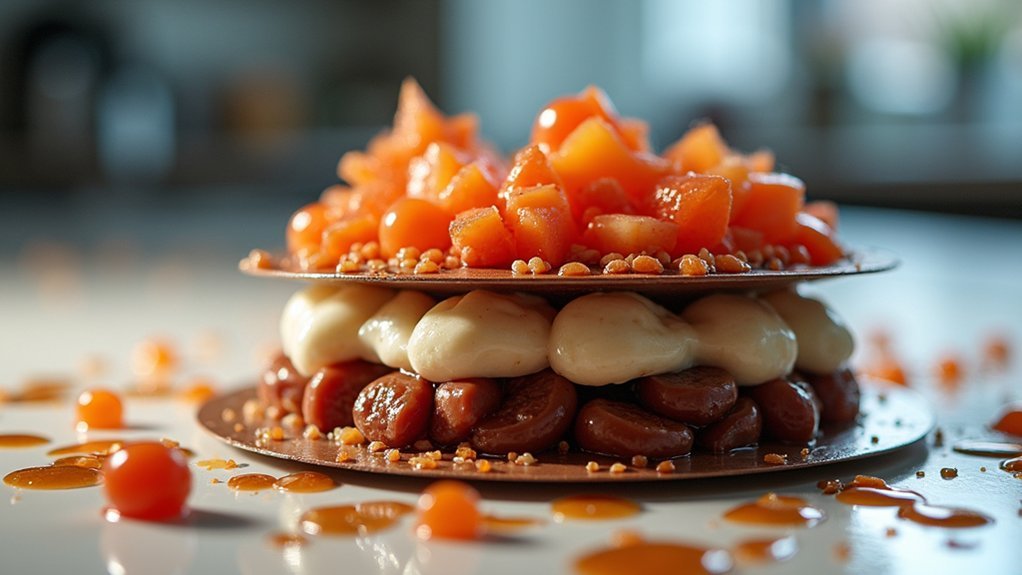
When you’re designing intricate food structures through 3D printing, edible support materials provide the stable framework necessary to maintain complex geometries without compromising your final product’s shape.
These edible materials enhance structural integrity by preventing collapse or deformation during printing, especially when creating overhangs, bridges, or delicate features that would otherwise lack adequate support.
Edible support materials prevent structural collapse during 3D food printing, maintaining stability for overhangs and intricate geometric features.
You’ll find that edible supports maintain geometric fidelity throughout the entire process, allowing you to produce complex shapes with confidence.
The tailored formulations offer ideal mechanical properties like firmness and elasticity, ensuring your designs remain intact.
Improved Printability of Challenging Food Materials
Although many food materials present considerable challenges during 3D printing due to their low viscosity or unstable compositions, edible support materials dramatically improve their printability by providing essential stabilization throughout the process.
You’ll find that these materials enhance your food inks’ flowability and rheological properties, enabling smoother extrusion and better layer adhesion.
When you’re working with challenging compositions like high-moisture content ingredients or delicate textures, edible support materials expand your printing capabilities considerably.
They eliminate the need for non-edible supports, streamlining your post-processing workflow while ensuring your final product remains completely consumable.
This enhancement allows you to successfully print a broader variety of food compositions that would otherwise fail during the printing process.
Waste Reduction Through Complete Consumption
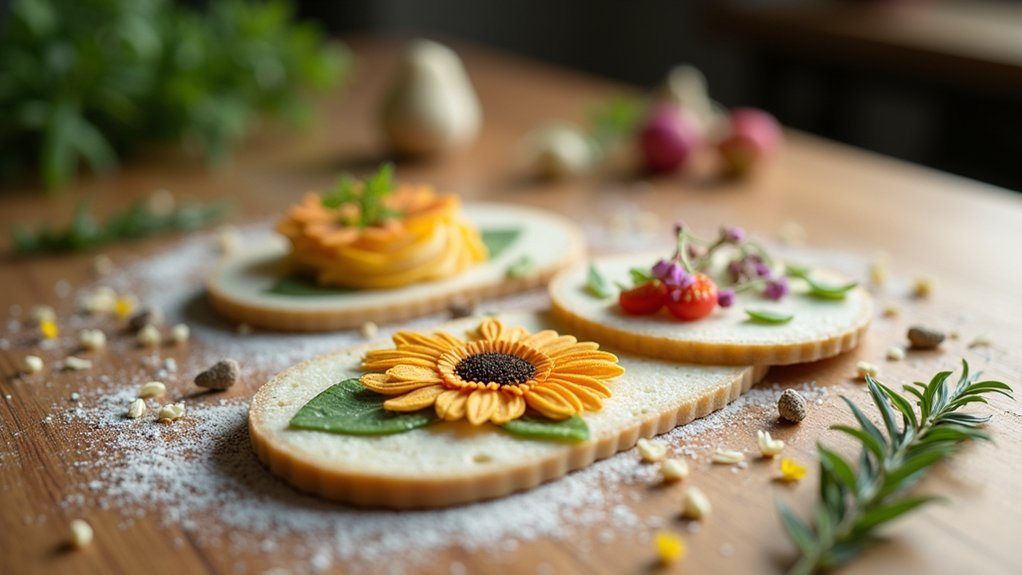
Since edible support materials eliminate the need for non-consumable components, you’re able to achieve complete ingredient utilization that greatly reduces waste in your food printing operations.
Unlike traditional supports that you’d discard after printing, edible supports become part of your final product, ensuring nothing goes to waste.
Edible supports transform into part of your final dish, eliminating waste entirely from the 3D food printing process.
This approach considerably cuts food waste during production while enhancing your sustainability efforts. You’re reducing environmental impact by eliminating disposal needs entirely.
The zero-waste philosophy appeals to environmentally conscious consumers who value responsible food practices.
When you integrate edible supports, you’re creating intricate designs where every component serves a purpose.
This complete consumption model transforms food printing from a potentially wasteful process into an efficient, sustainable production method that maximizes ingredient value.
Flavor and Aesthetic Enhancement Opportunities
You can transform your 3D printed foods into culinary masterpieces by incorporating flavored edible supports that complement or contrast with your main ingredients.
These supports don’t just add taste—they’ll enhance your dish’s visual appeal through vibrant colors, intricate patterns, and decorative elements that rival traditional garnishes.
Edible Flavor Infusion
When you infuse edible support materials with carefully selected flavors, you’re transforming what was once a purely functional component into an integral part of your dish’s taste profile. These flavor extracts don’t just add taste—they create harmonious balances that enhance your main dish while maintaining structural integrity during printing.
| Support Material Type | Flavor Profile | Culinary Impact |
|---|---|---|
| Sweet Gelatin Base | Vanilla, Berry, Citrus | Complements desserts perfectly |
| Savory Protein Matrix | Herb, Umami, Spice | Enhances main courses seamlessly |
| Neutral Starch Blend | Customizable Extract | Adapts to any dish requirement |
You’ll discover that customizable flavoring opens doors to personalized dining experiences, allowing you to cater to individual preferences while creating visually stunning presentations. This innovation elevates your entire culinary experience beyond traditional cooking methods.
Visual Appeal Enhancement
Beyond their structural function, edible support materials serve as canvases for remarkable visual transformations that’ll captivate diners before they take their first bite. You can leverage edible supports to craft intricate structures and layered colors that transform ordinary printed food into striking culinary art.
These materials enable you to create sculptural presentations and thematic designs that command attention while maintaining complete edibility. Natural colorants integrated into your edible supports promote health-conscious choices without sacrificing visual impact.
You’ll find that innovative food presentations become achievable when supports contribute aesthetic value rather than requiring removal. The result is multi-dimensional culinary art that engages sight immediately upon presentation.
This visual appeal enhancement encourages consumer engagement and transforms simple dishes into memorable experiences that showcase your creative capabilities in food printing.
Multi-Sensory Experience Creation
Since edible support materials integrate seamlessly into the final dish, they create unprecedented opportunities to orchestrate complex multi-sensory experiences that engage taste, aroma, and texture simultaneously.
You’ll discover that these materials don’t just hold your printed food together—they actively contribute to the overall flavor profile by introducing complementary tastes that enhance rather than detract from your main ingredients.
You can customize edible supports to create textural contrasts that make each bite more engaging.
Whether you’re adding crispy elements to soft foods or incorporating bursts of flavor, you’re crafting a complete multi-sensory experience.
This approach enables personalized nutrition, letting you tailor both taste preferences and dietary requirements while maintaining visual appeal through colorful, informative design elements.
Cost-Effective Alternative to Traditional Support Systems
You’ll find that edible support materials greatly cut your material waste since there’s no need to discard inedible structures after printing.
Your production costs drop considerably because you’re eliminating the expense of non-food-grade support materials while streamlining your post-processing workflow.
You’re also reducing labor costs by removing the time-consuming step of manually separating and disposing of traditional support structures.
Reduced Material Waste
One of the most compelling advantages of edible support materials lies in their ability to eliminate waste entirely—when your 3D-printed food structure is complete, you can consume every component rather than discarding traditional supports.
This approach transforms what’s typically considered waste into valuable nutrition, maximizing your ingredient efficiency. Unlike conventional supports that require disposal, edible supports become part of the final product, ensuring you’re utilizing 100% of your materials.
This significant reduction in material waste directly impacts sustainability efforts within food manufacturing operations. You’ll find that incorporating edible supports not only minimizes environmental impact but also optimizes resource allocation, creating a more responsible production cycle that aligns with modern sustainability standards while maintaining product quality and structural integrity.
Lower Production Costs
Beyond the environmental benefits of zero waste, edible support materials deliver substantial cost savings that make them an increasingly attractive alternative to traditional support systems.
When you use edible supports, you’ll eliminate expensive non-edible structures that require costly post-processing steps. This streamlined approach reduces both time and labor expenses associated with removing traditional supports.
You’ll achieve efficient use of ingredients since both your primary product and supports are consumable, maximizing ingredient value.
Research shows edible supports can lower production costs for 3D printing food by approximately 20%, making this technology more accessible for commercial kitchens and home use.
Additionally, you’ll enhance culinary experiences by incorporating complementary flavors and textures, adding value without incurring extra material costs.
Post-Processing Advantages and Shape Stability

When you incorporate edible support materials into your food printing process, you’ll reveal significant post-processing advantages that directly impact your final product’s shape stability.
These materials revolutionize how you handle complex designs after printing, ensuring your creations maintain their intended form throughout baking and solidifying stages.
Edible supports ensure your most intricate 3D food designs stay perfectly intact from printer to plate.
Your 3D food printing workflow becomes dramatically more efficient with these key benefits:
- Perfect structural integrity – Your intricate designs won’t collapse or deform during critical processing steps.
- Seamless baking compatibility – You can confidently apply heat treatments without worrying about support removal.
- Enhanced texture harmony – The supports complement your main ingredients for superior mouthfeel.
- Zero waste convenience – You’ll consume everything you print, eliminating disposal concerns.
This integration transforms post-processing from a delicate challenge into a streamlined, reliable operation that consistently delivers professional results.
Applications Across Different Food Categories
As you explore different food categories, edible support materials demonstrate remarkable versatility across diverse culinary applications.
You’ll find these edible materials revolutionizing confectionery through intricate chocolate designs that remain completely consumable. In the plant-based sector, they’re helping recreate authentic meat textures and juiciness that satisfy traditional meat expectations.
When you’re creating complex cake structures or edible sculptures, starches and proteins provide essential structural integrity while maintaining visual appeal.
3D food printing benefits greatly from alginate and gelatin supports, which accommodate various dietary restrictions for health-conscious consumers.
The food industry increasingly values these applications for their sustainability benefits. You’re reducing waste by ensuring every printed component remains edible, utilizing byproducts effectively, and aligning production with environmental goals while delivering customized, visually striking food products.
Frequently Asked Questions
Why Are Supports Needed When Printing?
You need supports when printing because they prevent sagging and collapse of overhanging structures. Without them, you can’t create complex geometries, hollow shapes, or intricate designs that defy gravity during layer-by-layer construction.
What Are the Materials Used in Food Printing?
You’ll use doughs, purees, chocolate, and plant-based proteins as primary materials. These require specific viscosity properties ranging from 30 to 100,000 centipoise. You’ll also need food-grade dyes, binders like gum Arabic, and natural colorants.
What 3D Printing of Food Involves Printing Meals From Edible Ingredients?
You’ll create meals through layer-by-layer construction using edible inks like liquified ingredients, doughs, and purées. You can achieve intricate designs and customize shapes that aren’t possible with traditional cooking methods.
What 3D Printing Materials Are Edible?
You can use edible materials like chocolate, sugar, gelatin, starch, cheese, dough, and pureed fruits or vegetables for 3D food printing. These materials provide structure while remaining completely consumable in your final printed food products.

Leave a Reply