

You’ll find three standout bioprinting materials transforming culinary applications today. Hydrocolloid-based bioinks like alginate and gelatin create exceptional structural integrity while maintaining thixotropic properties that preserve your printed food’s shape. Plant-protein composites using pea, soy, and rice proteins deliver outstanding nutritional density with essential amino acids and enhanced printability. Cell-cultured biomaterials enable authentic meat texture replication through muscle fiber structures. Each material offers unique advantages that’ll revolutionize how you approach food production and customization in modern kitchens.
Hydrocolloid-Based Bioinks for Enhanced Texture and Structural Integrity
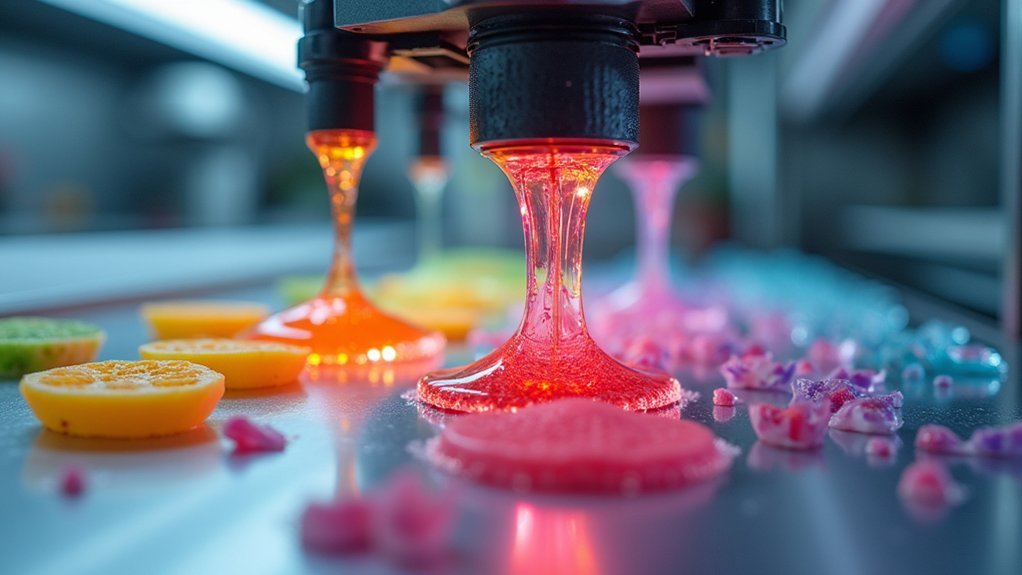
When you’re developing bioinks for culinary 3D printing, hydrocolloids like alginate and gelatin serve as your foundation materials because they deliver the printability and structural integrity vital for creating food with authentic textures.
Alginate’s biocompatibility makes it perfect for encapsulating living cells while replicating meat textures through ion-induced gelation.
You’ll find GelMA particularly valuable since it combines gelatin’s natural properties with photopolymerization capabilities, letting you create customizable scaffolds that mimic real meat’s mouthfeel.
The thixotropic nature of these hydrocolloids guarantees your 3D-printed food maintains shape after extrusion, producing stable, visually appealing structures.
Current research focuses on optimizing bioinks ratios to enhance texture, flavor retention, and nutritional profiles in culinary applications.
Plant-Protein Composite Materials for Nutritional Value and Printability
Plant-protein composite materials represent a breakthrough in culinary bioprinting, offering you exceptional nutritional density while maintaining the printability essential for complex food structures. These composites deliver high nutritional value through essential amino acids and dietary fibers, supporting sustainable food production goals.
| Protein Type | Printability Benefits | Nutritional Advantages |
|---|---|---|
| Pea Protein | Enhanced viscosity | Complete amino profile |
| Soy Protein | Improved gel strength | High fiber content |
| Rice Protein | Better flow properties | Hypoallergenic option |
You’ll find that combining plant proteins with hydrocolloids like alginate optimizes the extrusion process. This integration enhances mechanical properties and sensory characteristics of your printed foods. Research shows that balancing protein-to-hydrocolloid ratios considerably impacts your final product’s appeal, creating textures that satisfy consumer expectations while reducing environmental impact.
Cell-Cultured Biomaterials for Authentic Meat Texture Replication
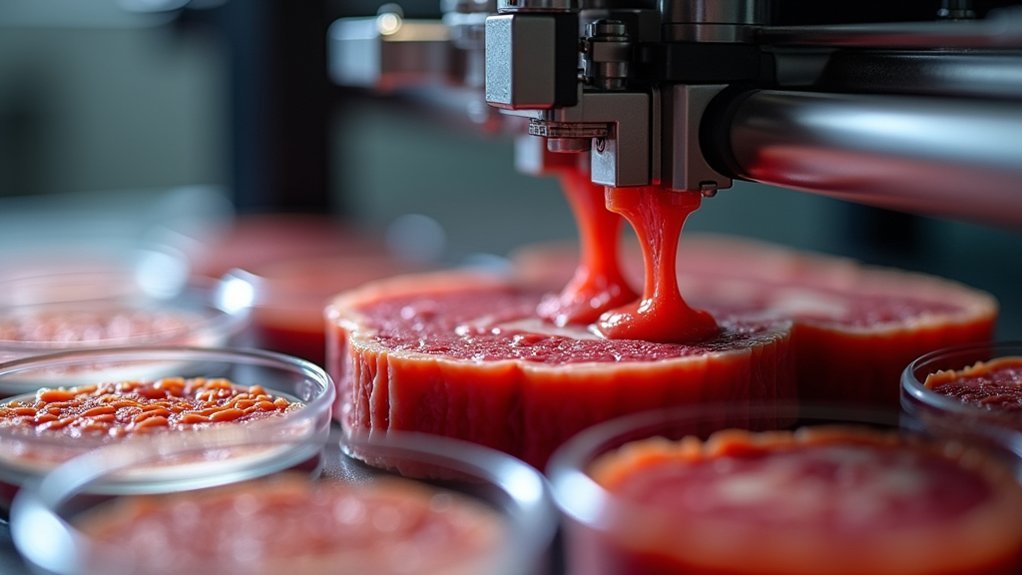
Cell-cultured biomaterials revolutionize meat texture replication by enabling you to create authentic muscle fiber structures through sophisticated bioprinting techniques.
You’ll achieve remarkable results using gelatin methacryloyl (GelMA) scaffolds that support muscle cell growth and organization. When you combine hydrocolloids like alginate with these biomaterials, you’ll replicate meat’s fibrous structure and enhance chewiness effectively.
You can integrate plant-based proteins such as pea and soy protein to maintain nutritional profile while addressing sustainability concerns.
Advanced bioprinting techniques allow you to layer different muscle and fat cell types, creating complex flavor profiles. By optimizing extrusion conditions and formulations in food printing, you’ll greatly improve juiciness and tenderness—critical factors that determine consumer acceptance of your cultured meat products.
Frequently Asked Questions
What Materials Are Used for Bioprinting?
You’ll use hydrocolloids like alginate, gelatin, and carrageenan for viscosity. Synthetic polymers including PLA and PEG offer tunable properties. GelMA supports cell growth, while edible inks from purees enable creative designs.
What Food Grade Materials Are Good for 3D Printing?
You’ll find hydrocolloids like alginate and gelatin work excellently for food 3D printing. They’re joined by thixotropic materials such as ketchup and peanut butter, plus plant-based proteins that create sustainable meat alternatives.
What Is the Most Commonly Used Synthetic Polymers in Bioprinting?
You’ll find that polylactic acid (PLA) is the most commonly used synthetic polymer in bioprinting. It’s favored for its biodegradability and biocompatibility, making it versatile for numerous applications.
What Material Is Used to 3D Print Meat?
You’ll use hydrocolloids like alginate and gelatin for texture, plant-based proteins such as soy for flavor mimicking, and synthetic polymers like PLGA for scaffolding when 3D printing meat products.



Leave a Reply