

You’ll want biocompatible filaments for medical prototypes because they meet ISO 10993 safety standards, ensuring patient safety through rigorous cytotoxicity and sensitization testing. These materials offer superior properties like PEEK’s strength for implants, PLA’s biodegradability for sustainable prototypes, and excellent sterilization resistance up to 134°C. They’re cost-effective compared to traditional manufacturing, enable rapid patient-specific customization, and support multiple medical specialties from surgical guides to orthopedic scaffolds. Understanding their full potential reveals even greater advantages.
Understanding Biocompatible Filament Standards and Regulatory Requirements
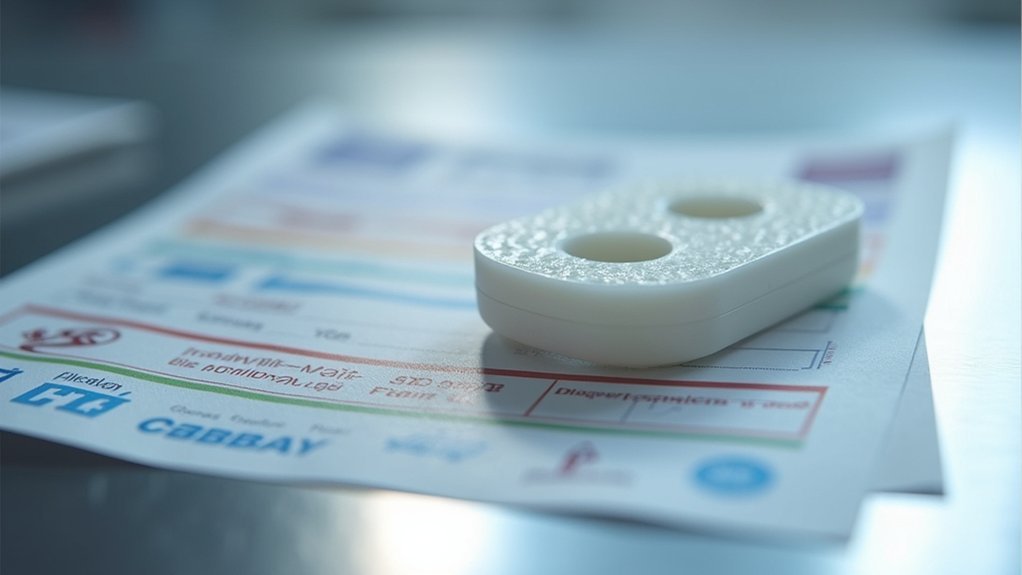
When developing medical prototypes with 3D printing, you must navigate a complex landscape of biocompatible filament standards that directly impact patient safety and regulatory approval.
You’ll need to guarantee your biocompatible materials comply with ISO 10993 standards, which include cytotoxicity testing, sensitization assessments, and device-specific evaluations. Regulatory requirements from the FDA and EMA demand thorough documentation covering biological risk assessments, chemical characterization, and mechanical safety evaluations before market approval.
You can’t overlook post-processing validation either—washing, curing, and sterilization must maintain biocompatibility throughout medical device manufacturing.
Manufacturers must stay current with evolving regulations to avoid legal liabilities and guarantee successful product launches. Proper biocompatibility testing isn’t just regulatory compliance; it’s essential for protecting patients and advancing medical innovation.
Key Medical Applications and Use Cases for Biocompatible Filaments
As biocompatible filaments transform medical manufacturing, you’ll find their applications spanning from pre-surgical planning to permanent implants.
These versatile materials enable precise, patient-specific solutions across multiple medical specialties.
The primary medical applications include:
Biocompatible filaments revolutionize healthcare through patient-specific models, surgical guides, orthopedic scaffolds, and wearable monitoring devices.
- Patient-specific anatomical models – You can create accurate surgical planning tools that provide surgeons with exact replicas of individual patient anatomy for enhanced visualization and practice sessions.
- Custom surgical guides – These filaments produce precise navigation tools that help surgeons follow predetermined paths based on preoperative imaging, greatly improving procedural accuracy.
- Orthopedics applications – You’ll see artificial bone scaffolds that promote natural tissue regeneration while minimizing rejection risks.
- Wearable medical devices – These materials guarantee skin-safe health monitoring solutions that provide both comfort and functionality for continuous patient care.
Material Properties and Types of Medical-Grade FDM Filaments
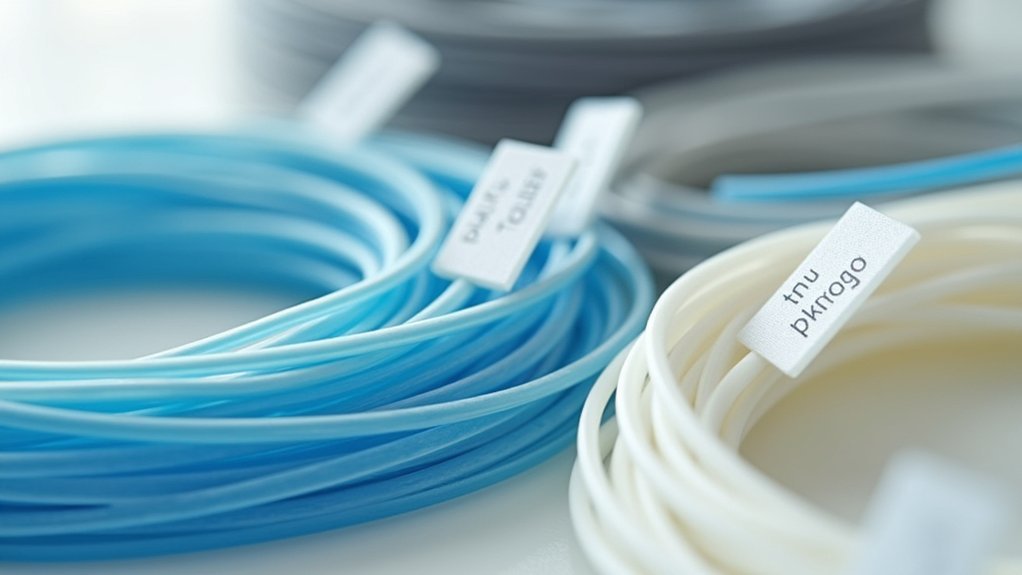
Understanding the fundamental characteristics of medical-grade FDM filaments becomes essential when you’re selecting materials for healthcare applications.
You’ll find PEEK offers exceptional strength and thermal stability, making it perfect for durable implants requiring superior material properties.
PLA provides a biodegradable alternative that’s easily processed and ideal for medical prototypes where environmental sustainability matters.
ABS delivers strong, lightweight solutions with excellent post-processing capabilities, though you’ll need controlled printing environments to prevent warping.
Nylon’s durability and flexibility make it valuable for complex geometries in functional devices.
Advantages of Biocompatible Filaments Over Traditional Manufacturing Materials
When you’re developing medical prototypes, biocompatible filaments offer distinct advantages that traditional manufacturing materials simply can’t match.
You’ll achieve superior patient-specific customization capabilities that allow you to create devices tailored precisely to individual anatomical requirements, something that’s extremely difficult and costly with conventional manufacturing methods.
Most importantly, you’re working with materials that provide enhanced safety profiles through rigorous testing and compliance with medical standards, ensuring your prototypes won’t cause adverse reactions during patient contact.
Superior Patient-Specific Customization
While traditional manufacturing methods struggle to accommodate individual anatomical variations, biocompatible filaments excel at creating patient-specific medical devices that deliver perfect fits and enhanced comfort.
You’ll find that these advanced materials enable unprecedented customization capabilities that weren’t possible before.
Here’s how biocompatible filaments revolutionize patient-specific customization:
- Complex geometries – You can create intricate surgical guides and custom implants with designs impossible through conventional machining.
- Rapid prototyping – You’ll considerably reduce development time for iterating on custom medical devices.
- Safety compliance – Your devices meet ISO 10993 standards, ensuring reduced adverse reaction risks.
- Superior mechanical properties – Materials like Polyamide 12 maintain functionality through sterilization processes.
This precision manufacturing approach transforms how you’ll develop personalized medical solutions for individual patient requirements.
Enhanced Safety Profiles
Since patient safety remains the paramount concern in medical device development, biocompatible filaments deliver considerably enhanced safety profiles that traditional manufacturing materials simply can’t match. You’re getting rigorously tested materials that comply with ISO 10993 standards, ensuring cytotoxicity and irritation testing that conventional materials often lack.
| Biocompatible Materials | Traditional Materials |
|---|---|
| ISO 10993 certified | No biocompatibility standards |
| Sterilization-resistant | May degrade during sterilization |
| Designed for tissue contact | General manufacturing focus |
| Tailored mechanical properties | Standard industrial specs |
When you choose biocompatible filaments, you’re creating personalized medical devices with mechanical properties specifically engineered for healthcare applications. These medical materials maintain their integrity through sterilization processes, giving you confidence that your prototypes won’t compromise patient wellbeing during clinical use.
Performance Testing and Reliability Factors for Medical Prototypes
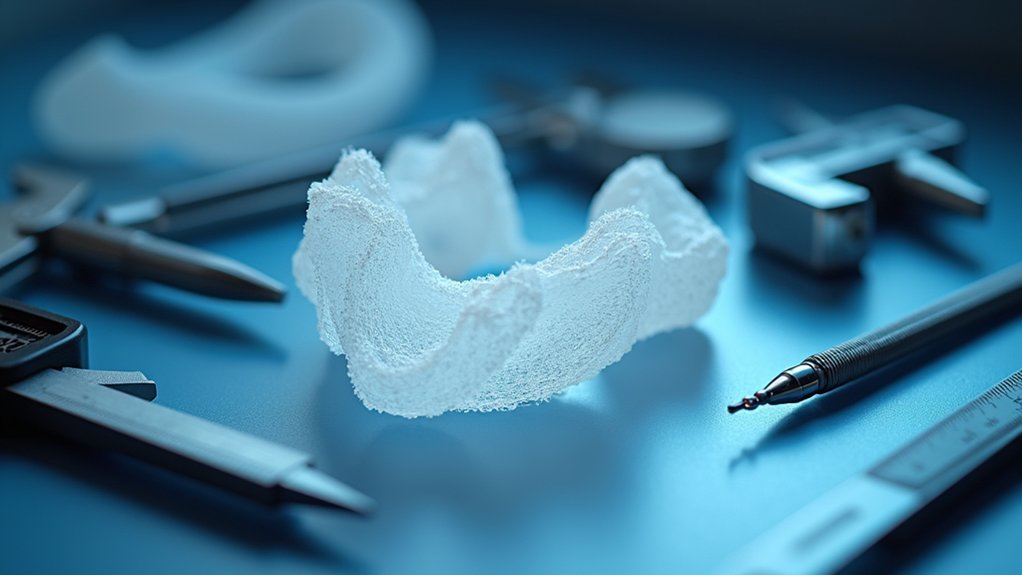
Although biocompatible filaments show promise for medical applications, you’ll need thorough performance testing to confirm they meet the rigorous demands of healthcare environments.
These reliability factors determine whether your printed prototypes can safely function in real medical settings.
Your performance testing protocol should include:
- Cytotoxicity assessments using human cell lines to verify materials won’t harm living tissues
- Mechanical testing to evaluate strength and durability under medical application stresses
- Sterilization resistance testing to confirm materials maintain properties after repeated autoclaving cycles
- Long-term durability evaluations when exposed to bodily fluids and disinfectants
Compliance with ISO 10993 standards confirms your biocompatible filaments meet essential safety requirements.
This rigorous testing framework validates that your medical prototypes will perform reliably throughout their intended lifespan.
Post-Processing and Sterilization Considerations for Medical Devices
You’ll need to carefully select sterilization methods that won’t compromise your biocompatible filament’s structural integrity or safety properties.
Each sterilization technique—whether gamma radiation, ethylene oxide, or steam—requires validation testing to confirm it doesn’t degrade your device’s mechanical performance or biocompatibility.
You must conduct post-sterilization testing following ISO 10993 standards to verify your medical prototype maintains its intended functionality and remains safe for patient contact.
Sterilization Method Compatibility
When you’re developing medical prototypes with biocompatible filaments, verifying compatibility with sterilization methods becomes just as critical as the initial material selection.
Biocompatible materials like Polyamide 12 and Epoxy 82 withstand sterilization processes up to 134°C without compromising their integrity.
Your sterilization compatibility testing must align with ISO 10993 standards to validate safety.
Consider these essential factors:
- Temperature Resistance – Verify materials maintain mechanical properties during autoclaving, gamma radiation, or ethylene oxide treatment
- Post-Processing Methods – Implement thorough washing and curing to eliminate residual monomers
- Byproduct Assessment – Confirm no harmful substances release during sterilization
- Long-Term Durability Assessments – Test performance retention after repeated sterilization cycles
This extensive validation approach guarantees your prototypes meet medical device requirements while maintaining biocompatibility throughout their operational lifecycle.
Post-Print Biocompatibility Validation
Post-print biocompatibility validation extends far beyond initial material certification, requiring thorough testing protocols that verify your 3D printed medical devices won’t trigger adverse biological responses.
You’ll need to follow ISO 10993-5 guidelines for cytotoxicity testing, ensuring your biocompatible materials maintain safety standards after printing.
Chemical characterization becomes essential for identifying residual monomers and degradation products that could compromise medical applications.
Your sterilization compatibility testing must confirm that gamma radiation or ethylene oxide won’t damage material integrity.
Mechanical testing verifies that sterilization processes don’t degrade performance properties vital for device functionality.
Long-term durability assessments validate that your materials withstand physiological conditions and repeated sterilization cycles without significant deterioration, ensuring sustained biocompatibility throughout the device’s intended lifespan.
Cost-Effectiveness and Manufacturing Efficiency in Medical Prototyping
While traditional manufacturing methods often generate significant material waste and require lengthy production cycles, biocompatible filaments transform medical prototyping by delivering both cost savings and accelerated timelines.
Biocompatible filaments revolutionize medical prototyping by cutting costs and accelerating production timelines compared to traditional manufacturing approaches.
You’ll achieve manufacturing efficiency through rapid prototyping that creates medical devices in days rather than weeks, while minimizing material waste through tailored designs.
Here’s how biocompatible filaments maximize cost-effectiveness:
- Bulk sourcing reduces per-unit costs while maintaining regulatory standards compliance
- Sterilization and reuse capabilities allow multiple testing cycles without replacement
- Patient-specific customization eliminates design revisions and follow-up procedures
- Minimal waste generation through precise material usage compared to traditional methods
You’ll see improved patient outcomes through personalized prototypes, translating into healthcare cost reductions.
This efficiency transformation makes biocompatible filaments essential for modern medical device development.
Frequently Asked Questions
Why Is It Important to Use Biocompatible Materials?
You’ll prevent harmful immune responses and toxicity when biocompatible materials contact living tissue. They’re essential for patient safety, regulatory compliance, and ensuring your medical devices won’t cause inflammation, rejection, or long-term health complications.
What Is the Best Filament for Prototypes?
You’ll find PEEK offers the best performance for demanding medical prototypes due to its exceptional strength and biocompatibility. However, you can use medical-grade PLA for cost-effective testing.
Why Is Biocompatibility a Critical Factor When Selecting Biomaterials for Medical Devices?
You’ll prevent harmful immune responses and toxicity when you select biocompatible materials. They guarantee patient safety, reduce inflammation risks, and help you meet regulatory requirements for FDA approval of medical devices.
Can PLA Be Used for Medical Devices?
You can use PLA for short-term medical prototypes like surgical models, but it’s not suitable for long-term implants since it degrades biologically and can’t withstand sterilization temperatures.



Leave a Reply