You’re looking for nylon that won’t buckle under stress, stays dimensionally stable, and handles moisture without swelling. In 2026 the market offers six standout filaments—glass‑filled, carbon‑reinforced, high‑temperature blends, and even flexible PEBA options—each promising a different balance of stiffness, strength‑to‑weight, and wear resistance. The key is matching the material’s chemistry to your part’s thermal load and post‑processing workflow, and the trade‑offs become clear once you compare their specs side by side.
| Siraya Tech Fibreheart PPA 3D Filament (1kg) |  | Professional Grade | Material Type: Polyphthalamide (PPA) – PAHT | Diameter: 1.75 mm | Spool Weight: 1 kg | CHECK ON AMAZON | Read Our Analysis |
| SUNLU 3D Filament 1.75mm 1KG Grey 25% Glass Fiber Nylon |  | High-Temp Specialist | Material Type: PA6 Nylon with 25% Glass Fiber | Diameter: 1.75 mm | Spool Weight: 1 kg | CHECK ON AMAZON | Read Our Analysis |
| OVERTURE Nylon 3D Printer Filament 1kg (Black) |  | Versatile Performer | Material Type: Nylon 6 / Nylon 6.6 copolymer | Diameter: 1.75 mm | Spool Weight: 1 kg | CHECK ON AMAZON | Read Our Analysis |
| Siraya Tech PAHT-CF Carbon Fiber Nylon Filament (2.5kg) | 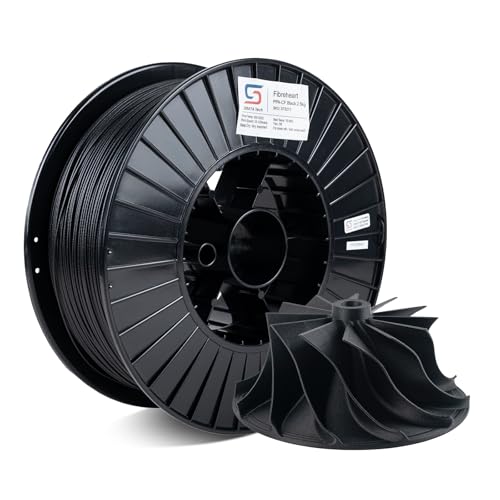 | Bulk Powerhouse | Material Type: Polyphthalamide (PPA) with 15% Carbon Fiber | Diameter: 1.75 mm | Spool Weight: 2.5 kg | CHECK ON AMAZON | Read Our Analysis |
| Polymaker Fiberon PA6-GF Nylon Filament 1.75mm Grey 0.5kg | 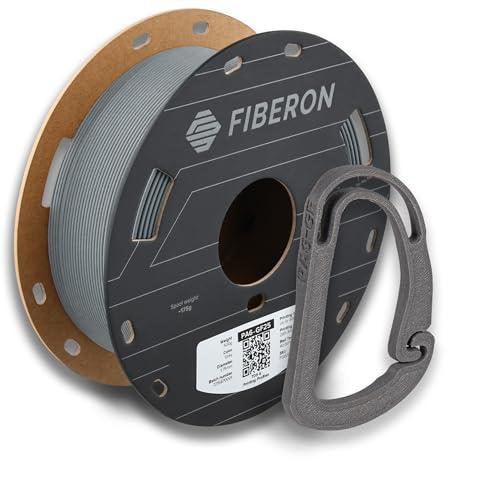 | Cost-Effective Composite | Material Type: PA6 Nylon with 25% Glass Fiber | Diameter: 1.75 mm | Spool Weight: 0.5 kg | CHECK ON AMAZON | Read Our Analysis |
| SainSmart PEBA Flexible Filament 1KG High Rebound Blue/Pink |  | Flexible Engineer | Material Type: PEBA (flexible TPU‑type) | Diameter: 1.75 mm | Spool Weight: 1 kg | CHECK ON AMAZON | Read Our Analysis |
More Details on Our Top Picks
Siraya Tech Fibreheart PPA 3D Filament (1kg)
Looking for a nylon filament that can handle high‑temperature, high‑stress parts without swelling up from moisture? Siraya Tech’s Fibreheart PPA delivers exactly that. This black, 1 kg spool of 1.75 mm PPA (PAHT) boasts a 1.2 g/cm³ density and only 2.5 % water uptake, far less than standard nylons. When dry, its tensile strength hits 70 MPa and flexural strength 114 MPa, while its low friction coefficient makes it self‑lubricating and wear‑resistant—ideal for gears, bearings, and aerospace components. Store and dry it properly, then print parts that resist heat, chemicals, and mechanical strain with confidence.
- Material Type:Polyphthalamide (PPA) – PAHT
- Diameter:1.75 mm
- Spool Weight:1 kg
- Color:Black
- High‑Temperature Resistance:Up to ~195 °C (PPA)
- Reinforcement Type:None (pure PPA)
- Additional Feature:Self‑lubricating surface
- Additional Feature:Ultra‑low moisture absorption
- Additional Feature:Wear‑resistant for gears
SUNLU 3D Filament 1.75mm 1KG Grey 25% Glass Fiber Nylon
If you need a filament that combines high‑temperature resilience with industrial‑grade strength, the SUNLU 1.75 mm 1 kg Grey filament—25 % glass‑fiber reinforced PA‑6—fits the bill. It offers 401 °F (205 °C) heat resistance, strong impact tolerance, and chemical resistance to acids and fuels. Dry it for four hours at 110 °C before printing; then use a 270–290 °C nozzle and a 50–70 °C bed, printing at 50–120 mm/s. Expect low warpage, smooth surfaces, and accurate dimensions for automotive, aerospace, and drone parts. Use a hardened‑steel nozzle to avoid copper wear, and keep the spool dry to prevent breakage.
- Material Type:PA6 Nylon with 25% Glass Fiber
- Diameter:1.75 mm
- Spool Weight:1 kg
- Color:Grey
- High‑Temperature Resistance:Up to 205 °C
- Reinforcement Type:25% Glass Fiber
- Additional Feature:Copper nozzle wear risk
- Additional Feature:Requires pre‑drying (110 °C)
- Additional Feature:Low warpage, high dimensional accuracy
OVERTURE Nylon 3D Printer Filament 1kg (Black)
Engineers and makers who demand reliable, high‑strength prints will appreciate OVERTURE Nylon’s 1 kg black spool, a copolymer of Nylon 6 and Nylon 6.6 that delivers strong, tough parts with heat resistance up to 180 °C. You’ll find a ±0.02 mm tolerance and a 1.75 mm diameter that stays consistent thanks to CCD self‑adaptive control. The filament feeds smoothly from the larger inner spool, and the grid‑pattern surface lets you resize quickly. Use PVA glue for adhesion, store in a transparent bag to avoid moisture, and monitor remaining length via the viewing hole and gauge. OVERTURE supports most FDM printers and offers a one‑year shelf life when unopened.
- Material Type:Nylon 6 / Nylon 6.6 copolymer
- Diameter:1.75 mm
- Spool Weight:1 kg
- Color:Black
- High‑Temperature Resistance:Up to 180 °C
- Reinforcement Type:None (pure nylon copolymer)
- Additional Feature:Odorless printing experience
- Additional Feature:Grid‑pattern surface for resizing
- Additional Feature:Advanced CCD diameter control
Siraya Tech PAHT-CF Carbon Fiber Nylon Filament (2.5kg)
Needaya Tech’s Fibreheart PPA‑CF filament stands out for anyone needing industrial‑grade strength and heat resistance in large‑scale prints. With 15 % chopped carbon fiber, its Smart Fiber Reinforced Technology boosts stiffness, impact resistance, and dimensional stability, while ultra‑low moisture absorption keeps warping at bay. You’ll get consistent, accurate parts that hold up to 195 °C, making it perfect for gears, bearings, and moving mechanisms in automotive or industrial machinery. The 2.5 kg bulk spool minimizes changes and downtime, delivering reliable, high‑performance prints for prototypes, tools, and functional components alike.
- Material Type:Polyphthalamide (PPA) with 15% Carbon Fiber
- Diameter:1.75 mm
- Spool Weight:2.5 kg
- Color:Black
- High‑Temperature Resistance:Up to 195 °C
- Reinforcement Type:15% Carbon Fiber
- Additional Feature:15% chopped carbon fiber
- Additional Feature:Bulk 2.5 kg spool for farms
- Additional Feature:Ultra‑low moisture uptake
Polymaker Fiberon PA6-GF Nylon Filament 1.75mm Grey 0.5kg
Looking for a cost‑effective, high‑speed filament that still delivers the stiffness and heat resistance of glass‑fiber‑reinforced Nylon 6? Polymaker’s Fiberon PA6‑GF 1.75 mm Grey hits that sweet spot. It’s a glass‑fiber‑reinforced Nylon 6 blend that stays stiff, strong, and heat‑resistant while maintaining layer adhesion. You’ll appreciate its tangle‑free, vacuum‑sealed spool with desiccant, plus a reinforced, recycled cardboard edge that guards against dust and delamination. The filament prints smoothly on most entry‑level or mainstream printers, enabling robust parts like bike pedals, drone frames, jigs, and prosthetic handles without sacrificing speed or cost.
- Material Type:PA6 Nylon with 25% Glass Fiber
- Diameter:1.75 mm
- Spool Weight:0.5 kg
- Color:Grey
- High‑Temperature Resistance:High‑temp nylon (≈180 °C)
- Reinforcement Type:25% Glass Fiber
- Additional Feature:Vacuum‑sealed with desiccant
- Additional Feature:Tangle‑free wound filament
- Additional Feature:Fully recycled cardboard packaging
SainSmart PEBA Flexible Filament 1KG High Rebound Blue/Pink
If you demand a filament that combines nylon‑level toughness with the bounce of a premium TPU, the SainSmart PEBA High Rebound 90A Flexible Filament is the answer. You’ll get 78 % high rebound, delivering up to 78 % energy return—over 30 % more than standard TPU. Its density is 20 % lower, so prints stay ultra‑lightweight without losing durability, perfect for drones, wearables, and robotics joints. You can print twice as fast thanks to higher flow, and the 1.75 mm strand works with most FDM printers, especially dual‑gear extruders. Adjust hardness on the fly, then use the bright blue or pink for sports gear, medical prototypes, or creative cushioning parts.
- Material Type:PEBA (flexible TPU‑type)
- Diameter:1.75 mm
- Spool Weight:1 kg
- Color:Blue / Pink (dual)
- High‑Temperature Resistance:Not specified (flexible filament)
- Reinforcement Type:None (PEBA matrix)
- Additional Feature:78% high rebound energy
- Additional Feature:20% lighter than TPU
- Additional Feature:2× faster printing speed
Factors to Consider When Choosing Nylon Filaments for High-Strength Engineering Applications
When you pick a nylon filament, start by checking its moisture absorption rate because excess water can weaken the part. Next, compare mechanical strength metrics, thermal resistance limits, and chemical compatibility to ensure the material will hold up under load, heat, and exposure. Finally, evaluate printability and warping tendencies to avoid costly failures during printing.
Moisture Absorption Rate
Why does moisture matter for high‑strength nylon prints? Because nylon is hygroscopic, and absorbed water acts as a plasticizer, weakening interlayer bonds and causing warping. PA6‑based filaments typically soak up more moisture than polyphthalamide blends such as PAHT, so you’ll see greater dimensional drift and reduced tensile strength with the former. Look for filaments labeled “low moisture absorption” or boasting one‑fifth the uptake of PA6; they stay stable even in humid workshops. Dry your filament for 4–6 hours at the recommended temperature before each batch, and store it in airtight containers with desiccants. Consistently low moisture preserves the tensile and flexural performance you need for demanding engineering parts.
Mechanical Strength Metrics
Assess the tensile, flexural, and impact metrics before you pick a nylon filament, because these numbers directly dictate how your part will hold up under load, bending, and sudden forces. Tensile strength tells you how much pulling force the printed part can endure; carbon‑fiber reinforced grades like PA6‑GF often exceed 70 MPa when dry, outpacing standard nylons. Flexural strength reveals resistance to bending; reinforced filaments push MPa values well beyond unmodified grades, giving you stiffer, less warping components. Impact resistance matters for sudden shocks—materials engineered for high‑temperature and chemical resistance retain strength under those conditions. Look for strong interlayer adhesion, too, because weak bonds can nullify the high tensile and flexural numbers you’re chasing. Choose filaments that balance all three metrics for reliable, high‑stress engineering parts.
Thermal Resistance Limits
High‑strength nylon parts must also survive the heat they’ll encounter, so thermal resistance is as important as tensile or flexural strength. When you pick a filament, check its service‑temperature rating—most standard nylons hold up to 180–205 °C, while PAHT‑based grades (PPA) push beyond that, preserving stiffness and strength under continuous load. Carbon‑fiber‑reinforced nylons (PA6‑GF, PA6‑GF) add heat resistance and dimensional stability, making them ideal for tooling and high‑temp components. If you need flexibility, PEBA/nylon blends stay resilient through thermal cycling without cracking. Low moisture‑absorption formulations curb swelling and degradation during repeated heating, ensuring reliable performance in demanding environments. Choose the grade that matches your temperature envelope and mechanical demands.
Chemical Compatibility Details
Ever wonder which nylon filament will hold up when it meets aggressive chemicals? You should look at PA6, PA6‑GF, and PAHT‑based blends, because they resist acids, fuels, and industrial cleaners better than standard nylons. Reinforcing nylon with carbon or glass fibers—like PA6‑GF or PAHT‑CF—keeps that resistance while boosting strength, though higher fiber content can change how moisture interacts with chemicals. Polyphthalamide backbones (PPA/PAHT) give the best chemical durability and heat tolerance, so they stay stable in hot, corrosive environments. Remember to dry your filament thoroughly before printing; excess moisture erodes resistance and warps dimensions. Some CF/GF formulations also add self‑lubricating, wear‑resistant traits that can affect compatibility with lubricants and cleaning agents.
Printability and Warping Tendencies
Chemical resistance is only half the battle; once you’ve chosen a durable blend, you must ensure it prints without warping. High‑glass‑fiber nylons like PA6‑GF stay dimensionally stable because the fibers stiffen the melt, reducing shrinkage. Copolymer blends such as PA11/PA12 handle moisture better, so they warp less than pure homopolymers. Choose filaments marketed as low‑moisture‑absorption or with moisture‑resistant additives; they keep dimensional shift in check. Dry your filament for at least four hours at 110 °C before each run—moisture is the biggest warp driver. Raise the heated bed to 70‑80 °C and print inside an enclosure; consistent heat improves interlayer adhesion and curbs warping. Follow these steps, and you’ll get strong, flat nylon parts.
Fiber Reinforcement Options
What matters most when you pick a nylon filament for engineering strength is the type and amount of reinforcement it carries. Glass‑fiber blends (GA/PA6‑GF, PA6‑GF) give you rigidity and dimensional stability while keeping impact resistance, making them ideal for parts that must stay true under load. Carbon‑fiber variants (PPA‑CF, PA6‑CF) push stiffness and strength‑to‑weight further, adding thermal stability and wear resistance for high‑temperature or high‑stress uses. Pay attention to fiber content—typically 15–25 % by weight—and fiber length, because they affect interlayer adhesion, printability, and nozzle wear. Smart fiber systems can also lower moisture absorption and warpage, delivering consistent accuracy when you need reliable performance in demanding engineering applications.
Post‑Processing Compatibility
Why does post‑processing matter for high‑strength nylon? Because the final mechanical performance hinges on how you treat the part after printing. You should dry the filament—typically 4 hours at 110 °C—before extrusion to avoid moisture‑induced porosity and weak inter‑layer bonds. After printing, heat‑treat or anneal the piece to relieve residual stresses and boost tensile strength. If you pick glass‑ or carbon‑fiber‑reinforced nylon, expect better dimensional stability, but you’ll need wear‑resistant nozzles and tighter temperature control during annealing. Moisture‑sensitive nylons, especially PPA‑based grades like PAHT and CF variants, demand sealed storage and desiccation between builds to preserve low absorption. Proper post‑processing ensures the part meets engineering tolerances and retains its high‑strength characteristics.
Frequently Asked Questions
How Does Moisture Absorption Affect Nylon Filament Performance?
Moisture makes nylon swell, weakening its tensile strength and causing layer delamination. It also lowers the melting point, leading to nozzle clogs and surface imperfections. Drying the filament restores dimensional stability and print quality.
What Printer Nozzle Size Is Optimal for Carbon‑Fiber Nylon?
You should use a 0.4 mm nozzle for carbon‑fiber nylon; it balances extrusion stability and detail, minimizing clogging while maintaining enough flow for the reinforced fibers.
Can Nylon Filaments Be Used on Non‑Heated Beds?
You can’t reliably print nylon on a non‑heated bed; it warps and adheres poorly. Use a heated surface, preferably 60‑70 °C, and a suitable build‑plate material to avoid failure.
What Post‑Processing Methods Improve Nylon Part Strength?
You boost nylon strength by annealing at 80‑90 °C for 2‑4 hours, then slowly cooling. Post‑print soaking in hot water, chemical vapor smoothing, and applying a thin epoxy coating also add rigidity.
How Does Print Orientation Impact Tensile Strength of Nylon Prints?
You’ll notice tensile strength drops when layers run perpendicular to the load; aligning prints parallel to stress maximizes bond continuity, so orient parts so fibers follow the primary force direction.

Leave a Reply