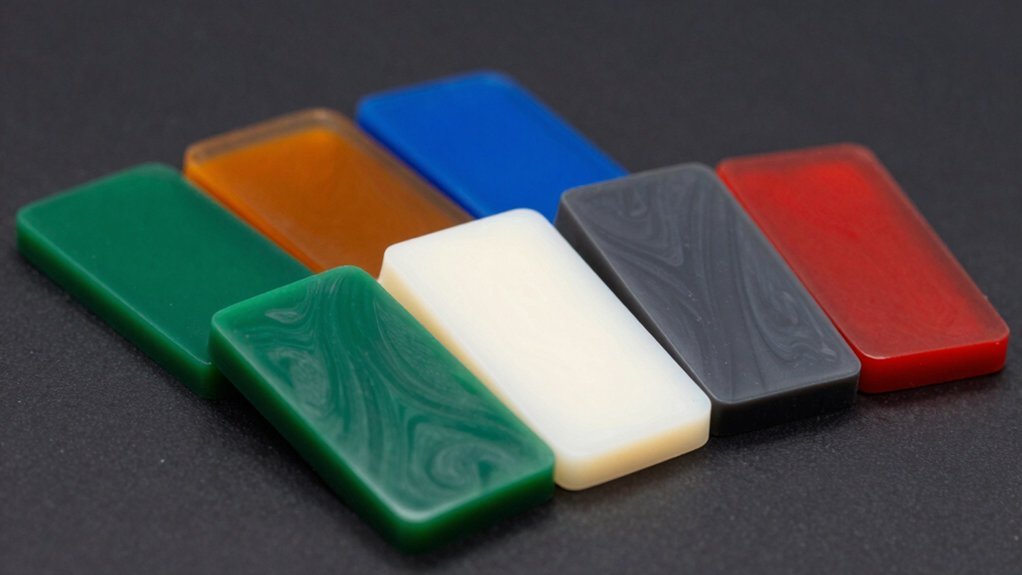
You’ve probably already noticed how traditional rigid resins just can’t handle the stretch and bounce you need for rubber‑like prototypes. In 2026, a handful of flexible blends—like Inslogic’s low‑viscosity 70A or Siraya Tech’s Tenacious—are changing that game, offering low shrinkage, strong tear resistance, and surface finishes that actually look professional. The differences between them can be subtle but critical, and picking the right one will depend on the exact flexibility, durability, and post‑cure requirements of your project. Let’s explore how each formula stacks up and what you should weigh before committing.
| Inslogic Flexible 70A 3D Printer Resin – 1KG Black | 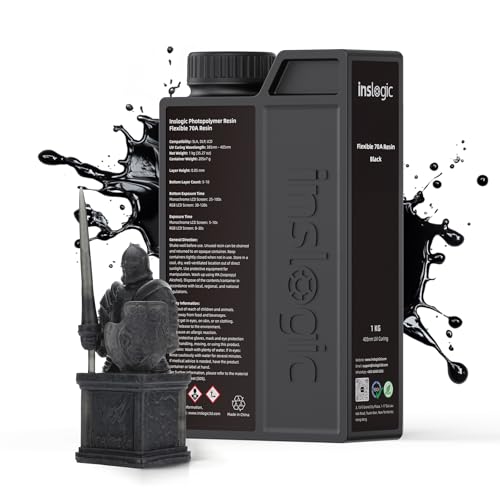 | Best Overall | Shore Hardness: 70 A | Color: Black | UV Curing Wavelength: 405 nm | CHECK ON AMAZON | Read Our Analysis |
| YOUSU Flexible Tough 3D Printing Resin Black 1000g |  | High Elasticity | Shore Hardness: 80 A | Color: Black | UV Curing Wavelength: 405 nm | CHECK ON AMAZON | Read Our Analysis |
| Flex-It 70 Flexible Urethane Casting Resin 32 Oz | 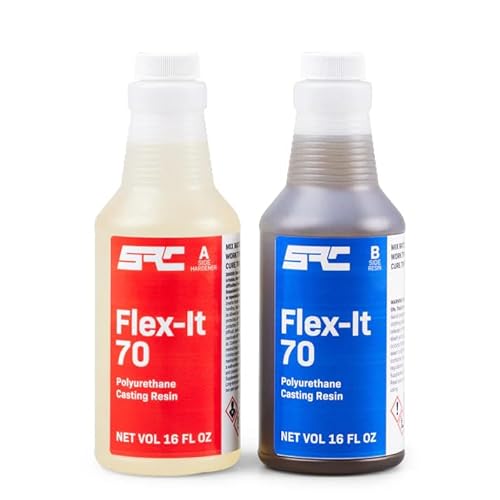 | Industrial Strength | Shore Hardness: 70 A (urethane) | Color: Clear/transparent | UV Curing Wavelength: Not UV (urethane) | CHECK ON AMAZON | Read Our Analysis |
| SUNLU Flexible 3D Printer Resin 66A 1000g Gray |  | Balanced Flexibility | Shore Hardness: 66 A | Color: Gray | UV Curing Wavelength: 365‑405 nm | CHECK ON AMAZON | Read Our Analysis |
| Siraya Tech Tenacious Flex 405nm UV Resin (500g) | 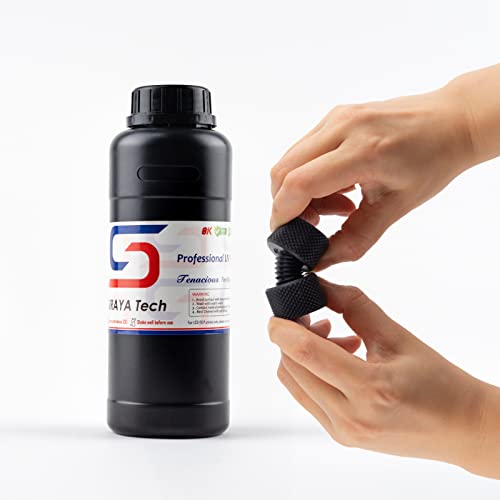 | Impact‑Resistant | Shore Hardness: 80 A (flex) | Color: Black | UV Curing Wavelength: 405 nm | CHECK ON AMAZON | Read Our Analysis |
| Flex-It 40 Flexible Urethane Casting Resin (1 Gallon) |  | Large‑Scale Casting | Shore Hardness: 40 A (urethane) | Color: Transparent (assumed) | UV Curing Wavelength: Not UV (urethane) | CHECK ON AMAZON | Read Our Analysis |
More Details on Our Top Picks
Inslogic Flexible 70A 3D Printer Resin – 1KG Black
Looking for a resin that truly mimics the softness and stretch of rubber while staying durable enough for wearables? Inslogic Flexible 70A delivers Shore‑70A elasticity in a black, 405 nm UV photopolymer that feels rubber‑like yet resists tearing. You’ll notice its low viscosity and low odor, which make printing smoother and your workspace fresher. The material flexes under repeated bending, twisting, and compression without cracking, and it finishes non‑sticky, dust‑resistant, and ready to use straight from the printer. Packaged leak‑proof with an airtight bag, the 1 kg bottle arrives intact, and the company offers technical support whenever you need a hand.
- Shore Hardness:70 A
- Color:Black
- UV Curing Wavelength:405 nm
- Packaging Size:1 kg
- Flexibility Characteristics:Rubber‑like elasticity, tear‑resistant
- Printer Compatibility:LCD/DLP/SLA (405 nm)
- Additional Feature:Low odor formulation
- Additional Feature:Leak‑proof air‑bag packaging
- Additional Feature:Smooth, non‑sticky finish
YOUSU Flexible Tough 3D Printing Resin Black 1000g
Need you need a resin that bends like rubber yet holds fine details, YOUSU Flexible Tough 3D Printing Resin, Black 1000 g is the go‑to choice. This 405 nm UV‑curing photopolymer offers Shore 80A hardness, giving you a rubber‑like feel while retaining high precision. You’ll notice excellent surface finish, low yellowing, and strong tear resistance, perfect for phone cases, wallets, medical insoles, or toys. It works with most LCD/DLP printers, and the 1 kg jar reduces frequent refills. Shake well before use, wear gloves and a mask, and enjoy a recyclable, low‑water‑absorption material that bends repeatedly without breaking.
- Shore Hardness:80 A
- Color:Black
- UV Curing Wavelength:405 nm
- Packaging Size:1 kg
- Flexibility Characteristics:High elongation, repeatable bending
- Printer Compatibility:LCD/DLP (405 nm)
- Additional Feature:Low yellowing tendency
- Additional Feature:Recyclable after use
- Additional Feature:Shake‑well before printing
Flex-It 70 Flexible Urethane Casting Resin 32 Oz
If you need a resin that stays firm yet bends like rubber, SPRESIN Flex‑It 70 is the standout choice for high‑tear‑strength seals, gaskets, and functional prototypes. This 32‑oz, two‑part urethane kit delivers a clear, tough‑yet‑flexible finish with excellent elongation and tensile strength. You’ll appreciate its low viscosity (≈500 cP) for clean pours into wood, metal, concrete, or ceramic molds. It resists water and chemicals, making it ideal for short‑run production, industrial seals, and shock‑absorbing parts. Mix it once, let it cure consistently, and you’ll get a durable, rubber‑like component that retains shape under mechanical stress.
- Shore Hardness:70 A (urethane)
- Color:Clear/transparent
- UV Curing Wavelength:Not UV (urethane)
- Packaging Size:32 oz (≈0.94 kg)
- Flexibility Characteristics:Tough yet flexible, high tear strength
- Printer Compatibility:Casting (not printer)
- Additional Feature:Two‑part urethane system
- Additional Feature:500 cps viscosity
- Additional Feature:Water‑resistant cured parts
SUNLU Flexible 3D Printer Resin 66A 1000g Gray
Designers who demand rubber‑like flexibility without sacrificing durability will find the SUNLU 66A Flexible Resin a top pick for bendable parts. You’ll appreciate its 66A Shore hardness paired with 135 % elongation, delivering a soft yet strong feel that resists impact and drops. The resin cures at 365‑405 nm, so it works with almost any LCD, DLP, or SLA printer you own. After cleaning, the surface stays smooth and non‑sticky, and low shrinkage preserves dimensional accuracy. Its leak‑proof bottle and minimal odor make handling safe, while resistance to weak acids and greases ensures long‑term stability for functional prototypes.
- Shore Hardness:66 A
- Color:Gray
- UV Curing Wavelength:365‑405 nm
- Packaging Size:1 kg
- Flexibility Characteristics:Soft‑to‑medium, high impact resistance
- Printer Compatibility:LCD/DLP/SLA (365‑405 nm)
- Additional Feature:Minimal printing
- Additional Feature:Patented leak‑proof bottle
- Additional Feature:Low shrinkage during cure
Siraya Tech Tenacious Flex 405nm UV Resin (500g)
Looking for a resin that lets you print truly rubber‑like parts without sacrificing strength? Siraya Tech Tenacious Flex 405nm UV Resin (500 g) delivers soft, elastic prints that rebound instantly and resist impact. Its blend offers superior elasticity compared with classic Tenacious, handling extreme bending and compression while staying durable, not brittle. You can use it for soft grips, gaskets, shock‑absorbing components, or mix a small amount into other resins to boost flexibility. Designed for LCD and DLP printers, the black 500 g batch weighs 1.1 lb and fits a 3.15 × 3.15 × 7.87 in container. It’s a reliable choice for resilient, pliable prototypes.
- Shore Hardness:80 A (flex)
- Color:Black
- UV Curing Wavelength:405 nm
- Packaging Size:500 g
- Flexibility Characteristics:Fast rebound, extreme bending tolerance
- Printer Compatibility:LCD/DLP (405 nm)
- Additional Feature:Fast rebound elasticity
- Additional Feature:Mixable additive for other resins
- Additional Feature:High impact resistance
Flex-It 40 Flexible Urethane Casting Resin (1 Gallon)
Flex‑It 40’s two‑part urethane formula gives you a rubber‑like finish that stretches up to 300% without tearing. You’ll pour the 1‑gallon kit into molds, mix the components, and watch a firm‑yet‑flexible part cure smoothly. Its high tear strength and elongation let you craft reusable seals, gaskets, and prototypes that bend without breaking. Chemical resistance handles concrete, epoxy, and harsh environments, making it a reliable silicone alternative for DIY and professional projects. Tensile strength is solid, yet the forgiving cure works for first‑time users. The kit fits medium‑scale casting, delivering consistent flexibility across arts, crafts, and industrial prototyping.
- Shore Hardness:40 A (urethane)
- Color:Transparent (assumed)
- UV Curing Wavelength:Not UV (urethane)
- Packaging Size:1 gallon (≈3.8 kg)
- Flexibility Characteristics:High elongation, chemical resistance
- Printer Compatibility:Casting (not printer)
- Additional Feature:Chemical‑resistant cured material
- Additional Feature:Ideal for concrete molds
- Additional Feature:Versatile for arts & crafts
Factors to Consider When Choosing Flexible Resins for Bendable and Rubber-Like Resin Parts
You’ll want to check the Shore hardness rating to match the flexibility you need, then look at viscosity and flow so the resin fills intricate molds without air pockets. Make sure the curing wavelength aligns with your printer or lamp, and verify tear resistance and durability for long‑term use. Finally, consider odor and workspace safety to keep the process comfortable and compliant.
Shore Hardness Rating
What does Shore hardness really tell you about a flexible resin? It shows how rigid or pliable the material is, with lower numbers—like 66A or 70A—signifying a softer, rubber‑like feel. When you pick a resin around 70A–80A, you get a sweet spot: enough elongation and tear resistance for bendable parts, cushions, or seals, while still maintaining structural integrity. A higher rating, say 80A, adds toughness and durability without sacrificing flexibility, making it suitable for components that face repeated flexing. Below 60A, the resin becomes very soft and may lose load‑bearing capacity. Remember, Shore hardness works hand‑in‑hand with elongation at break to determine how well the part snaps back after bending and how it endures cyclic stress.
Viscosity and Flow Characteristics
Shore hardness tells you how soft or stiff a resin feels, but the way it flows during printing determines whether those soft characteristics translate into a flawless part. You’ll want a resin with low enough viscosity to fill fine details and bond layers, yet not so runny that it strings or traps air. Flexible formulations in the Shore 66A–80A range typically strike this balance, offering smooth flow while preserving a controlled surface finish. High‑elongation resins maintain consistent flow under the printer’s heat, reducing clogging in intricate features. Stable, leak‑proof packaging preserves viscosity from factory to build plate, preventing air pockets that could ruin a part. Keep an eye on cure speed: lighter resins cure faster, but excessive fluidity may cause unwanted strings that require extra post‑processing.
Curing Wavelength Compatibility
Curious how a resin’s light‑absorption spectrum shapes the final part? You need to match the resin’s curing wavelength to your printer’s light source, typically 405 nm for LCD, DLP, and SLA machines. When the resin is optimized for 405 nm, photopolymerization proceeds efficiently, giving you the elasticity and smooth surface finish you expect. If the wavelength is off, you’ll see under‑cured sections that stay soft or over‑cured zones that become brittle, both ruining flexibility. Look for a clear compatibility statement on the product label or datasheet. Fast‑curing formulations at 405 nm can cut print time without sacrificing performance, but only if your printer truly emits that wavelength. Verify this match before you start printing.
Tear Resistance and Durability
How much tear resistance do you really need for a bendable, rubber‑like part? Resins that balance elasticity with strength—typically a Shore hardness of 66A‑80A—provide the stretch and impact absorption that keep a component from ripping after repeated flexing. Look for formulations that pair high elongation with a tough polymer network; they let the part absorb impacts and stretch rather than crack. Flexible “tough” resins often tout tear resistance as a selling point for seals, gaskets, and wearables. Keep geometry in mind—thin sections will tear more easily, so design adequate thickness or add reinforcement. Finally, match the resin to your printer’s 405 nm curing range; consistent curing preserves the material’s coherence and long‑term durability.
Odor and Workspace Safety
Even if your part can survive repeated flexing, the resin’s odor and safety profile can make or break a comfortable workflow. Low‑odor claims matter because many flexible resins release volatile compounds during UV curing, especially at 405 nm. Choose a formulation that pairs low odor with low viscosity; it prints cleanly and leaves fewer lingering vapors. Still, no resin is completely scent‑free, so you’ll need proper ventilation—open windows, exhaust fans, or a fume hood. Wear nitrile gloves and a respirator or mask to avoid skin contact and inhalation of fumes, both during printing and post‑curing. Regularly check your workspace’s air quality, and don’t rely solely on the resin’s marketing; safety is a habit, not a label.
Packaging Leak‑Proof Design
What should you look for in a resin’s packaging to keep it leak‑proof and ready for use? Check for tight airbag wraps and secure bottle seals that prevent spills during transport. Some brands offer patented seals or specialized containers that stay closed even when shaken or tipped. Look for protective outer cartons and clear labels that shield the resin from heat, humidity, and punctures. A well‑sealed package preserves viscosity and blocks moisture or dust contamination before you pour it into the printer. Finally, ensure the packaging includes concise handling guidance so you know how to transfer the resin without creating drips or leaks. These design features keep your flexible resin clean, consistent, and ready for flawless printing.
After‑Sales Technical Support
A sealed, well‑protected package gets your flexible resin to the printer in perfect condition, but the real test begins once you start printing. After‑sales technical support should be comprehensive, offering multiple contact channels and quick troubleshooting guidance. Choose a supplier that stays involved after purchase—answering material‑compatibility questions, helping you tune curing parameters, and addressing odor, viscosity, elongation, and tear‑resistance quirks. Look for easy access to replacement bottles and resin‑specific curing recommendations for your printer model. A robust knowledge base—FAQs, step‑by‑step guides, and safety data sheets—will cut downtime when you work with rubber‑like, high‑elasticity resins. When support covers these nuances, you’ll keep bendable parts printing reliably and efficiently.
Frequently Asked Questions
How Does Post‑Curing Affect Flexibility of These Resins?
Post‑curing hardens the polymer network, so you’ll notice reduced flexibility; longer cure times or higher temperatures increase cross‑link density, making the material stiffer and less rubber‑like.
Can These Resins Be Mixed With Colorants Without Losing Elasticity?
You can blend colorants into those resins, and you’ll keep most of the elasticity—just use low‑viscosity pigments, stay under 5 % loading, and cure according to the manufacturer’s guidelines.
What Safety Precautions Are Needed When Handling These Uv‑Cured Resins?
You should wear gloves, goggles, and a respirator, work in a well‑ventilated area, avoid skin contact, keep the resin away from open flames, and follow the manufacturer’s disposal and storage guidelines.
How Do Storage Conditions Impact the Shelf Life of Flexible Resins?
You’ll find that cool, dry storage dramatically extends shelf life; heat and humidity accelerate polymer degradation, causing brittleness and color shift. Keep resins sealed, away from sunlight, and below 25 °C for optimal longevity.
Are There Recommended Printer Settings for Optimal Layer Adhesion?
You should set the nozzle temperature around 210‑220 °C, bed at 60‑70 °C, use a 0.1‑0.2 mm layer height, and enable a 30‑45 % overlap for strong adhesion.

Leave a Reply