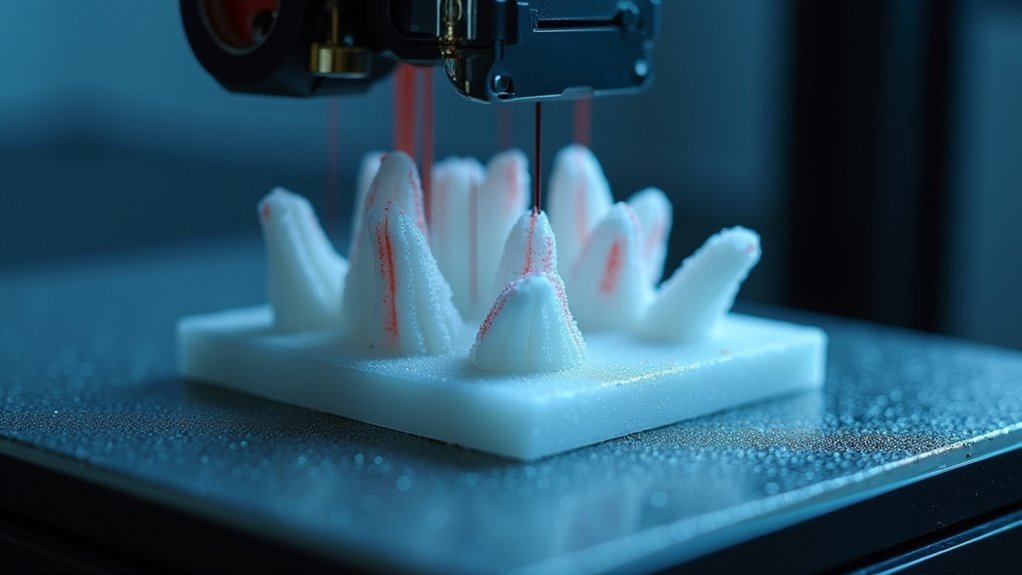
Ambient temperature dramatically affects your 3D print adhesion by controlling how quickly extruded plastic cools and bonds. When room temperatures drop below 20-22°C, your filament won’t melt and adhere properly, causing warping and layer separation. Cold environments increase filament viscosity, leading to under-extrusion and weak bed adhesion, especially with ABS materials. Maintaining stable temperatures between 21-26°C guarantees consistent first layer success, while temperature fluctuations create thermal contraction that weakens structural integrity and causes print failures.
The Science Behind Ambient Temperature and Layer Bonding
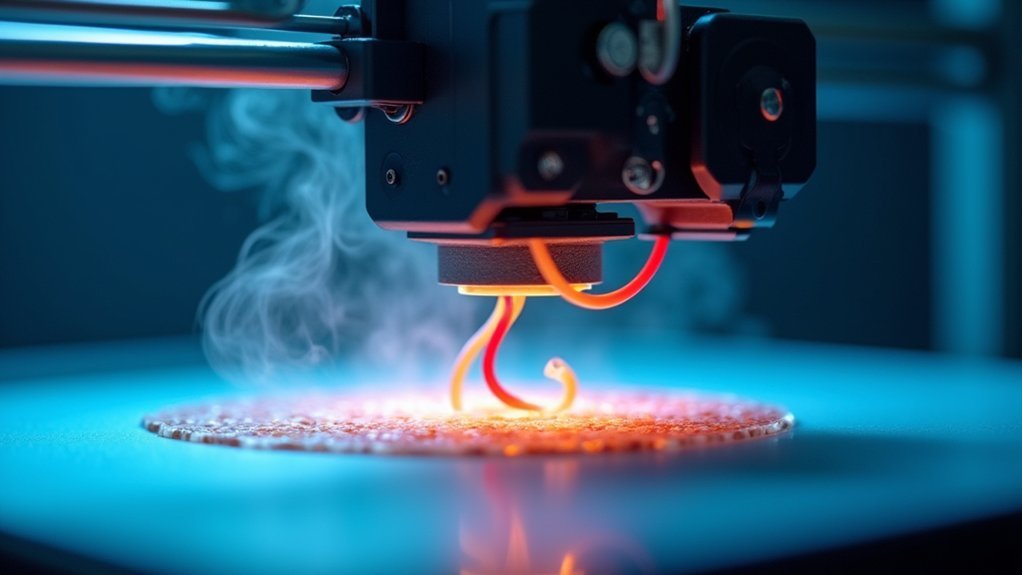
When you extrude filament during 3D printing, the ambient temperature around your printer directly controls how quickly that molten plastic cools and solidifies.
This cooling rate determines whether successive layers properly fuse together or create weak bonds that compromise your print quality.
As each layer cools, thermal contraction occurs. When ambient temperature drops too low, this shrinkage happens rapidly and unevenly, preventing adequate layer bonding.
The result? Poor adhesion between layers that creates structural weaknesses throughout your print.
Temperature fluctuations worsen these effects, particularly with materials like ABS and Nylon.
Inconsistent cooling leads to warping as different sections contract at varying rates. You’ll notice this as lifted corners, cracked layers, or complete print failures when ambient conditions aren’t properly controlled.
How Cold Environments Impact Print Bed Adhesion
When you’re printing in cold environments, you’ll notice that your filament doesn’t stick to the bed as effectively, creating weak foundation layers that can ruin your entire print.
The lower temperatures cause your material to shrink more rapidly as it cools, which weakens the bond between layers and makes your print structurally unsound.
You’ll also face increased warping risks, especially with materials like ABS, as the temperature fluctuations cause uneven cooling that pulls your print away from the bed.
Cold Reduces Bed Adhesion
Cold environments pose a significant threat to your 3D print’s foundation, directly undermining the critical bond between your first layer and the print bed. When ambient temperatures drop below 20-22°C, your filament won’t melt and bond properly, creating weak adhesion that leads to warping and print failures.
| Temperature Range | Adhesion Quality | Common Issues | Recommended Action |
|---|---|---|---|
| Below 18°C | Poor | Severe warping, detachment | Increase room temperature |
| 18-20°C | Fair | Minor lifting, weak bonds | Monitor first layers closely |
| 20-22°C | Good | Minimal issues | Maintain current conditions |
| Above 22°C | Excellent | Strong adhesion | Ideal printing environment |
Cold conditions prevent proper thermal expansion, making your bed temperature settings ineffective. You’ll notice increased separation risks during printing, compromising your print’s structural integrity from the start.
Layer Bonding Weakens
Beyond bed adhesion problems, rapid cooling creates a cascade of bonding issues throughout your entire print.
When ambient temps drop below the ideal 21–26°C range, your extruded filament cools too quickly before the next layer deposits. This prevents proper molecular bonding between layers, creating weak points that’ll cause your print to split apart.
Cold environments increase filament viscosity, leading to under-extrusion that compounds poor adhesion between successive layers.
You’ll notice this especially with PLA, which relies on heat for ideal flow and bonding.
Temperature impacts become more severe with materials like ABS and Nylon, where inadequate layer adhesion often triggers warping that propagates upward through your print.
Maintaining a stable temperature around 30–45°C for sensitive materials dramatically improves interlayer bonding strength.
Warping Risk Increases
As ambient temperatures plummet, your print bed struggles to maintain the critical surface heat needed for proper adhesion, dramatically increasing warping risks across your entire build.
Temperature-sensitive materials like ABS and Nylon become particularly vulnerable when your ambient temperature drops below the ideal 21–26°C range. The accelerated cooling rate causes uneven layer contraction, lifting edges from the bed surface.
This temperature differential creates a battle between your heated bed and the cold environment, compromising adhesion throughout the printing process.
You’ll notice corners curling upward and entire sections separating as the print progresses. To combat these warping challenges, you need to establish a stable temperature environment around your printer.
Installing an enclosure effectively shields your print from cold air currents, preventing catastrophic print failure.
Warping and Shrinkage Issues in Variable Temperature Conditions
When ambient temperature fluctuates during your 3D printing process, you’ll encounter warping and shrinkage issues that can ruin even the most carefully planned prints.
Temperature fluctuations during 3D printing will cause warping and shrinkage that destroys your most meticulously planned projects.
Materials like ABS and Nylon are particularly susceptible to these environmental changes, making stable conditions essential for proper adhesion.
Cold conditions cause rapid cooling and uneven contraction, leading to warping and layer separation. Hot environments soften filament prematurely, creating sagging and detail loss.
You’ll need to maintain ambient temperature between 21–26°C (70–78°F) for ideal results.
Variable temperatures create unpredictable shrinkage patterns that compromise your print’s dimensional accuracy.
An enclosure provides the controlled environment you need, eliminating drafts and temperature swings that cause these frustrating adhesion failures.
Optimal Ambient Temperature Ranges for Different Filament Types
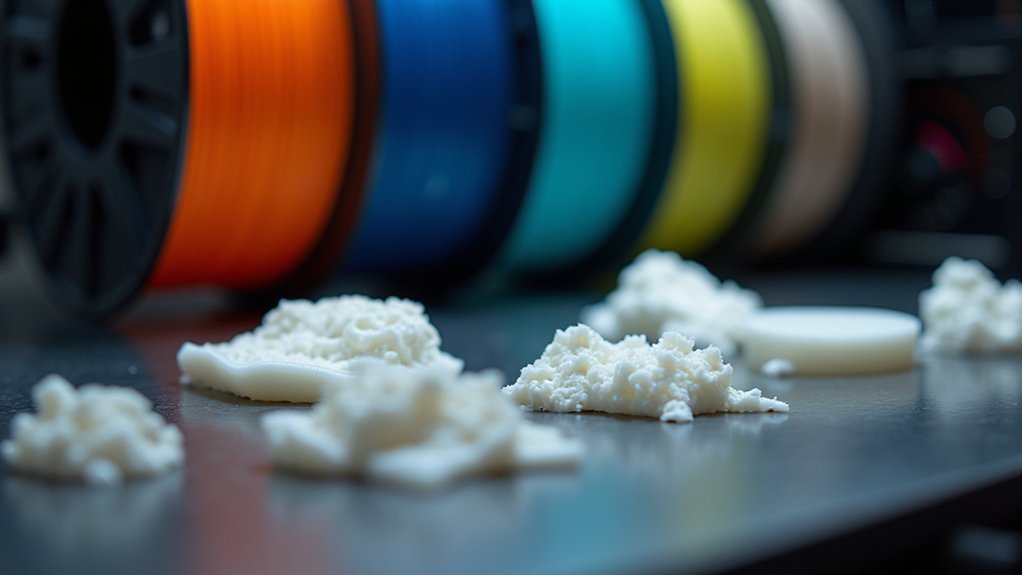
Each filament type demands specific ambient temperature ranges to achieve perfect adhesion and print quality. Understanding how temperature affects your prints guarantees you’ll select appropriate temperature settings for each material. Materials require different bed and ambient conditions to prevent adhesion failures.
| Filament Type | Ideal Ambient Temperature |
|---|---|
| PLA | 20-22°C |
| ABS/Nylon | 30-45°C (enclosed) |
| PETG | 21-26°C |
| TPU | 22-28°C |
PLA works well at room temperature with proper cooling, while high heat materials like ABS need enclosed chambers. PETG maintains excellent adhesion in stable moderate temperatures. TPU requires slightly warmer conditions to prevent under-extrusion. Polycarbonate demands controlled 30°C environments to avoid warping. Matching your ambient temperature to these specifications dramatically improves layer bonding and overall print success.
Managing Heat Creep and Thermal Expansion Effects
Beyond setting the right ambient temperature for your filament, you must also understand how temperature fluctuations create heat creep and thermal expansion problems that can destroy your prints.
When your ambient temperature drops too low, heat creep occurs as your hotend environment cools, preventing filament from melting completely and causing nozzle clogs. Conversely, high ambient temperatures trigger thermal expansion effects that lead to warping and distortion, especially with ABS and Nylon materials.
You’ll achieve ideal results by maintaining stable ambient conditions between 21–26°C (70–78°F).
Consider using an enclosure to regulate temperature fluctuations around your printer. Remember to calibrate both bed and hotend temperatures relative to your ambient conditions, ensuring proper filament flow and reliable adhesion throughout your printing process.
First Layer Performance in Fluctuating Room Temperatures
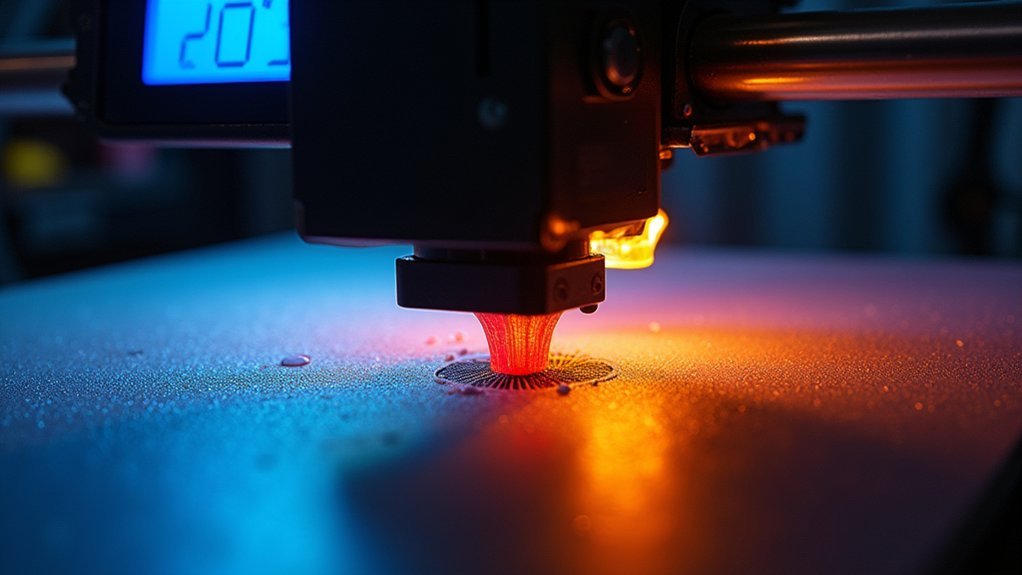
Fluctuating room temperatures create your biggest first layer nightmare, as inconsistent cooling patterns destroy the critical bond between your print bed and filament.
Temperature swings wreak havoc on first layer adhesion, turning your perfect print into a warped disaster before it even starts.
When ambient temperature drops below 21°C (70°F), you’ll face increased warping risks and poor adhesion as your filament cools too rapidly. This quick cooling weakens initial layers, causing potential separation during printing.
You’ll notice materials sensitive to temperature like ABS and Nylon struggle most with these fluctuations. Even PLA becomes problematic when room temperatures swing dramatically.
To maintain stable ambient conditions, consider using an enclosed printer that shields against drafts and temperature variations.
Monitoring your printing environment becomes essential for consistent first layer success. Maintaining temperatures between 21–26°C (70–78°F) guarantees ideal adhesion performance across all materials.
Temperature Control Solutions for Consistent Adhesion
You can achieve consistent 3D print adhesion by implementing three essential temperature control strategies that work together to maintain ideal printing conditions.
Start with proper heated bed calibration to guarantee your first layer bonds correctly.
Then consider adding an enclosure to stabilize ambient temperatures and protect against drafts.
Finally, install digital temperature monitoring systems to track real-time conditions and make immediate adjustments when temperatures drift outside your material’s ideal range.
Heated Bed Calibration
The heated bed serves as your print’s foundation, and its proper calibration directly determines whether your first layer will stick or fail. You’ll need to set the recommended bed temperature ranges based on your filament type to prevent warping and guarantee reliable adhesion.
| Filament Type | Printing Temperature | Bed Temperature |
|---|---|---|
| PLA | 190-220°C | 50-60°C |
| ABS | 220-250°C | 90-110°C |
| PETG | 230-250°C | 70-80°C |
Proper temperature calibration requires regular bed leveling checks, as uneven surfaces cause inconsistent adhesion regardless of temperature settings. You should monitor your first few layers closely and make real-time adjustments when adjusting the bed temperature. If you’re still experiencing adhesion issues, clean your print surface or apply adhesive aids to compensate for suboptimal temperatures.
Enclosure Design Benefits
Building an enclosure around your 3D printer creates a controlled thermal environment that dramatically improves print adhesion by eliminating temperature fluctuations.
You’ll maintain stable ambient temperature conditions that prevent drafts from disrupting your prints, especially with challenging materials like ABS and Nylon.
Your enclosure design should include these key features:
- Insulation barriers that prevent rapid cooling and reduce warping risks
- Adjustable ventilation systems to regulate heat buildup without overheating
- Temperature monitoring capabilities for real-time environmental adjustments
- Draft elimination panels that maintain consistent conditions across multiple prints
When you control temperature fluctuations effectively, you’ll achieve superior layer bonding and consistent adhesion results.
Enclosures transform unpredictable printing environments into reliable production spaces where your prints stick properly from first layer to completion.
Digital Temperature Monitoring
While enclosures create controlled environments, digital temperature monitoring takes precision to the next level by providing real-time data that guarantees your ambient temperature remains optimal throughout entire print cycles.
Thermocouples and infrared sensors deliver accurate tracking, while smart thermostats automate temperature control to prevent adhesion issues from fluctuating conditions.
You’ll benefit from continuous monitoring within enclosures, reducing warping risks and ensuring consistent layer bonding.
Integration with your printer triggers alerts when temperatures drift outside recommended ranges, enabling immediate corrections for ideal print adhesion.
Data logging features analyze temperature trends over time, helping you identify patterns affecting adhesion quality.
This systematic approach transforms guesswork into precise control, letting you optimize settings based on concrete temperature data for consistently successful prints.
Monitoring and Measuring Ambient Conditions for Better Results
Since consistent ambient conditions directly impact your print’s success, you’ll need reliable tools to track temperature and humidity fluctuations in real-time.
Digital temperature sensors provide precise ambient temperature readings, guaranteeing you maintain that vital 21–26°C range for peak adhesion. Monitoring both temperature and humidity levels helps prevent moisture-related issues that compromise filament quality.
Here’s your essential monitoring setup:
- Install digital sensors inside your printing enclosure for accurate readings
- Track seasonal changes that affect your workspace temperature stability
- Use insulated enclosures or heaters to maintain ideal conditions year-round
- Calibrate sensors regularly to guarantee measurement accuracy
Consistent monitoring enables you to make proactive adjustments, preventing adhesion problems before they occur.
When you maintain stable conditions, your filaments perform consistently, delivering better layer bonding and superior print quality.
Frequently Asked Questions
Does Ambient Temperature Affect 3D Printing?
Yes, ambient temperature greatly affects your 3D printing results. You’ll experience poor layer adhesion, warping, and print failures if temperatures fluctuate or fall outside the ideal range for your filament material.
What Is the Best Temperature for PLA Adhesion?
You’ll achieve ideal PLA adhesion by maintaining ambient temperatures between 20-22°C and setting your heated bed to 50-60°C. This combination guarantees strong layer bonding while preventing warping and delamination issues.
What Causes Poor Layer Adhesion in 3D Printing?
You’ll experience poor layer adhesion when your print bed’s too cold, nozzle temperature’s incorrect, printing speed’s too fast, or you’re using contaminated filament that prevents proper bonding between layers.
Does a Hotter Bed Make PLA Stick Better?
Yes, you’ll get better PLA adhesion with a hotter bed around 50-60°C. It creates a stable bonding surface and reduces warping, but don’t exceed 60°C or you’ll risk deformation.

Leave a Reply