You’ll need to implement local exhaust ventilation systems with approximately 6 air changes per hour to capture VOCs and ultrafine particles from thermoplastic materials like ABS and PLA. Install HEPA filters for particle removal and activated carbon filters for VOC elimination, while maintaining continuous air quality monitoring that meets OSHA standards. Position printers near external walls with dedicated fume hoods, conduct monthly filter replacements, and document all maintenance for regulatory compliance. These foundational requirements represent just the beginning of extensive facility safety protocols.
Understanding Emission Sources in Commercial 3D Printing Operations
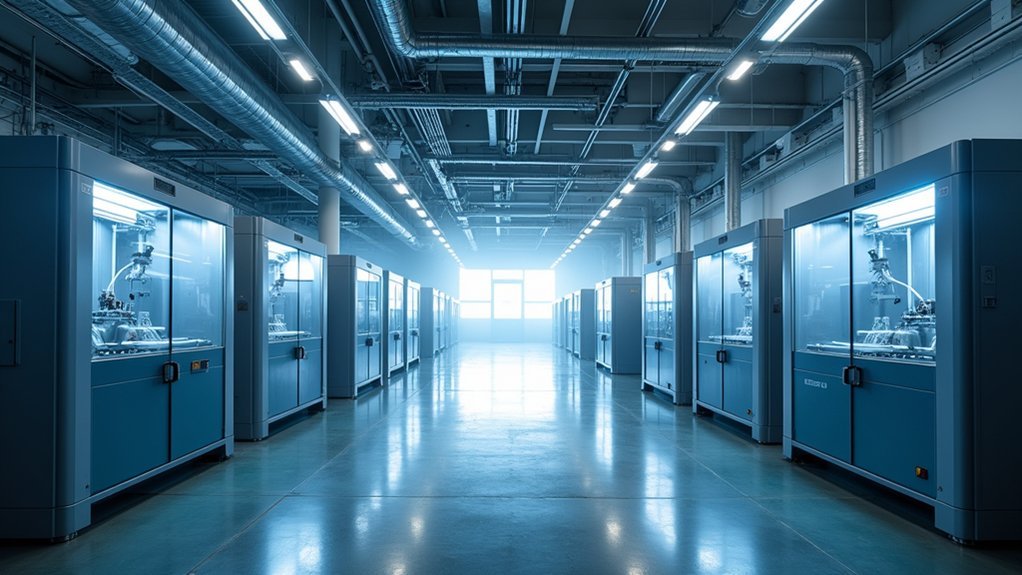
While 3D printing transforms manufacturing possibilities, commercial operations introduce significant air quality challenges that you can’t afford to ignore.
Your facility’s printing processes generate harmful emissions from multiple sources that directly impact worker safety. Thermoplastic materials like ABS and PLA release VOCs during heated extrusion, with ABS producing particularly dangerous styrene concentrations.
Resin-based printers emit hazardous chemicals including acrolein, creating serious health risks for exposed personnel. These processes also generate ultrafine particles that penetrate deep into respiratory systems, causing long-term complications.
Continuous commercial operation means sustained pollutant release, making proper identification of emission sources critical for establishing effective ventilation requirements.
Understanding these specific hazards enables you to design targeted safety protocols that protect your workforce.
OSHA Compliance Requirements for Industrial 3D Printing Facilities
You’ll need to meet OSHA’s mandatory air quality standards that specifically address ultrafine particles and volatile organic compounds released during 3D printing operations.
Your facility must implement extensive employee health protection requirements, including proper hazard communication protocols and regular safety training programs.
You’re also required to install and maintain compliant ventilation systems with engineering controls like local exhaust ventilation and fume hoods to capture emissions at their source.
Mandatory Air Quality Standards
Three critical OSHA compliance requirements form the foundation of mandatory air quality standards in industrial 3D printing facilities.
You’ll need mandatory air quality monitoring systems that continuously detect Volatile Organic Compounds (VOCs) and ultrafine particles throughout your workspace. These monitoring systems guarantee you’re maintaining safe exposure levels and protecting workers from respiratory health and safety hazards.
You must install effective local exhaust ventilation systems that capture emissions directly at the source during printing operations. These systems prevent harmful fumes from dispersing into your facility’s general air supply.
Additionally, you’re required to conduct regular risk assessments evaluating your ventilation system’s effectiveness.
These assessments verify compliance with regulatory standards while identifying potential improvements needed to maintain ideal air quality and worker protection.
Employee Health Protection Requirements
Before employees can safely operate in your industrial 3D printing facility, you must guarantee they’ve completed thorough hazard recognition training and understand proper personal protective equipment protocols.
Your protective equipment requirements should align with OSHA standards to safeguard employee health from exposure to volatile organic compounds and airborne contaminants.
You’ll need accessible Safety Data Sheets for all printing materials, ensuring workers understand potential hazards.
Your ventilation system must effectively remove harmful particles and maintain proper air quality through regular monitoring.
Conduct routine risk assessments to identify material and process hazards, implementing necessary engineering controls.
Train your employees on emergency exposure procedures, including reporting protocols and first aid measures, creating a detailed safety program that meets OSHA compliance requirements.
Facility Ventilation System Regulations
When designing your facility’s ventilation system, OSHA’s Hazard Communication Standard requires compliance with specific regulations that directly impact your 3D printing operations.
You must implement local exhaust ventilation to control emissions at their source, ensuring worker health protection from hazardous fumes and ultrafine particles. Your facility needs approximately 6 air changes per hour to adequately dilute airborne contaminants.
Engineering controls like fume hoods and exhaust systems are mandatory safety measures that must effectively capture pollutants. Your filtration system should meet OSHA standards for removing VOCs and particles from the air stream.
You’re required to conduct regular air quality monitoring and risk assessments to maintain compliance and verify your ventilation system’s effectiveness in protecting employees.
Local Exhaust Ventilation System Design and Implementation
Precision in capturing airborne contaminants at their source defines effective local exhaust ventilation system design for commercial 3D printing facilities.
You’ll need to position hoods or enclosures directly near your 3D printing equipment to capture harmful fumes before they disperse throughout your workspace. Your system must maintain airflow rates of 100-150 feet per minute at the hood face for ideal contaminant capture.
You should construct ducting from heat and corrosion-resistant materials while keeping runs short and direct to minimize pressure loss.
Regular filter inspection and cleaning guarantees peak performance. Integrate air quality monitoring systems to continuously track VOCs and ultrafine particles levels, enabling real-time ventilation adjustments when contamination exceeds safe thresholds.
Air Quality Monitoring Protocols for Commercial Print Environments

You’ll need sophisticated monitoring systems that continuously track ultrafine particles and volatile organic compounds throughout your printing operations.
Your facility should deploy real-time sensors capable of detecting specific VOCs and particulate matter concentrations, enabling immediate ventilation adjustments when emission levels spike.
These monitoring protocols must align with NIOSH guidelines and OSHA requirements, ensuring you maintain documented compliance while protecting worker health in your commercial environment.
Real-Time Particle Detection
Invisible threats lurk in commercial 3D printing facilities as ultrafine particles and volatile organic compounds escape from heated filaments and resin curing processes. You’ll need real-time particle detection systems equipped with calibrated sensors to identify these hazards before they compromise worker safety. These monitoring systems detect ultrafine particles (UFPs) and volatile organic compounds (VOCs) at dangerously low thresholds.
| Pollutant Type | Health Impact | Detection Threshold |
|---|---|---|
| UFPs (0.1-100nm) | Lung inflammation | 10,000 particles/cm³ |
| VOCs (Various) | Respiratory irritation | 0.1-1.0 ppm |
| Formaldehyde | Carcinogenic exposure | 0.016 ppm |
Your air quality monitoring equipment must integrate with building management systems for automated ventilation responses. Regular calibration guarantees accurate readings that protect your workforce from invisible airborne contaminants.
VOC Concentration Measurements
While real-time detection identifies harmful particles, you must establish detailed VOC concentration measurement protocols that quantify specific chemical compounds released during printing operations.
Your air quality monitoring system should include real-time sensors capable of detecting hazardous compounds like styrene and formaldehyde. These Volatile organic compounds (VOCs) pose significant health risks when concentrations exceed safety thresholds.
You’ll need to integrate ACGIH’s threshold limit values into your monitoring practices to evaluate indoor air quality effectively.
Your VOC concentration measurements should provide immediate feedback, enabling timely interventions when levels spike. Regular assessments help identify emission trends over time while making sure your ventilation systems function at their best.
This all-encompassing approach mitigates health risks and guarantees compliance with OSHA’s Hazard Communication Standard requirements.
Compliance Monitoring Systems
Although VOC measurements provide critical data, establishing extensive compliance monitoring systems guarantees your facility maintains continuous oversight of air quality conditions. You’ll need air quality sensors that detect ultrafine particles, volatile organic compounds (VOCs), styrene, and formaldehyde in real-time. Regular calibration guarantees accurate readings while action thresholds trigger immediate ventilation systems adjustments.
| Component | Function | Requirement |
|---|---|---|
| Continuous Sensors | Real-time detection | UFPs, VOCs monitoring |
| Calibration Schedule | Accuracy maintenance | Regular intervals |
| Action Thresholds | Safety triggers | Ventilation activation |
Your compliance monitoring must include thorough documentation for OSHA audits. Establish protocols for immediate corrective actions when contaminant levels exceed safe limits. This systematic approach guarantees workplace safety standards adherence while demonstrating regulatory compliance through detailed reporting of all monitoring results.
Filtration Technologies for Different 3D Printing Materials
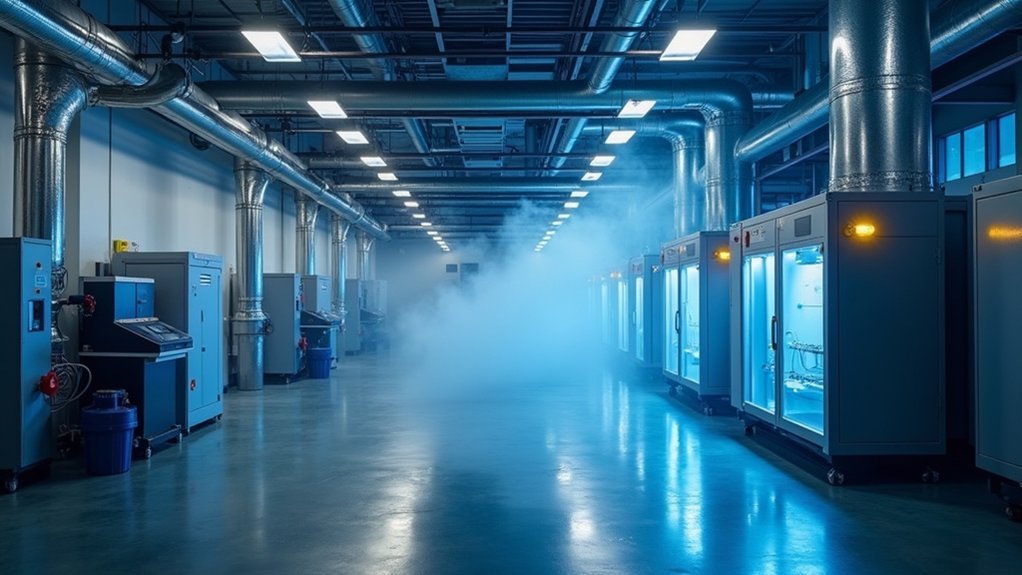
The diversity of 3D printing materials demands tailored filtration approaches to protect workers from harmful emissions.
You’ll need HEPA filter systems to capture ultrafine particles (UFPs) generated when printing with ABS and nylon, which produce considerably higher emissions than other materials.
Install activated carbon filters to remove volatile organic compounds (VOCs) like formaldehyde and styrene released during thermoplastic melting.
Your filtration technologies should match material requirements—PLA needs only basic ventilation, while resin printing requires advanced systems for hazardous fumes.
Integrate multiple filter types in industrial systems to address various contaminants and maintain air quality compliance.
You must establish regular maintenance schedules and replace filters promptly, as clogged filters reduce effectiveness and increase health risks.
Facility Layout Considerations for Optimal Airflow Management
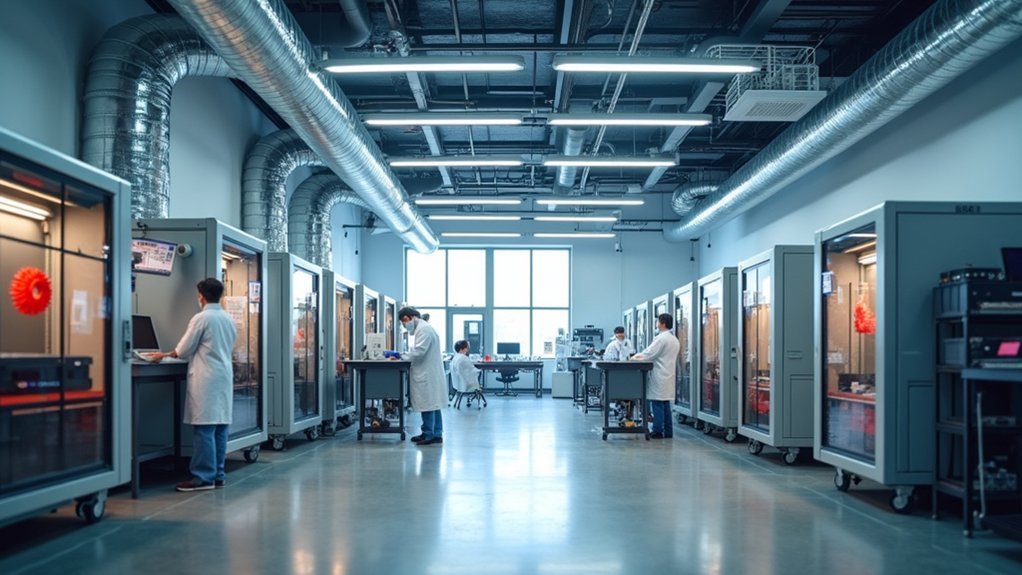
Since proper airflow management directly impacts worker safety and air quality compliance, you’ll need to design your facility layout with strategic positioning of equipment and ventilation systems. Position your printers near windows or external walls to enhance natural airflow and reduce fume concentration. Create open spaces with adequate cross-ventilation to effectively dissipate harmful emissions.
| Layout Element | Requirement | Purpose |
|---|---|---|
| Air Changes | 6 per hour minimum | Maintain ideal air quality |
| Printer Spacing | Near external walls | Improve natural ventilation |
| Filtration Placement | Strategic throughout facility | Capture ultrafine particles |
Install dedicated local exhaust hoods in enclosed areas to capture emissions at their source. Deploy HEPA and activated carbon filters strategically throughout your facility layout to manage ultrafine particles and volatile organic compounds effectively.
Employee Health Protection and Exposure Limit Guidelines
When operating commercial 3D printing facilities, you must establish thorough employee health protection protocols that strictly adhere to NIOSH and OSHA exposure limit guidelines for ultrafine particles (UFPs) and volatile organic compounds (VOCs).
You’ll need to implement engineering controls like local exhaust ventilation and fume hoods to manage harmful emissions effectively. Maintain approximately 6 air changes per hour in printing areas to guarantee adequate ventilation and ideal air quality.
You should train employees to recognize hazards associated with 3D printing emissions, including materials that release carcinogenic chemicals like styrene and formaldehyde.
Regular air quality monitoring is essential for evaluating compliance with established exposure limits. This ongoing surveillance guarantees you’re maintaining a safe working environment for all personnel engaged in 3D printing activities.
Maintenance Schedules and Performance Verification for Ventilation Systems
Although implementing proper ventilation systems establishes the foundation for worker safety, you must maintain these systems through rigorous schedules and performance verification to assure continued effectiveness.
You’ll need monthly filter replacements and quarterly inspections to guarantee peak performance and regulatory compliance. Performance verification requires air quality sensors that monitor VOC levels and ultrafine particles, confirming emissions stay within acceptable limits.
Monthly filter changes and quarterly inspections ensure your ventilation system maintains regulatory compliance and optimal air quality performance.
Annual exhaust system evaluations assess airflow rates and identify blockages that compromise air quality. Document all maintenance and cleaning activities plus verification results for OSHA compliance.
Implementing preventative Ventilation Solutions programs with routine checks extends equipment lifespan while enhancing overall air quality in your 3D printing operation.
Frequently Asked Questions
What Are the Ventilation Requirements for 3D Printing?
You’ll need approximately 6 air changes per hour with mechanical ventilation systems that exhaust fumes outside. Use HEPA and VOC filtration for enclosed printers, and negative pressure enclosures for resin materials.
What Are the Ventilation Requirements for a Print Shop?
You’ll need strong exhaust systems, proper air circulation, and dust collection equipment. Maintain adequate ventilation rates, install local exhaust hoods near equipment, and guarantee regular filter maintenance for worker safety.
Does a 3D Printer Need to Be in a Well-Ventilated Area?
You should place your 3D printer in a well-ventilated area because it emits harmful VOCs and ultrafine particles. Open windows, guarantee good airflow, and consider air filtration to protect your health.
Do 3D Printer Enclosures Need Ventilation?
Yes, you’ll need ventilation for 3D printer enclosures, especially when printing with ABS or resin. Install negative pressure systems with HEPA and carbon filters to remove harmful VOCs and ultrafine particles effectively.