You’re exposed to potential carcinogens when 3D printing, particularly with ABS filaments that release styrene—a possible human carcinogen—at levels 200-300 times higher than normal air pollution. While PLA filaments produce lower emissions, studies show changes in 113 cancer-related genes from exposure. Both materials emit ultrafine particles that penetrate deep into your lungs and bloodstream, potentially causing long-term cellular damage. Proper ventilation and protective equipment can greatly reduce these health risks and safeguard your wellbeing.
Understanding Volatile Organic Compounds in 3D Printing
The invisible threat lurking in your 3D printing workspace comes in the form of Volatile Organic Compounds (VOCs) that silently escape from heated filaments during the printing process.
Hidden VOCs silently release from heated 3D printer filaments, creating an invisible health hazard in your workspace.
These chemical compounds become airborne when your printer heats materials like ABS and PLA to their melting points. ABS filament poses particularly serious health risks, generating up to 200-300 times more particles than typical air pollution levels.
The printing emissions contain dangerous substances including styrene, which the International Agency for Research on Cancer classifies as a possible carcinogen.
You’ll encounter varying VOC concentrations depending on your filament choice, with ABS producing considerably higher emissions than PLA.
Understanding these compounds is essential because they can cause immediate symptoms like headaches and throat irritation, while prolonged exposure may lead to severe complications.
ABS Filament and Styrene Emission Hazards
When you choose ABS filament for your 3D printing projects, you’re exposing yourself to styrene emissions that pose serious health risks.
This volatile organic compound (VOC) is classified as a possible carcinogen by the International Agency for Research on Cancer.
During the printing process, heating ABS to 250°C-300°C releases dangerous ultrafine particles that can cause immediate health problems including headaches, nausea, dizziness, and respiratory distress.
The NIOSH reports that ABS fumes generate 200-300 times more particulate emissions than typical air pollution.
These toxic volatile organic compounds (VOCs) irritate your eyes, throat, and respiratory system, potentially causing long-term damage.
OSHA’s exposure limits emphasize the critical need for proper ventilation when working with ABS.
PLA Filament Safety Profile and Risk Assessment
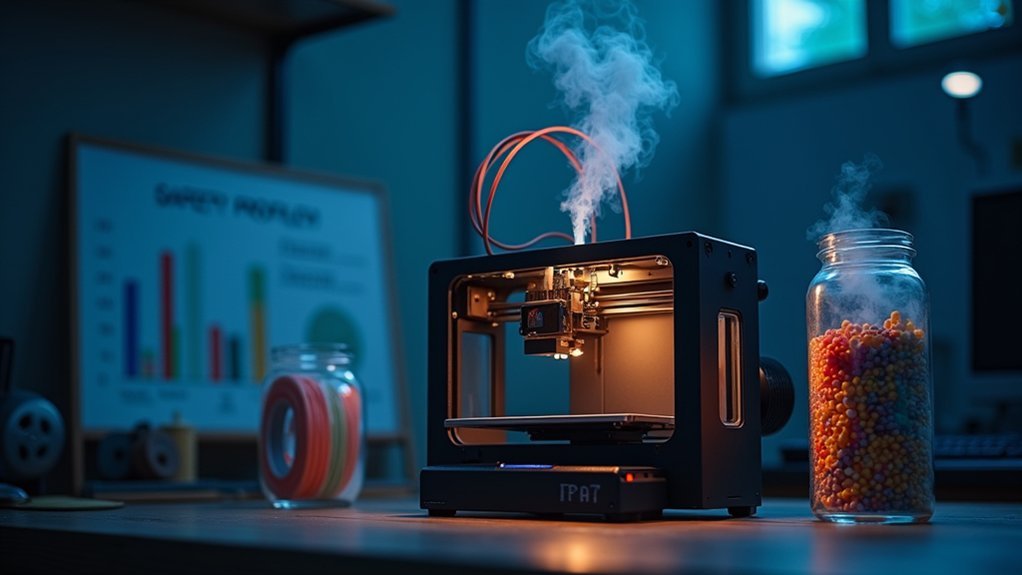
You’ll find that PLA filament produces markedly lower emission levels compared to ABS, with reduced ultrafine particles and volatile organic compounds during printing.
When researchers exposed cells to PLA emissions, they detected minimal carcinogenic risk and no notable DNA damage in laboratory assays.
However, cellular impact studies revealed changes in 113 out of 147 cancer-related genes, indicating potential metabolic effects that warrant further investigation.
PLA Emission Levels
While ABS filament raises considerable health concerns, PLA (Polylactic Acid) offers a markedly safer alternative for 3D printing enthusiasts.
You’ll find that PLA produces considerably lower VOCs compared to other filaments, making it your best choice for health-conscious printing. The emissions from PLA typically generate fewer ultrafine particles, with concentrations ranging from 10^4 to 10^6 particles/cm³—substantially lower than ABS alternatives.
High-quality PLA produces almost no noticeable odor during printing, indicating minimal harmful emissions. However, low-quality variants may still release some VOCs.
While PLA’s safer profile is reassuring, you shouldn’t become complacent. Research suggests prolonged exposure to PLA particulates might cause cellular changes through altered gene expression. As a result, maintaining proper ventilation during printing remains essential for minimizing any potential exposure risks.
Cellular Impact Studies
Laboratory studies examining PLA’s cellular effects provide deeper insights into its safety profile beyond emission measurements.
When researchers conducted comet assays on Balb/c cell lines, they found no significant DNA damage from PLA filament exposure, indicating low carcinogenic risk. However, RNA analysis revealed changes in 113 out of 147 cancer-related genes, with both PLA and ABS increasing glucose metabolism in vitro. This suggests potential metabolic alterations rather than direct carcinogenic effects.
Cytotoxicity assessments didn’t reveal significant cell transformation properties, confirming PLA’s reduced hazard compared to ABS regarding cancer risk.
While long-term exposure studies show minimal carcinogenicity under laboratory conditions, you should know that ongoing research emphasizes evaluating filament additives, as these may contribute additional health risks beyond the primary materials’ cellular impact.
Ultrafine Particulate Matter and Respiratory Health
When you breathe in ultrafine particles from 3D printing, they’re small enough to penetrate deep into your lung tissue and even cross into your bloodstream.
These microscopic particles can trigger immediate respiratory problems like bronchospasm while potentially causing long-term cardiovascular damage.
You’re facing a dual threat since UFPs don’t just affect your breathing—they can circulate throughout your body and impact your heart health.
UFP Lung Penetration
Because ultrafine particles from 3D printing measure smaller than 100 nanometers, they slip past your body’s natural defenses and penetrate deep into your lung tissue.
These UFPs bypass your nose’s filtration system and reach the alveoli, where gas exchange occurs. Once there, they can accumulate and potentially trigger inflammatory responses that compromise your respiratory health.
When you’re printing with ABS, you’re exposed to particle concentrations 200-300 times higher than typical air pollution levels. This massive increase creates a concerning environment for extended exposure.
The combination of UFPs and VOC exposure from heated filaments compounds the risk, as these tiny particles can carry toxic compounds directly into your bloodstream through lung tissue. Your lungs struggle to clear particles this small, allowing them to remain lodged in respiratory passages.
Cardiovascular Disease Links
Ultrafine particles don’t just damage your lungs—they’re creating a pathway for cardiovascular disease that researchers are only beginning to understand.
When you’re exposed to UFPs from 3D printing, these microscopic particles penetrate deep into your respiratory system, triggering inflammation that extends beyond your lungs. This inflammatory response affects your cardiovascular system, potentially worsening existing heart conditions and creating new health risks.
VOCs from materials like ABS compound these dangers, causing symptoms like headaches and dizziness that may signal broader cardiovascular stress.
The particles can remain airborne for up to 48 hours, prolonging your exposure and increasing inflammation risks. While researchers continue investigating the long-term cardiovascular consequences, current evidence suggests that protecting your respiratory health during 3D printing is vital for maintaining overall cardiovascular disease prevention.
Long-term Exposure Effects on Cellular Function
Although immediate health effects from 3D printing emissions may seem minimal, prolonged exposure to particulates from common filaments can trigger significant changes at the cellular level.
When you’re exposed to volatile organic compounds (VOCs) from ABS filament over extended periods, your cells undergo metabolic alterations that affect cancer-related gene expression. Research shows that long-term exposure modified 113 out of 147 cancer-related genes, even though DNA damage wasn’t directly detected in laboratory tests.
You’ll face higher risks with ABS compared to PLA filaments, but both materials can compromise cellular function over time.
The ultrafine particles remain airborne for hours, creating persistent inhalation risks that may accumulate in your system and potentially disrupt normal cellular processes through chronic exposure.
Vulnerable Populations and Enhanced Risk Factors
While cellular damage affects all individuals exposed to 3D printing emissions, certain groups face amplified dangers that demand immediate attention.
Children represent the most vulnerable populations due to their developing lungs and higher air intake rates, increasing exposure to harmful ultrafine particles and volatile organic compounds (VOCs). You’ll find styrene emissions from ABS printing particularly concerning for young people, as this possible carcinogen poses elevated risks to developing bodies.
If you have pre-existing respiratory conditions like asthma, you’re likely to experience worsened symptoms and heightened sensitivity to 3D printing emissions.
Those with compromised immune systems also face increased potential health risks, requiring enhanced safety protocols in environments where 3D printing occurs regularly.
Ventilation Systems and Emission Control Methods
Three primary ventilation strategies can greatly reduce your exposure to dangerous 3D printing emissions. High-flow spot ventilation and ductless hoods effectively capture volatile organic compounds (VOCs) and particle emissions at their source.
Sealed enclosures with high-efficiency filtration systems provide superior protection by trapping harmful substances before they reach your breathing zone. Exhaust fans in enclosed printing areas maintain continuous air circulation, removing contaminants and reducing inhalation risks.
Proper emission control methods require regular maintenance to remain effective:
- Change activated carbon filters regularly and verify air exchange rates meet safety standards
- Install ventilation systems that achieve higher air change rates to correlate with reduced emission levels
- Monitor particle concentrations during printing operations to verify your ventilation system’s performance
Research consistently shows these strategies considerably lower harmful exposure levels.
Personal Protective Equipment for 3D Printing Operations
Even with proper ventilation systems in place, you’ll need personal protective equipment to create an additional barrier against harmful 3D printing emissions.
Start with N95 respirators or higher-rated masks to filter ultrafine particles and volatile organic compounds (VOCs) released during printing. Protect your eyes with safety goggles or face shields, as heated filaments like ABS and PLA emit irritating fumes and particles.
Wear nitrile gloves when handling filaments or cleaning equipment to prevent skin irritation from plastics and solvents.
If you’re operating printers continuously in educational or industrial settings, use hearing protection against elevated noise levels.
Consider full-body protective clothing like lab coats or coveralls to minimize skin exposure to hazardous materials throughout your 3D printing operations.
Material Selection Strategies for Safer Printing Practices
Beyond protective equipment, your choice of filament material directly impacts the level of toxic emissions you’ll encounter during printing.
Smart material selection strategies can dramatically reduce your exposure to volatile organic compounds (VOCs) and health risks. PLA stands out as a safer alternative to ABS, which releases higher levels of ultrafine particles and styrene—a possible carcinogen. PETG and biodegradable options like PHAs offer excellent strength with lower emissions.
- Choose low-emission filaments that produce minimal detectable odors, indicating reduced toxic vapor release
- Consider filament color carefully since black ABS typically emits fewer particles than other colored variants
- Research filament additives thoroughly before purchasing, as certain brands may contain substances that release additional toxins during heating
Frequently Asked Questions
Can 3D Printing Fumes Cause Cancer?
You’re exposed to potentially harmful emissions when 3D printing, but there’s no definitive proof these fumes cause cancer. However, ABS releases styrene, a possible carcinogen, so you should guarantee proper ventilation.
Is It Bad to Breathe in 3D Printer Fumes PLA?
Breathing PLA fumes isn’t particularly dangerous since PLA emits fewer harmful particles than other filaments. However, you shouldn’t intentionally inhale them regularly. Use proper ventilation when printing to minimize exposure risks.
How Toxic Are 3D Printer Resin Fumes?
You’ll face significant toxicity from 3D printer resin fumes. They’ll release harmful VOCs causing immediate irritation and headaches. Long-term exposure can damage your liver, kidneys, and nervous system requiring proper ventilation.
Is It Safe to Be in the Same Room as a 3D Printer PLA?
You can safely stay in the same room as a PLA 3D printer since it emits minimal harmful particles. However, you’ll want proper ventilation for best air quality and comfort.