Transform your manufacturing waste into valuable resources by implementing proper material sorting with dedicated containers and clear labeling to prevent cross-contamination. You’ll need advanced tracking systems that monitor particle size distribution and chemical composition in real-time. Select cost-effective filler materials like discarded metal powders for 60-80% cost reductions, and balance your purchase specifications with production tolerances to extend reuse cycles. Choose single-batch methods for regulated industries or blending approaches for consistent performance—the strategies below reveal how to maximize these opportunities.
Establish Proper Material Sorting and Segregation Practices
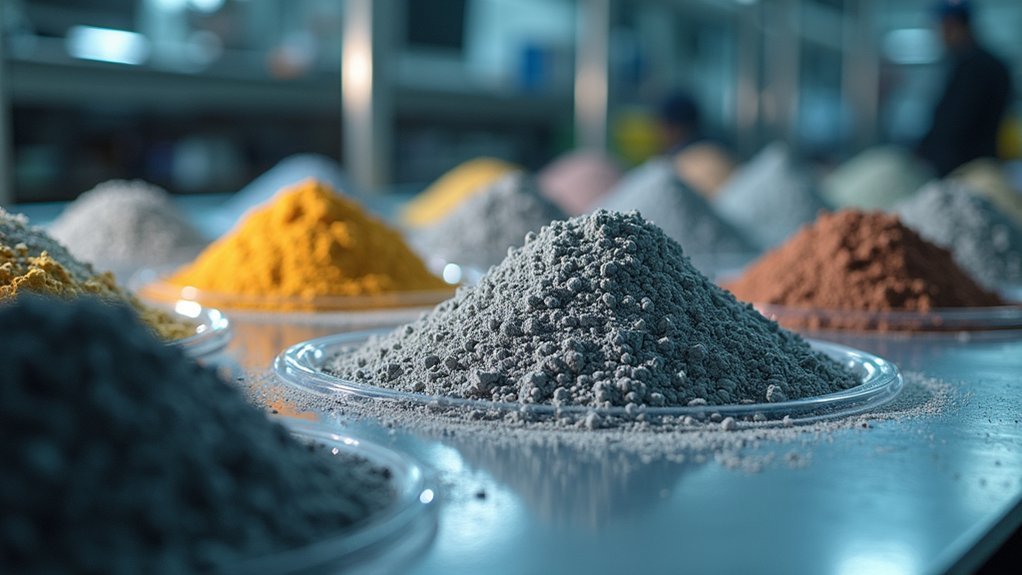
When recycling metal powders, you’ll need to establish robust sorting and segregation practices that differentiate between various powder types based on their unique chemical compositions and particle characteristics.
Implement effective material sorting procedures to guarantee each metal powder maintains its performance characteristics throughout the recycling process.
Use dedicated storage containers with clear labeling systems to prevent cross-contamination between different alloys, as this contamination can compromise the quality of recycled materials.
Train your staff regularly on proper segregation techniques to minimize errors and boost efficiency.
Document the flow of different powders through tracking systems, which provides valuable insights into recovery rates and helps optimize future sorting practices for better material management.
Implement Advanced Tracking Systems for Powder Performance Monitoring
Advanced tracking systems transform your metal powder recycling operations by providing real-time visibility into performance metrics that directly impact material quality and production outcomes.
You’ll gain unprecedented control over your additive manufacturing processes while maximizing powder longevity.
These systems deliver extensive monitoring capabilities:
Comprehensive monitoring solutions provide complete operational oversight through integrated tracking technologies that optimize recycling efficiency and material performance.
- Real-time particle size distribution analysis – Monitor powder characteristics throughout recycling cycles to maintain consistent quality standards.
- Chemical composition tracking – Detect contamination levels and compositional changes that affect material performance.
- Automated inventory management – Track powder usage patterns and refine ordering to reduce waste.
- Data-driven refresh strategies – Analyze performance data to determine ideal timing for mixing recycled powder with virgin materials.
You’ll guarantee compliance with industry regulations while implementing strategic reuse practices that maintain material integrity across multiple recycling cycles.
Optimize Filler Material Selection to Maximize Cost Efficiency

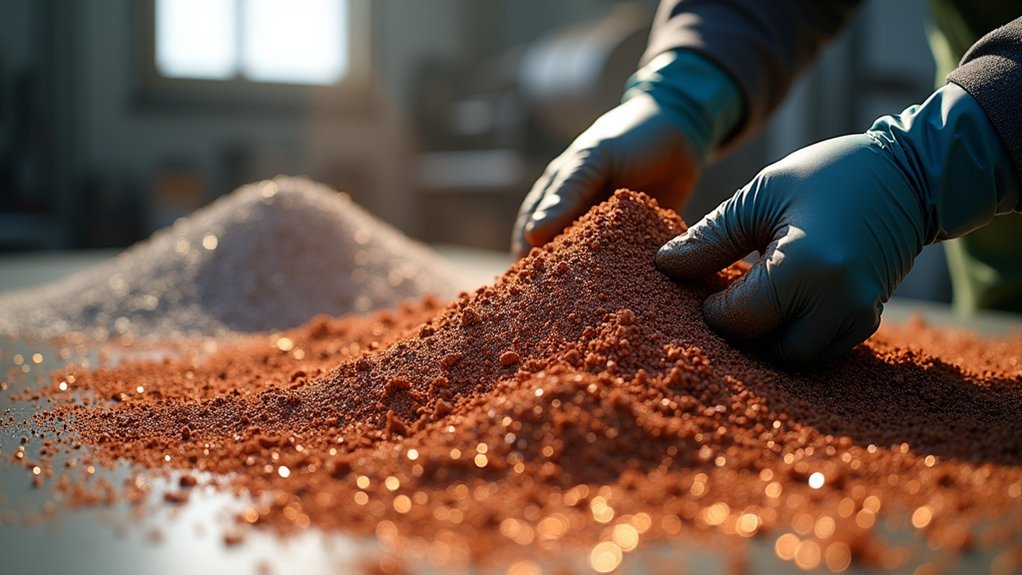
Strategic filler material selection transforms your metal powder recycling economics by enabling near-complete powder recovery while maintaining product quality standards. You’ll maximize cost efficiency by blending discarded metal powders with expensive functional materials, reducing your dependence on powder suppliers while maintaining operational efficiency.
| Filler Material Type | Cost Impact | Recycling Rate |
|---|---|---|
| Discarded Metal Powders | 60-80% cost reduction | 95-100% |
| Ceramic Powder Mix | 40-60% cost reduction | 90-95% |
| Hybrid Combinations | 70-85% cost reduction | 98-100% |
You can achieve close to 100% powder recycling rates by incorporating inexpensive ceramic powders that preserve your primary material’s integrity. This approach transforms waste streams into valuable resources, streamlining operations and minimizing material waste throughout your additive manufacturing processes.
Balance Purchase and Production Specifications for Extended Reuse Cycles
Effective powder recycling extends far beyond smart material blending—you’ll achieve maximum reuse cycles by strategically aligning your purchase specifications with actual production requirements.
This balance between virgin materials quality and production needs creates sustainable recycling workflows that accommodate natural metal powders degradation while maintaining acceptable part standards.
Consider these key strategies for optimizing your feedstock material specifications:
- Match virgin material grades closely to production tolerances rather than over-specifying quality requirements
- Account for aging characteristics specific to your metal powders during the recycling process
- Control oxygen and nitrogen exposure throughout handling to preserve chemical properties
- Build degradation allowances into specifications that still meet your final production criteria
This approach reduces waste, lowers material costs, and maximizes the efficiency of your recycling process.
Choose Appropriate Reuse Methods Based on Industry Requirements
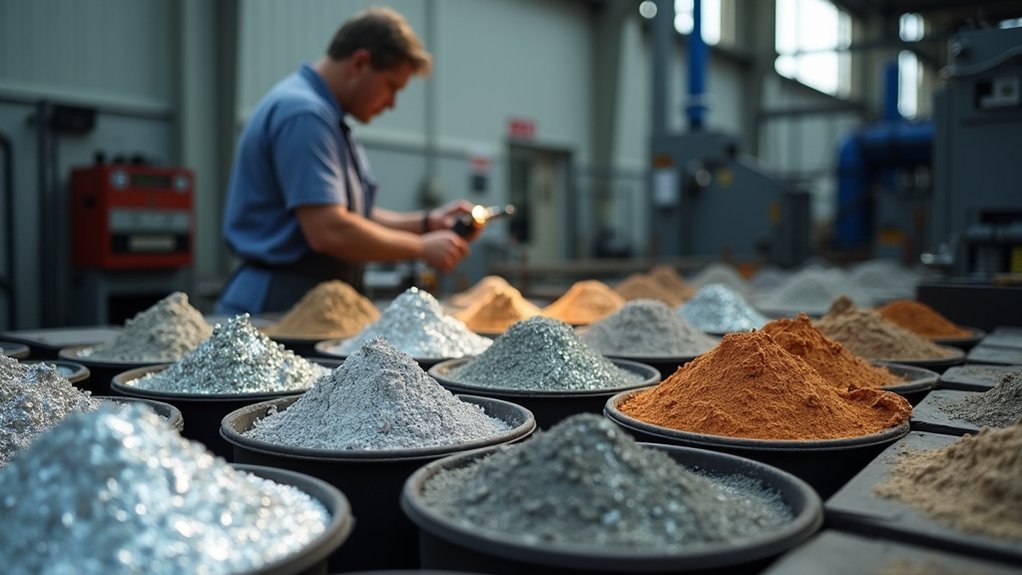
While powder recycling strategies must align with your production goals, the specific reuse method you select depends heavily on your industry’s regulatory requirements and quality standards.
For aerospace and other regulated sectors, single batch reuse offers superior traceability despite increasing interstitial impurities through multiple sievings. You’ll maintain strict tracking protocols essential for quality assurance in these applications.
Alternatively, revitalizing batches by mixing used material with virgin powder provides consistent performance across powder metallurgy applications. This approach stabilizes initial degradation but complicates traceability compared to single-batch methods. Blending methods work well when uniform quality matters more than individual batch tracking.
Consider your material properties, part specifications, and machine architecture when choosing between recycling approaches.
Continuous monitoring guarantees your selected method meets evolving industry requirements.
Frequently Asked Questions
How Do You Dispose of Metal Powder?
You shouldn’t dispose of metal powder in landfills. Instead, store it properly in original packaging with hazmat labels, then transport it to certified recycling facilities where it’s processed safely while conserving significant energy.
How to Improve Metal Recycling?
You’ll improve metal recycling by implementing systematic collection processes, educating employees on proper handling techniques, partnering with specialized recycling companies, establishing closed-loop systems, and regularly monitoring powder properties for quality maintenance.
What to Do With Metal Powder?
You should recycle metal powder through proper storage to prevent contamination, partner with third-party recycling services for safe handling, and implement collection programs to recover valuable materials while reducing waste.
What Is the Best Way to Recycle Scrap Metal?
You’ll maximize recycling value by sorting different metals separately before transport. Contact certified recycling facilities that specialize in your specific metal types, and use proper packaging with hazmat labels for safe handling.