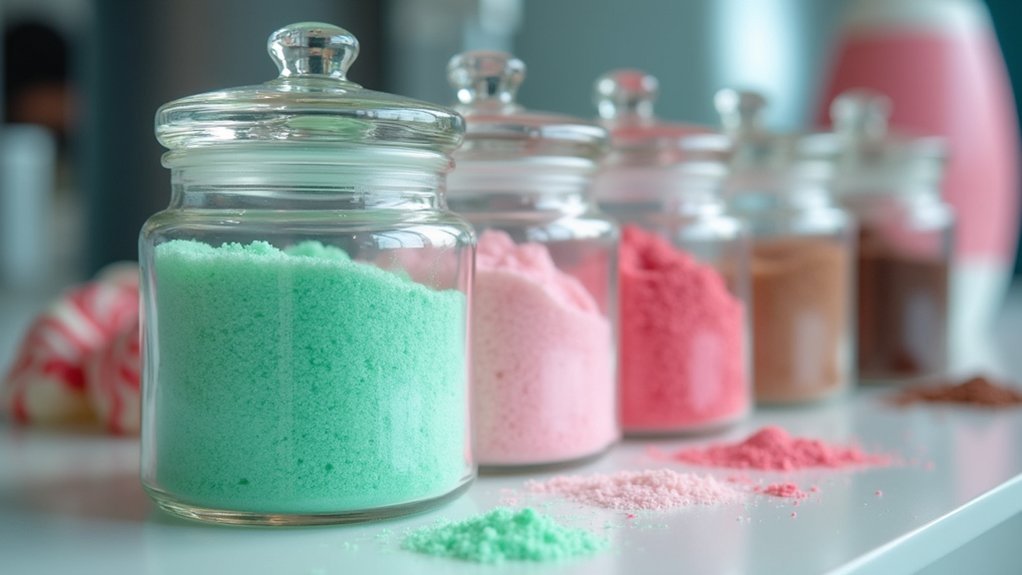
When choosing confectionery 3D printing materials, you’ll need FDA-approved filaments that meet food safety regulations while maintaining structural integrity. Prioritize materials with neutral taste profiles, smooth surfaces that resist bacterial growth, and temperature stability between 190°C-260°C for ideal printing. Consider sugar-based, chocolate, or protein powder options that offer proper shelf life and storage requirements. Factor in costs ranging from $20-50 per kilogram and guarantee compatibility with your printer’s hardware specifications for professional results.
Understanding Food Safety Regulations for Edible 3D Printing
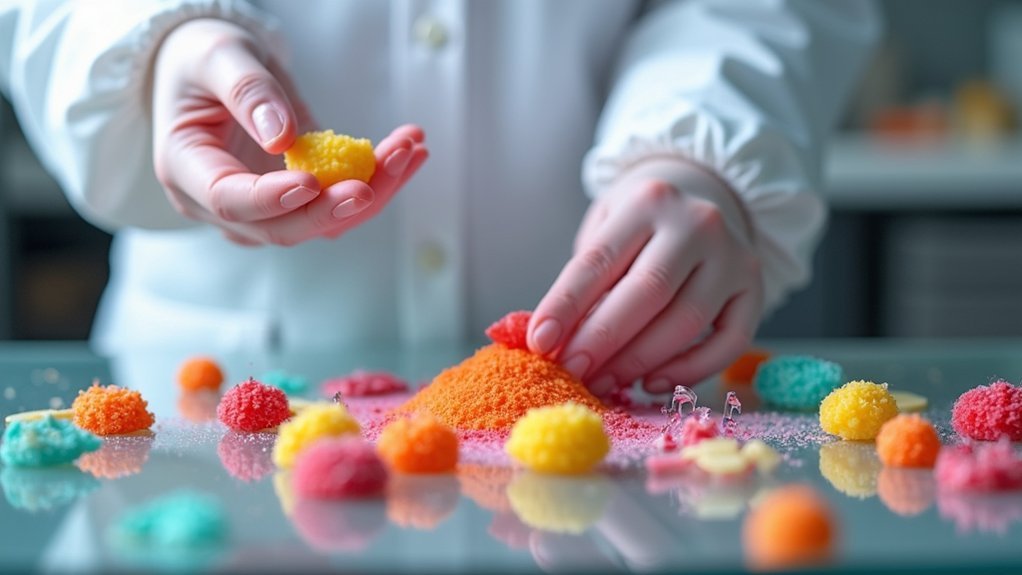
Before you can plunge into confectionery 3D printing, you’ll need to navigate the complex landscape of food safety regulations that govern edible materials.
The FDA in the US and EFSA in Europe strictly regulate materials used in direct food contact applications. You must guarantee all printing materials are certified for food contact, meeting FDA CFR 21 and EU guidelines 10/2011 standards.
These regulations prevent migration and leaching of harmful substances into your confections. You’ll also need to maintain a smooth surface finish that’s nonabsorbent and easily cleanable to prevent bacterial growth.
Food-safe materials with smooth, nonporous surfaces are critical for preventing contamination and ensuring easy sanitization in confectionery 3D printing applications.
Following Good Manufacturing Practices throughout your entire production process is essential for meeting food safety requirements and protecting consumer health.
Essential Material Properties for Confectionery Applications
Once you’ve established regulatory compliance, you’ll need materials that possess specific physical and chemical properties to create successful confectionery products.
Your food-safe materials must demonstrate excellent mechanical properties, particularly tensile strength and flexibility, guaranteeing your printed confections won’t break during handling or transport.
High-temperature resistance is critical since materials must withstand printing heat without deforming or melting in warm storage conditions.
You’ll want materials with a smooth surface finish to prevent bacteria buildup and facilitate easy cleaning between production runs.
Consider biodegradable options that support environmental sustainability goals while meeting consumer demand for eco-friendly products.
These properties work together to guarantee your confectionery 3D printing materials deliver both functional performance and market appeal in today’s competitive food industry.
FDA-Approved Edible Filaments and Their Characteristics
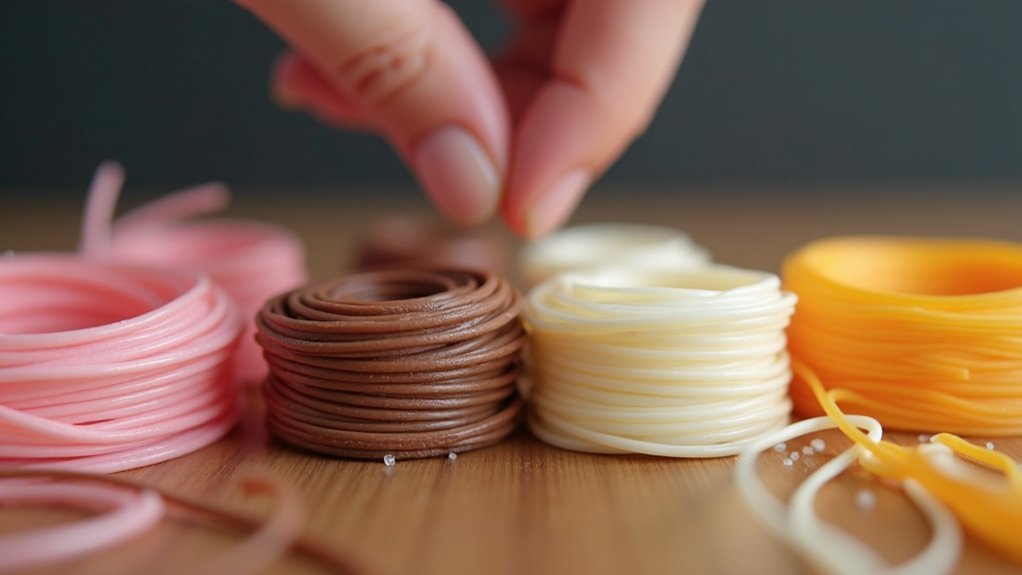
FDA-approved edible filaments represent the gold standard for confectionery 3D printing, offering you materials that’ve undergone extensive testing to guarantee human consumption safety.
These specialized materials comply with strict food safety regulations, ensuring they’re free from toxic chemicals and harmful additives that could contaminate your creations.
Rigorous food safety standards eliminate toxic substances and harmful additives, protecting your edible 3D printed confections from contamination.
Sugar-based options dominate the market, providing sweet flavor profiles perfect for intricate candy designs.
You’ll benefit from their low migration risk, which prevents unwanted substance transfer during printing. The melting temperature and printability characteristics of these filaments enable detailed, visually stunning confections suitable for diverse culinary applications.
When selecting FDA-approved edible filaments, you’re investing in materials that balance safety with functionality, allowing you to create professional-quality confectionery products with confidence.
Temperature Requirements and Thermal Stability
While FDA approval guarantees safety, your confectionery 3D printing materials must also withstand the thermal demands of both printing and post-production handling.
You’ll need to evaluate temperature requirements carefully, as heat deflection temperature determines whether your printed items maintain their shape during food processing and storage.
Common food-safe materials like PLA and PETG offer limited thermal stability, potentially distorting above 60°C (140°F). This restricts their use when heat exposure is expected.
For demanding confectionery applications, you should consider high-temperature resins specifically formulated for food use, providing enhanced resistance to deformation.
Nylon exhibits excellent thermal properties but requires moisture-resistant coatings for confectionery applications.
You must perform thorough testing to verify your chosen materials maintain structural integrity under your specific operating conditions.
Flavor Profiles and Taste Considerations
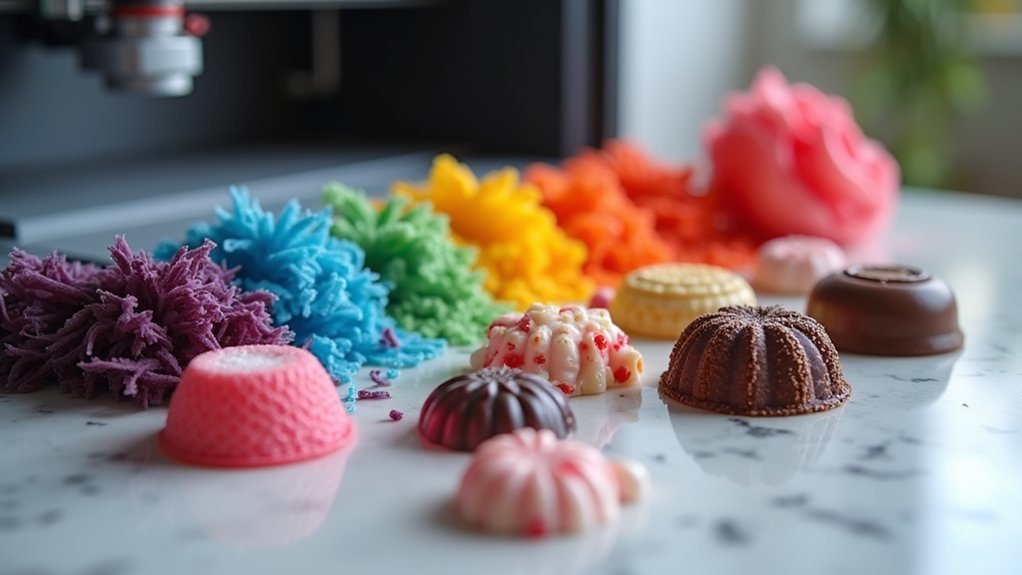
When you’re selecting materials for confectionery 3D printing, you’ll need to guarantee they won’t introduce unwanted flavors that could compromise your final product’s taste.
You must choose food-safe materials with neutral taste profiles that won’t compete with or alter your intended flavor combinations.
Additionally, you’ll want to prevent flavor migration between different colored or flavored sections of your printed confections to maintain distinct taste experiences.
Material Taste Neutrality
Since the success of your confectionery 3D printing project hinges on delivering the exact taste experience you’ve designed, material taste neutrality becomes a non-negotiable requirement.
You must select materials that won’t leach chemicals or impart unwanted flavors to your confections.
Consider these essential factors for maintaining taste integrity:
- Choose food-safe materials like PLA and PETG that minimize chemical migration into your products.
- Avoid nylon and similar materials that absorb flavors and moisture, compromising your flavor profiles.
- Apply food-safe coatings to create protective barriers between printed parts and confections.
- Implement rigorous testing for taste and odor transfer during development phases.
- Prioritize materials with proven track records in direct food contact applications.
Your material selection directly impacts whether your confectionery maintains its intended sensory qualities.
Flavor Migration Prevention
Beyond selecting taste-neutral materials, you must actively prevent flavor migration to preserve your confectionery’s authentic taste profile.
Choose food-safe materials like PETG or PLA, which won’t leach volatile compounds into your confectionery products. These materials considerably reduce flavor migration compared to non-food-safe plastics that can alter intended taste profiles.
Minimize prolonged contact time between your confectionery and 3D printed materials, as extended exposure increases migration risks.
Apply food-safe coatings to create protective barriers that prevent particle migration and maintain flavor integrity. These coatings shield your products from unwanted chemical transfer.
Implement regular testing protocols to monitor potential flavor migration. This guarantees your 3D printed materials don’t compromise the sensory qualities of your final confectionery products, maintaining consistent taste experiences for consumers.
Texture and Structural Integrity of Printed Confections
The tactile experience of your 3D printed confections depends heavily on material selection, as each printing medium creates distinct surface qualities and structural characteristics.
Your choice directly impacts both texture and structural integrity throughout production and consumption.
Material selection fundamentally determines whether your 3D printed treats achieve professional quality or crumble into disappointing failures.
Consider these key material properties for ideal results:
- PLA creates smooth surfaces ideal for detailed designs requiring crisp edges
- TPU offers flexibility that enhances mouthfeel while preventing brittle fractures
- PETG provides superior tensile strength for confections requiring durability during transport
- Nylon balances rigidity and flexibility preventing breakage while maintaining structural form
- High heat deflection temperature materials maintain shape integrity in warm environments
Post-processing techniques like food-safe coatings further enhance both texture and durability by adding protective layers that improve moisture resistance and overall mouthfeel quality.
Printability and Equipment Compatibility
You’ll need to match your material selection with your printer’s specific hardware capabilities, including extruder type and build plate composition.
Your chosen filament’s flow properties directly impact print quality, so you must understand how temperature affects viscosity and extrusion consistency.
You can’t achieve ideal results without precisely controlling your printer’s temperature settings throughout the entire printing process.
Printer Hardware Requirements
While standard 3D printers can handle basic plastics, confectionery printing demands specialized hardware that meets strict food safety and performance standards.
Your printer hardware requirements must align with food-grade applications to guarantee successful confectionery production.
- Food-safe filaments compatibility – Verify your printer supports materials certified for food contact without contamination risks.
- Nozzle size optimization – Choose larger diameter nozzles for thicker chocolate or sugar-based pastes that won’t clog during extrusion.
- Temperature control precision – Guarantee accurate heating systems maintain proper melting points for confectionery materials.
- Food-grade build plate – Select surfaces suitable for food contact that withstand rigorous cleaning protocols.
- Print resolution settings – Adjust layer height capabilities to achieve detailed finishes in your confectionery designs.
Filament Flow Properties
Beyond selecting compatible hardware, understanding your confectionery filament’s flow characteristics determines printing success or failure.
Filament flow properties directly impact printability, affecting how smoothly material extrudes through your printer nozzle. You’ll find thermoplastics like PLA and PETG offer excellent flow characteristics for confectionery applications, while materials like Nylon demand higher temperatures for peak performance.
Consider your material’s heat deflection temperature, as higher deflection temperatures maintain consistent flow under printing heat.
Compatibility with 3D printing equipment matters—higher viscosity materials may require specific nozzles or printer modifications to prevent clogging.
Maintain filament diameter consistency at standard 1.75mm or 2.85mm specifications.
This guarantees proper feeding and allows your extrusion settings to match the printer’s flow rate calculations for consistently successful prints.
Temperature Control Settings
Temperature control settings form the foundation of successful confectionery 3D printing, determining whether your sweet creations emerge flawlessly or become costly failures.
Understanding heat deflection temperatures prevents warping and guarantees your edible materials maintain structural integrity throughout the printing process.
Different 3D printing technologies require specific temperature ranges for ideal material selection and performance:
- Fused Deposition Modeling (FDM) operates at nozzle temperatures between 190°C-260°C with heated beds at 50°C-100°C
- SLA printing maintains resin curing temperatures at 20°C-25°C for proper layer adhesion
- Selective Laser Sintering (SLS) requires powder bed temperatures around 160°C-180°C
- Compatibility of equipment determines which materials you can successfully process
- Verify your printer’s temperature capabilities before selecting specialized confectionery materials
- Natural colorants like beet juice, turmeric, and spirulina provide vibrant color while maintaining health benefits.
- Material selection affects color retention – PLA holds colors exceptionally well in food-safe applications.
- Edible inks work with specialized 3D printing techniques for intricate designs and detailed patterns.
- Surface treatments like food-safe glazes enhance durability and aesthetic qualities.
- Protective layer coatings retain color intensity and add professional shine to finished products.
- PLA: Most affordable at $20-40/kg, ideal for budget-conscious projects
- PETG: Slightly higher cost but excellent durability and moisture resistance
- Nylon PA11: Premium pricing above $60/kg due to enhanced food-safe certifications
- SLS PA12: Specialty material with superior properties, commanding highest prices
- Bulk purchasing: Discounts available for orders exceeding 10kg, reducing per-unit costs
- Optimize print settings to reduce waste by 30%, greatly lowering your cost per kilogram impact
- Choose faster-printing materials like PETG to decrease cycle times and reduce labor costs per unit
- Invest in high-quality food-safe materials to minimize post-processing time and resources
- Prioritize durability to extend shelf life and reduce spoilage losses
- Calculate total production costs including material, time, and waste factors rather than just filament price
Storage and Shelf Life of Edible Materials
Once you’ve selected your confectionery 3D printing materials, proper storage becomes critical for maintaining their quality and extending their usable life. Edible materials have varying shelf life depending on their composition, typically lasting several weeks to months when stored correctly.
| Material Type | Storage Requirements | Shelf Life |
|---|---|---|
| Chocolate paste | Cool, dry place (65-70°F) | 2-3 months |
| Sugar-based materials | Airtight container, low humidity | 4-6 months |
| Protein powders | Sealed container, room temperature | 6-12 months |
| Fruit-based pastes | Refrigerated, moisture-free | 1-2 months |
You’ll need airtight containers to prevent moisture absorption, which causes clumping and spoilage. Temperature fluctuations greatly impact material integrity, so maintain consistent storage conditions. Always check manufacturers’ expiration dates and follow their specific guidelines to guarantee safety and ideal printing performance.
Color Options and Visual Appeal Factors
How vibrant do you want your 3D printed confections to appear? Your color options greatly impact visual appeal, so you’ll need food-safe colorants that comply with regulations.
You can achieve stunning results using naturally derived options that align with health-conscious trends.
Consider these key factors for maximum visual impact:
Cost Analysis and Material Efficiency
You’ll need to weigh material costs against performance when budget planning affects your confectionery 3D printing projects.
Smart design choices can dramatically cut print waste, while higher production volumes often justify investing in premium materials that reduce failure rates.
Understanding these economic factors helps you balance upfront material expenses with long-term operational efficiency.
Material Cost Comparison
When selecting materials for confectionery 3D printing, understanding cost dynamics becomes essential for project viability and long-term success.
Your material cost comparison should evaluate both upfront expenses and long-term operational efficiency.
Common materials offer varying price points:
Consider post-processing requirements when comparing costs.
PETG’s minimal finishing needs often provide better overall value despite higher upfront investment, while PLA remains the most affordable entry point for confectionery applications.
Print Waste Reduction
Since material costs represent 30-50% of your total production expenses, implementing strategic waste reduction measures can markedly improve your project’s profitability.
Start with efficient slicing software that optimizes print paths, reducing waste by 20-30% per job. Choose biodegradable materials like PLA, which generate less waste due to their lower density and easier handling properties.
Don’t discard failed prints entirely—recycling scrap filament can recover 10-15% of your material costs. Regular printer maintenance prevents the errors that cause failed prints, boosting efficiency by 15-20%.
Focus on print waste reduction through proper calibration and cleaning schedules. These combined strategies will considerably lower your overall production expenses while maintaining quality standards in your confectionery 3D printing operations.
Production Volume Economics
Although food-safe filament costs between $20-50 per kilogram, your material selection strategy directly determines whether small to medium production runs remain profitable.
You’ll maximize profit margins by balancing upfront material costs against long-term production efficiency.
Your production speed and material efficiency will ultimately determine profitability more than initial material costs alone.
Frequently Asked Questions
How to Select Material for 3D Printing?
You’ll need to contemplate your project’s requirements first. Evaluate material strength, flexibility, temperature resistance, and printability. Check compatibility with your printer, then match properties like durability and finish to your specific application needs.
What Is the Best Material to Use for 3D Printing?
You’ll find PLA’s your best overall choice for 3D printing due to its ease of use, biodegradable properties, and reliability. It’s beginner-friendly, prints at lower temperatures, and produces quality results consistently.
What Is the Most Profitable Thing to 3D Print?
You’ll find customized confectionery molds most profitable since they command premium prices for personalized events. Custom chocolate molds and intricate cake toppers also generate high profits through specialty designs and food-safe materials.
What Food Grade Materials Are Good for 3D Printing?
You’ll want to use PLA for basic food containers, PETG for durable moisture-resistant items, or properly processed nylon-6 for flexible designs. Always verify FDA compliance and current certifications before printing.