
You can choose from several excellent plant-based edible printing filaments that combine sustainability with functionality. PLA Smartfil Algae incorporates spirulina for nutrient-rich prints, while Coffee PLA transforms discarded grounds into aromatic filament. Wheat and Olive PLA utilize agricultural waste, creating biodegradable materials perfect for food-safe items. Marine-based options include Mussel, Scallop, and Oyster PLA filaments that repurpose seafood industry waste. Wood and Flax fiber variants offer enhanced mechanical properties. Explore these innovative materials to discover their unique printing characteristics and applications.
PLA Smartfil Algae – Spirulina-Based Sustainable Filament
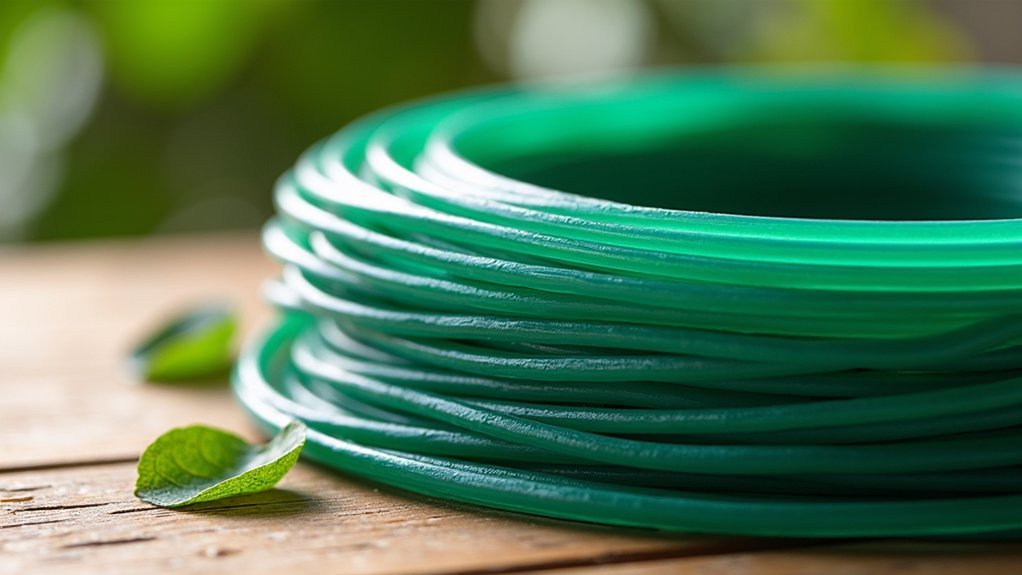
Innovation meets sustainability with PLA Smartfil Algae, a groundbreaking filament that combines traditional polylactic acid with spirulina, a nutrient-dense blue-green algae.
You’ll appreciate how this eco-conscious material delivers exceptional performance while reducing environmental impact through its plant-based composition and biodegradable properties.
At 25.50 €, you’re investing in sustainable 3D printing filaments that don’t compromise on quality.
The spirulina infusion creates a distinctive rustic texture that’s perfect for prototypes and creative projects.
You’ll find this versatile filament aligns perfectly with growing consumer demand for health-conscious, environmentally responsible materials.
Whether you’re developing prototypes or exploring artistic applications, PLA Smartfil Algae provides the reliability you expect from traditional filaments while supporting your commitment to sustainable manufacturing practices.
Coffee PLA – Recycled Coffee Grounds Biocomposite
While sustainability drives 3D printing innovation, Coffee PLA takes eco-consciousness to the next level by transforming discarded coffee grounds into a high-performance biocomposite filament.
Coffee PLA revolutionizes sustainable 3D printing by converting waste coffee grounds into premium biocomposite filament for eco-conscious makers.
You’ll appreciate how this unique material combines polylactic acid with recycled coffee waste, creating sustainable materials that contribute to the circular economy while reducing post-consumer waste.
When you print with Coffee PLA, you’ll notice it maintains the same reliable characteristics as standard PLA, ensuring consistent results across various applications.
The filament’s natural coffee coloration provides distinctive aesthetic variations that reflect the original grounds used in production.
You’ll also enjoy the pleasant coffee aroma released during printing, making your 3D printing sessions more enjoyable while supporting biodegradable, environmentally responsible manufacturing practices.
Wheat PLA – Agricultural Waste Derived Printing Material
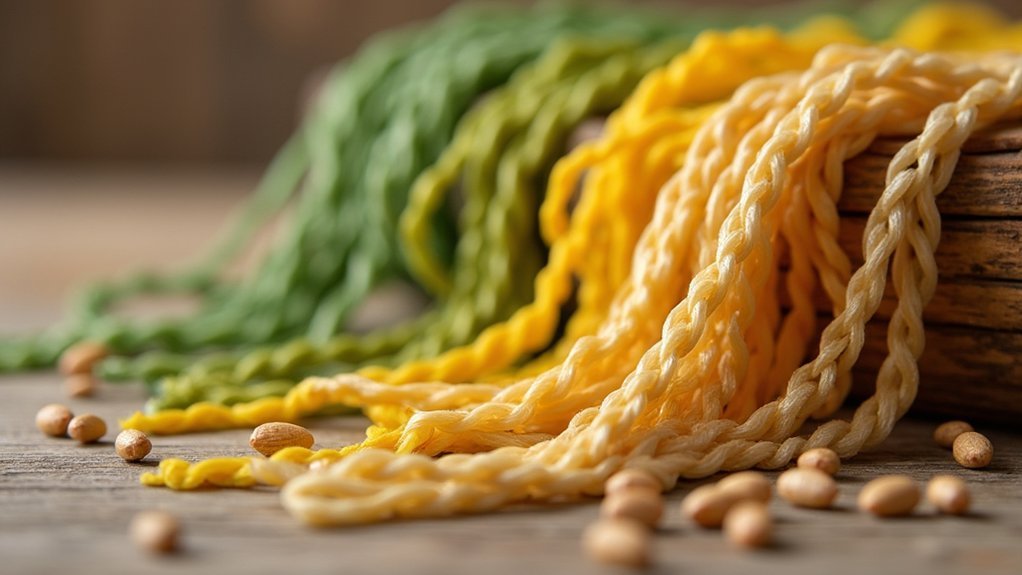
You’ll find wheat PLA stands out with its unique fiber composition that incorporates actual wheat particles from agricultural waste streams.
This innovative material transforms surplus wheat into a sustainable printing solution that reduces farming industry waste while creating biodegradable filament.
The wheat fiber content gives your prints a distinctive natural texture that can’t be replicated with traditional petroleum-based plastics.
Wheat Fiber Composition
Agricultural revolution meets modern manufacturing as wheat PLA transforms farming waste into valuable 3D printing material. You’ll discover that wheat fiber composition creates a sustainable filament that reduces agricultural waste while delivering excellent printing performance.
| Component | Percentage | Function |
|---|---|---|
| Wheat particles | 15-25% | Strength enhancement |
| PLA base | 70-80% | Printability structure |
| Additives | 5-10% | Processing aids |
The wheat fibers you’re working with provide mechanical reinforcement that enhances durability without compromising biodegradability. You’ll find these natural particles distribute evenly throughout the filament, creating consistent flow through your printer’s nozzle. This composition maintains food-safe properties while supporting circular economy principles in manufacturing.
Agricultural Sustainability Benefits
Beyond its impressive structural properties, wheat PLA delivers remarkable environmental advantages that transform agricultural waste streams into valuable manufacturing resources.
You’re contributing to a circular economy by utilizing leftover wheat particles that would otherwise become environmental waste. This approach directly reduces your reliance on petroleum-based plastics, considerably lowering the carbon footprint of your sustainable 3D printing projects.
You’ll support farmers by helping them manage agricultural by-products more effectively, promoting better waste management practices.
Since wheat PLA biodegrades naturally after use, you’re reducing landfill accumulation while choosing a renewable alternative.
This innovative material demonstrates how you can integrate agricultural sustainability into modern manufacturing, fostering environmental stewardship while maintaining resource efficiency in your 3D printing applications.
Olive PLA – Biodegradable Filament From Olive Pit Waste
Innovation meets sustainability when olive pit waste transforms into Olive PLA filament, creating a remarkable biodegradable printing material that’s revolutionizing eco-friendly 3D printing.
You’ll discover this represents the best sustainable 3D printing solution by recycling agricultural by-products that would otherwise go to waste.
You can create food-safe items with confidence thanks to its plant-based composition and excellent printability. Each spool offers unique color variations, giving your projects distinctive aesthetic appeal.
When you’re finished with printed objects, they’ll compost naturally, supporting circular economy principles.
You won’t sacrifice performance for sustainability—Olive PLA maintains traditional PLA’s mechanical properties while sourcing from renewable resources.
This filament reduces plastic waste while delivering reliable results for diverse applications.
Mussel PLA – Marine Byproduct Enhanced Bioplastic

Marine conservation takes an innovative turn with Mussel PLA filament, which transforms discarded mussel shells and processing waste into a high-performance biodegradable printing material.
You’ll find this eco-friendly filament incorporates mussel by-products that would otherwise contribute to marine waste, creating a valuable resource for 3D printing applications.
This sustainable bioplastic enhances traditional PLA’s mechanical properties while maintaining complete biodegradability.
You’ll appreciate how the mussel by-products provide unique textures and natural finishes that mimic organic materials perfectly.
The filament supports circular economy principles by utilizing marine waste streams and reducing dependence on petroleum-based plastics.
When you choose Mussel PLA, you’re supporting both marine conservation efforts and sustainable manufacturing practices, making it an excellent choice for environmentally conscious creators.
Buzzed Beer PLA – Brewery Waste Eco-Friendly Filament
The brewing industry’s contribution to sustainable 3D printing comes alive with Buzzed Beer PLA filament, which transforms brewery waste into a remarkable biodegradable printing material.
You’ll appreciate how this innovative filament reduces environmental impact while delivering quality results for your projects.
When printing with Buzzed Beer PLA, you’ll discover several compelling advantages:
- Unique aesthetics – Each spool features distinct color variations that add visual interest to your creations.
- Versatile applications – Perfect for decorative items, prototypes, and various sustainable printing projects.
- Circular economy support – You’re actively participating in waste reduction by choosing brewery by-products.
At €40.65, you’re investing in both quality and environmental responsibility.
At €40.65, this filament represents a smart investment where premium quality meets meaningful environmental impact for conscious creators.
This filament proves that sustainable printing doesn’t require compromising on performance, making it ideal for environmentally conscious makers.
PLA Flax – Natural Fiber Reinforced Plant-Based Material
Nature’s own reinforcement takes center stage with PLA Flax filament, where natural flax fibers transform ordinary plant-based printing into something extraordinary. This innovative filament made from renewable resources delivers enhanced mechanical properties while maintaining eco-friendly credentials.
| Feature | Specification |
|---|---|
| Base Material | PLA with Flax Fibers |
| Printer Compatibility | Standard FDM |
| Weight | Lightweight Alternative |
| Finish | Unique Organic Texture |
| Price | 27.15 € |
You’ll appreciate how flax fiber integration boosts both strength and rigidity compared to traditional PLA. The filament works seamlessly with your existing FDM printer without requiring special modifications. At 27.15 €, you’re getting a cost-effective sustainable solution that doesn’t compromise on performance, making it perfect for projects demanding both environmental responsibility and superior mechanical characteristics.
Scallop PLA – Seafood Industry Waste Composite Filament
Innovation meets ocean conservation as Scallop PLA filament transforms seafood industry waste into premium 3D printing material.
You’ll discover this biodegradable alternative effectively recycles scallop shells that would otherwise end up in landfills, creating a truly circular economy solution.
This eco-friendly filament delivers three compelling advantages:
- Waste Reduction – Repurposes scallop shell by-products from seafood processing
- Performance Retention – Maintains PLA’s excellent printing properties and adhesion characteristics
- Environmental Impact – Offers complete biodegradability compared to petroleum-based plastics
You can create both intricate artistic designs and functional components without sacrificing quality.
Scallop PLA responds beautifully to standard printing parameters while supporting your sustainability goals.
It’s perfect when you’re seeking plant-based materials that don’t compromise on performance or environmental responsibility.
Oyster PLA – Compostable Shell-Based Printing Medium
Millions of oyster shells discarded annually by seafood restaurants find new purpose through Oyster PLA filament technology.
You’ll discover this innovative material transforms marine waste into a valuable 3D printing resource while maintaining excellent printability characteristics.
When you choose oyster pla, you’re selecting an environmentally friendly alternative that combines polylactic acid with crushed oyster shell by-products.
This fusion creates enhanced mechanical properties, delivering superior strength and durability compared to standard PLA filaments.
You’ll appreciate the material’s strong bed adhesion and user-friendly printing behavior.
The shell incorporation doesn’t compromise the filament’s compostability – you can dispose of printed objects through industrial composting facilities.
This plant-based composite effectively reduces both plastic waste and seafood industry disposal problems, making it an ideal choice for sustainable manufacturing projects.
PLA Wood – Pine Fiber Biosourced Natural Filament
You’ll find PLA Wood’s unique 45% pine fiber composition creates a naturally textured filament that mimics real wood’s appearance and feel.
This biosourced material maintains PLA’s biodegradable properties while adding the organic strength of pine fibers to your printed objects.
The wood content doesn’t just provide aesthetics—it enhances the filament’s compostable nature, breaking down completely in appropriate conditions.
Pine Fiber Composition
When manufacturers combine polylactic acid (PLA) with 45% pine wood fibers, they create a biosourced natural filament that delivers both environmental sustainability and exceptional print quality.
This pine fiber composition transforms ordinary 3D printing into an eco-friendly experience that doesn’t compromise performance.
The unique formulation offers several advantages:
- Enhanced mechanical properties – Pine fibers strengthen the base PLA material, creating more durable printed objects.
- Natural wood aesthetics – You’ll achieve authentic wood-like textures and finishes without using actual lumber.
- Biodegradable structure – The pine fiber composition guarantees complete compostability, reducing your environmental footprint.
You’ll find this filament maintains excellent printability while providing the natural appeal of wood.
The 45% pine content strikes the perfect balance between sustainability and functionality, making it ideal for artistic projects and functional items alike.
Biodegradable Wood Properties
Beyond its impressive composition, PLA wood filament’s biodegradable nature sets it apart from conventional 3D printing materials. You’ll find that these biodegradable wood properties make it an environmentally responsible choice for your projects. The filament breaks down under industrial composting conditions, markedly reducing plastic waste compared to petroleum-based alternatives.
You can create both decorative and functional prints while supporting a circular economy. The pine fiber integration doesn’t just enhance aesthetics—it strengthens the material’s mechanical properties beyond standard PLA.
You’ll appreciate how easily this sustainable filament works with your existing FDM printer setup, requiring no special modifications. This means you can produce intricate, eco-friendly designs without compromising print quality or switching equipment.
Frequently Asked Questions
What Are the Best Food Safe Filaments?
You’ll find PLA and PETG are your best food-safe filament options. They’re FDA-approved, won’t release harmful substances, and work well for food contact applications. Consider adding surface treatments to enhance their safety properties further.
Is PLA Safe for Edible PLAnts?
You can use PLA for edible plants since it’s FDA-recognized as food-safe and made from renewable resources like cornstarch. However, you’ll need food-safe coatings to prevent bacteria buildup.
What Is the Most Environmentally Friendly Filament?
You’ll find PLA made from cornstarch and sugarcane is the most environmentally friendly filament. It’s biodegradable, renewable, and produces lower carbon emissions than oil-based plastics while supporting circular economy practices.
Is PLA or PETG Better for Food?
For food contact, you’ll find PLA works well for short-term use but can’t handle heat or moisture. PETG’s your better choice for durable food containers since it resists temperature and cleaning better.