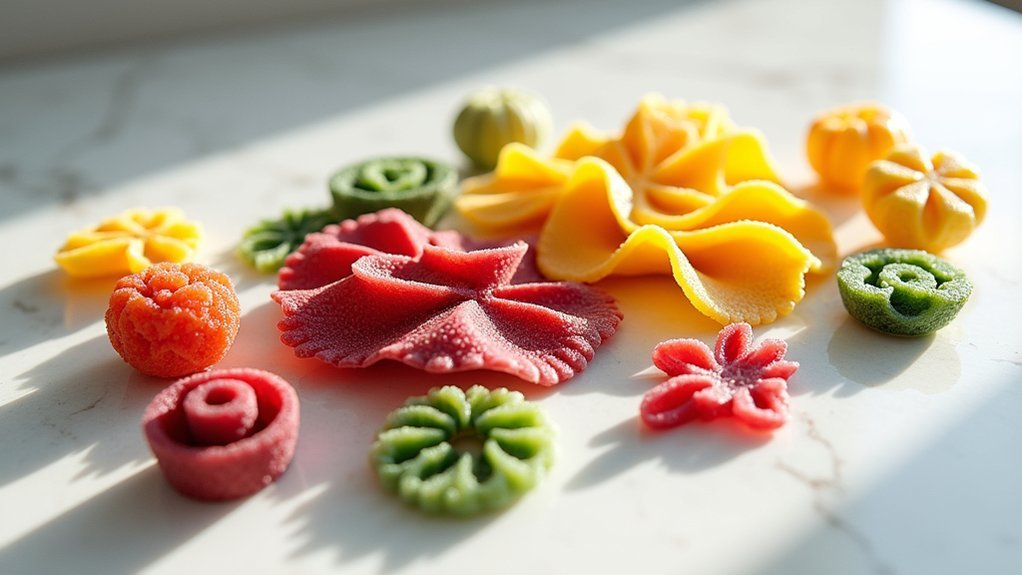
You’ll discover pasta shapes that defy traditional manufacturing limitations, with 3D printing technology creating intricate geometric designs inspired by coral reefs, crystalline structures, and architectural marvels that enhance both visual appeal and sauce retention through precise angular textures. Companies like Artisia craft nature-based forms using advanced algorithms, while premium semolina dough formulations guarantee perfect al dente consistency. These revolutionary shapes feature hollow spheres, interconnected chambers, and complex lattice patterns impossible with conventional methods, transforming your dining experience entirely.
Revolutionary Technology Behind Edible 3D Printing
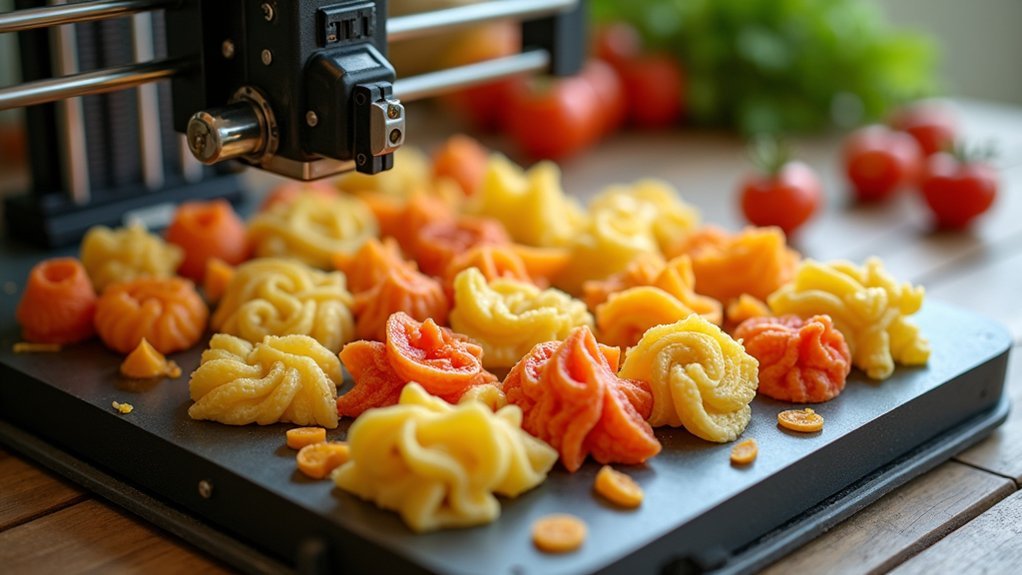
When you download a 3D model and load semolina dough into the printer, you’re witnessing technology that functions like a robotic piping bag, meticulously layering ingredients to create pasta shapes impossible through traditional manufacturing.
This 3D printing process eliminates the need for additives while maintaining ingredient quality and precision. You’ll find each print cycle produces nine pieces in just 2-3 minutes, ensuring consistent quality control and craftsmanship standards.
The technology allows you to customize pasta shapes according to individual dietary needs and preferences, opening new possibilities for personalized nutrition.
Revolutionary 3D printing technology enables personalized pasta creation, tailoring shapes and nutrition to meet individual dietary requirements and culinary preferences.
Unlike traditional methods, this innovation enables intricate structures and designs that revolutionize culinary experiences, representing Barilla’s commitment to advancing the pasta industry through creative technological exploration.
Artisia’s Geometric Pasta Shapes Inspired by Nature
You’ll discover that Artisia’s pasta shapes draw directly from natural forms like coral structures, leaf patterns, and crystalline formations to create stunning geometric designs.
Their 3D printing technology transforms these organic inspirations into precise angular shapes that wouldn’t be possible through traditional pasta-making methods.
These nature-based geometric innovations result in pasta pieces that function as edible art while maintaining the textural properties needed for ideal sauce adherence.
Nature-Inspired Design Elements
Nature’s intricate patterns become edible art through Artisia’s revolutionary approach to 3D printed pasta.
You’ll discover how these nature-inspired design elements transform your dining experience by mimicking organic forms found in the natural world. When you examine each printed pasta piece, you’ll notice the meticulous attention to geometric details that capture nature’s complexity.
The advanced algorithms used in production enable you to enjoy pasta shapes that traditional methods simply can’t achieve.
You’ll find that these nature-inspired design elements don’t just enhance visual appeal—they create unique textures that complement each dish’s flavors.
Geometric Shape Innovations
Beyond traditional pasta-making limitations, Artisia’s geometric innovations merge mathematical precision with organic inspiration to create edible sculptures that redefine your culinary expectations.
You’ll discover pasta shapes that conventional extrusion methods can’t achieve, crafted through advanced 3D printing technology that transforms durum wheat semolina into intricate geometric forms.
Each piece showcases digital craftsmanship that combines cutting-edge innovation with Italian tradition.
You’re experiencing pasta made from the finest grains, where complex angular designs enhance both visual appeal and texture interaction with sauces.
These revolutionary shapes don’t just serve as food—they’re artistic statements that elevate your entire dining experience.
Artisia’s geometric pasta transforms your plate into a canvas where mathematics meets culinary artistry, creating unforgettable sensory moments.
The Science of Al Dente Texture in 3D Printed Pasta
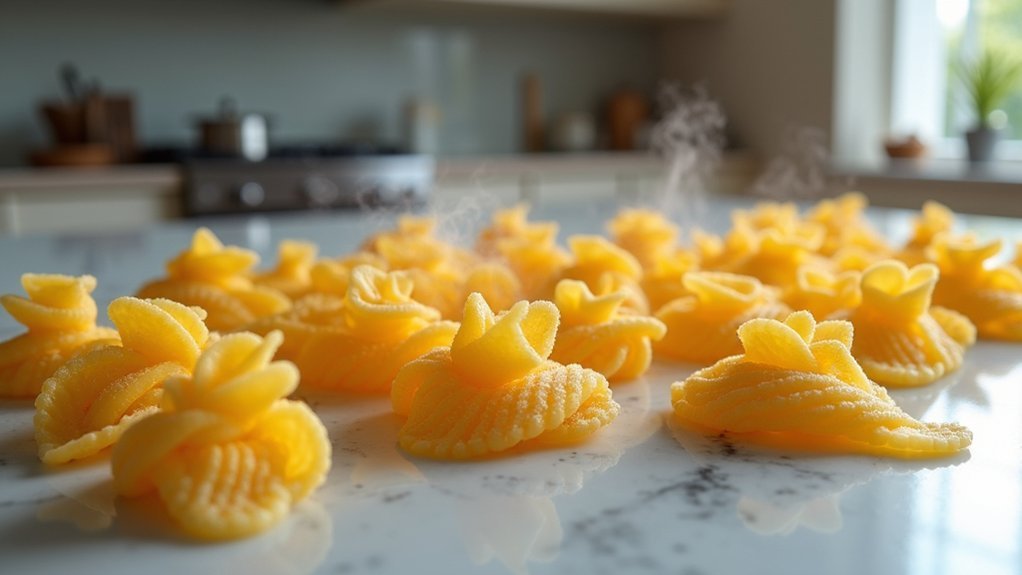
When you bite into perfectly cooked pasta, that satisfying resistance between your teeth signals the coveted al dente texture—a culinary standard that 3D printed pasta engineers now replicate through precise scientific methods. Advanced tools like the Z3 pressure measurement device guarantee your 3D printed pasta maintains consistent firmness by testing how much force pushes cooked pasta through specialized grids. This scientific validation assures exceptional taste experiences while preserving traditional textures.
| Measurement Factor | Traditional Pasta | 3D Printed Pasta |
|---|---|---|
| Texture Control | Variable timing | Precise engineering |
| Shape Complexity | Limited forms | Unlimited geometries |
| Cooking Consistency | Chef-dependent | Data-driven |
| Core Firmness | Experience-based | Scientifically measured |
| Structural Integrity | Standard extrusion | Layered optimization |
Through experimentation with semolina layering and cooking parameters, you’ll achieve that perfect al dente quality while exploring innovative culinary possibilities.
Custom Wedding and Event Pasta Design Services
You can transform your wedding or special event with custom 3D printed pasta that reflects your unique story and style.
These personalized shape designs let you incorporate meaningful symbols, initials, or themed elements directly into your menu, creating an unforgettable dining experience for your guests.
Special event packages cater to fine-dining establishments and event planners who want to offer something truly innovative and visually stunning.
Personalized Shape Design
As 3D printing technology transforms the culinary landscape, personalized pasta design has emerged as a revolutionary service that turns dining into an art form.
When you’re planning your special event, our collaborative approach between chefs and designers will allow us to create pasta that perfectly matches your vision. Whether you want intricate Eiffel Tower shapes for a Parisian-themed celebration or custom designs featuring your new name for wedding announcements, we’ll craft unique pieces that reflect your personal style.
The making pasta process uses high-quality semolina dough, ensuring each customized piece delivers exceptional taste alongside stunning visual appeal.
You’ll create memorable dining experiences that guests won’t forget, transforming ordinary meals into extraordinary celebrations tailored specifically to your event’s theme and atmosphere.
Special Event Packages
Taking personalized design to the next level, extensive event packages transform your special occasions into unforgettable culinary experiences. When partners use Barilla’s advanced 3D printing technology for weddings, they’ll receive intricate pasta shapes that reflect their unique personalities and themes. Each piece of pasta becomes a stunning conversation starter, whether it’s resembling the Eiffel Tower or incorporating meaningful symbols.
| Package Feature | Wedding | Corporate | Anniversary | Birthday | Gala |
|---|---|---|---|---|---|
| Custom Shapes | ✓ | ✓ | ✓ | ✓ | ✓ |
| Flavor Options | ✓ | ✓ | ✓ | ✓ | ✓ |
| Dietary Customization | ✓ | ✓ | ✓ | ✓ | ✓ |
| Fine-Dining Presentation | ✓ | ✓ | ✓ | ✓ | ✓ |
| Guest Memorability | ✓ | ✓ | ✓ | ✓ | ✓ |
These packages combine aesthetic pleasure with exceptional taste, ensuring your guests experience something truly distinctive.
Bronze-Cut Texture Technology for Enhanced Sauce Retention
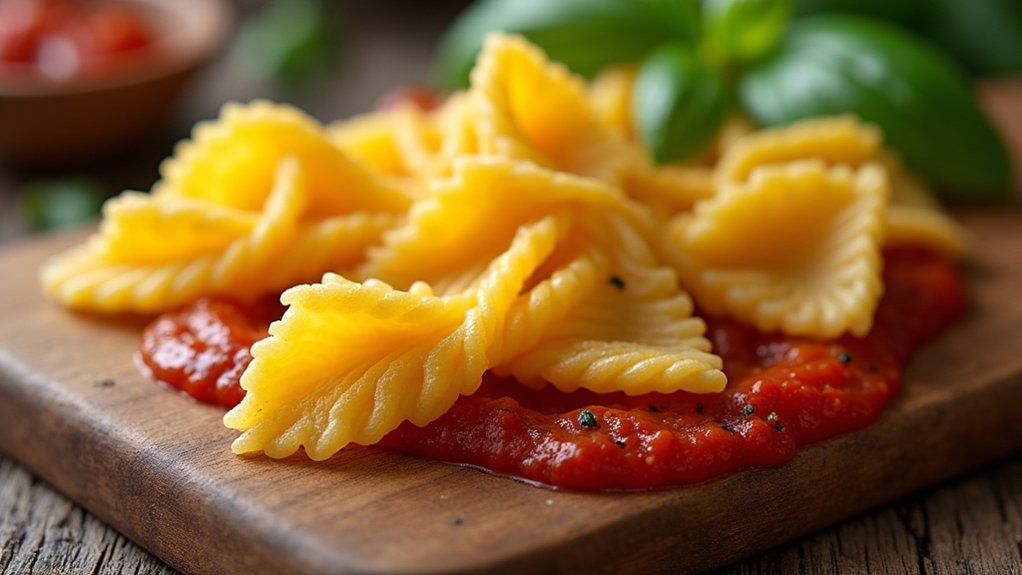
When traditional bronze dies extrude pasta, they create microscopic grooves that transform how sauce clings to each piece.
You’ll notice how bronze-cut pasta’s rough surface dramatically improves sauce retention compared to smooth alternatives. These micro-grooves aren’t random—they’re measured using rugosimeters to guarantee consistent quality that maximizes flavor interaction.
You’re experiencing enhanced taste with every bite because the textured surface creates greater contact between pasta and sauce. This isn’t just about appearance; it’s about delivering richer flavors throughout your meal.
At Artisia, we’ve applied this traditional bronze-cutting technique to our 3D printed pasta shapes.
You’ll get the same superior sauce-holding capabilities that chefs have relied on for generations, now combined with innovative geometric designs that weren’t possible before.
Nutritional Customization Through Advanced Food Printing
Beyond creating visually stunning shapes, 3D food printing technology transforms how you’ll approach nutrition by allowing precise customization of pasta’s ingredient composition.
You can now tailor every strand to meet specific dietary restrictions and health requirements, whether you’re managing diabetes, celiac disease, or swallowing difficulties.
Advanced food printers enable you to create pasta with modified textures and enhanced nutritional profiles through collaborative efforts between chefs, designers, and engineers:
3D food printing revolutionizes pasta creation through expert collaboration, delivering customized nutrition and textures for individual dietary needs.
- Protein fortification – Adding plant-based or alternative proteins directly into the pasta structure
- Vitamin integration – Incorporating essential vitamins and minerals without compromising taste
- Texture modification – Adjusting consistency for individuals with dysphagia or chewing difficulties
This precision approach reduces food waste by utilizing exact ingredient quantities while ensuring your meals fulfill both health requirements and culinary desires.
Complex Architectural Shapes Impossible With Traditional Methods
You can now create pasta with hollow spheres, intricate pineapple textures, and complex internal geometries that traditional extrusion methods simply can’t achieve.
The layered semolina dough approach lets you engineer structural designs with precise wall thickness and interconnected chambers that would collapse during conventional pasta making.
You’re no longer bound by the linear limitations of pushing dough through shaped dies—instead, you can build three-dimensional architectural forms that enhance both visual appeal and sauce interaction.
Geometric Pasta Design Innovation
Innovation in 3D printing has shattered the traditional boundaries of pasta making, enabling the creation of extraordinary geometric shapes that would be impossible to achieve through conventional extrusion methods.
You’ll discover that this technology transforms simple semolina dough into intricate architectural marvels through precise layer-by-layer construction.
The geometric design possibilities you can explore include:
- Hollow spherical structures that create unique sauce-capturing chambers
- Complex pineapple-inspired forms with detailed surface textures
- Interconnected lattice patterns that enhance cooking dynamics and flavor distribution
You’re witnessing pasta evolve from a basic food staple into customizable art pieces.
Each design offers precise control over texture and visual appeal, allowing you to experiment with structures that fundamentally change how sauce adheres and flavors develop during cooking.
Structural Engineering Through Technology
While traditional pasta machines rely on pushing dough through rigid dies, 3D printing technology functions as a digital architect, constructing complex internal geometries that challenge the very foundations of what pasta can become. You can now create hollow spheres, intricate lattices, and architectural marvels that traditional extrusion can’t achieve. The layer-by-layer semolina construction enables precise structural control.
| Shape Category | Traditional Method | 3D Printing Capability |
|---|---|---|
| Hollow Spheres | Impossible | Fully achievable |
| Internal Chambers | Limited | Complex geometries |
| Lattice Structures | Basic patterns | Intricate designs |
| Spiral Cores | Simple helixes | Multi-directional |
| Branching Forms | Not possible | Nature-inspired |
This technological advancement transforms pasta into engineered culinary architecture, where each piece’s structure directly impacts flavor distribution and texture experience.
Beyond Traditional Extrusion Limits
Because traditional extrusion methods force dough through static dies in a single direction, they can’t produce the geometric complexity that 3D printing achieves through its additive manufacturing process.
You’re witnessing a culinary revolution where semolina dough transforms into architectural masterpieces through precise layering technology.
This breakthrough enables you to create:
- Hollow spherical designs – Perfect cavities that trap sauces and enhance flavor distribution
- Intricate landmark replicas – Complex structures like Eiffel Tower pasta that merge art with gastronomy
- Multi-dimensional geometries – Impossible angles and interconnected forms that elevate texture experiences
Your 3D printer produces nine pieces simultaneously in minutes, ensuring consistent quality while pushing creative boundaries.
You’re not just making pasta; you’re crafting edible sculptures that transform fine-dining into an immersive visual and culinary experience.
Premium Semolina Dough Formulations for 3D Printing
The foundation of successful 3D printed pasta lies in meticulously crafted semolina dough formulations that balance precision with culinary excellence.
You’ll find these premium formulations use high-quality durum wheat semolina combined with precisely controlled water content. This careful balance guarantees your dough maintains ideal elasticity and moisture levels essential for successful layering during printing.
When you work with these formulations, you’re getting rigorously tested recipes that preserve pasta integrity throughout the printing process.
Your final product won’t just look visually stunning—it’ll maintain structural soundness and proper texture when cooked. You can also incorporate unique flavors and colors, expanding your pasta’s sensory experience beyond traditional options.
These innovative formulations result from extensive research, guaranteeing your 3D printed pasta meets exceptional standards of taste and quality.
Layer-by-Layer Construction Process and Quality Control
Once your premium semolina dough is prepared, the actual construction begins with downloading a digital model that guides the printer’s precise movements.
With your semolina dough ready, construction commences by downloading the digital blueprint that directs each calculated printer movement.
You’ll watch as each pasta piece forms layer by layer, with the entire process taking approximately 2-3 minutes per piece. Your printer’s capacity is limited to nine pieces at once, which actually enhances quality control throughout production.
The construction process focuses on three critical elements:
- Structural integrity – Each layer must bond properly to prevent collapse during cooking.
- Visual appeal – Layers align precisely to create clean, defined shapes.
- Functional design – Complex geometries maintain their form while allowing proper sauce adhesion.
You can measure your finished pasta’s quality using tools like the Z3, which tests firmness and resilience by measuring pressure required for penetration.
Specialized Applications for Elderly Dietary Needs
While traditional pasta shapes can pose challenges for elderly diners, 3D printing technology offers unprecedented control over texture and form to address specific dietary needs. You can now create custom meals that guarantee nutritional adequacy while maintaining palatability for seniors facing swallowing difficulties or dental issues.
The precise printing process allows you to control texture, resulting in pasta that’s easy to chew and swallow. You’ll find that innovative shapes and textures enhance the dining experience, making meals more enjoyable and engaging for older adults.
Research centers are exploring how this technology can create appealing options that reduce food waste while meeting elderly dietary requirements. This tailored approach transforms challenging mealtimes into visually appealing, accessible dining experiences.
Chef Collaborations and Fine Dining Restaurant Integration
As 3D printing technology moves beyond therapeutic applications, forward-thinking chefs are partnering with companies like Artisia to revolutionize fine dining through bespoke pasta creations.
You’ll discover that renowned culinary artists can now integrate custom-designed pasta pieces into their menus, offering visually striking dishes that deliver exceptional flavor and texture.
This innovative collaboration enables you to:
- Experiment with geometry – altering your dish’s taste and mouthfeel through unique structural designs
- Create personalized pasta for special events like weddings or private dinners
- Merge artistry and technology in gastronomy, redefining traditional pasta-making practices
You’re witnessing a transformation where fine dining establishments can elevate their culinary offerings, creating memorable experiences that showcase both technical innovation and artistic vision in upscale restaurants.
Sustainable Packaging Solutions for 3D Printed Pasta
When you’re producing 3D printed pasta, you’ll need packaging that matches your innovation with environmental responsibility.
You can explore eco-friendly material innovations like plant-based films and compostable wraps that protect your unique pasta shapes without harming the planet.
You’ll also want to focus on recyclable design elements and biodegradable packaging development that breaks down naturally after use.
Eco-Friendly Material Innovations
Since consumers increasingly demand environmentally responsible products, companies like Artisia have revolutionized their packaging approaches to meet these expectations.
You’ll notice their 2024 Blue Box redesign features a refined red aesthetic that showcases their eco-conscious materials. This innovation represents a significant shift in 3D printed pasta packaging standards.
Artisia’s material innovations focus on three key areas:
- High-quality cardboard construction – Guarantees minimal environmental impact while maintaining product integrity
- Biodegradable eco-friendly inks – Eliminates harmful chemicals from the packaging process
- Fully recyclable components – Allows you to dispose of packaging responsibly
You’re witnessing a broader food industry transformation where sustainability drives packaging decisions.
Artisia’s commitment demonstrates how companies can successfully balance environmental responsibility with product protection, setting new standards for 3D printed pasta packaging solutions.
Recyclable Design Elements
Beyond material selection, the actual design elements within recyclable packaging create the foundation for truly sustainable 3D printed pasta solutions.
You’ll notice how Barilla’s Blue Box packaging leverages high-quality cardboard that’s fully recyclable, setting industry standards for environmental responsibility.
When you choose brands like Artisia, you’re supporting companies that prioritize environmentally friendly materials in their packaging design philosophy.
These innovative packaging designs don’t just reduce waste—they’ll enhance your brand’s market positioning among environmentally conscious consumers.
You’ll find that incorporating recyclable design elements aligns perfectly with broader industry trends toward responsible consumption.
The aesthetic appeal of sustainable packaging solutions creates a compelling visual narrative that resonates with your values while demonstrating genuine commitment to environmental stewardship in the 3D printed pasta market.
Biodegradable Packaging Development
As consumer demand for eco-conscious products intensifies throughout high-end culinary markets, you’ll discover that biodegradable packaging development represents the next evolutionary step in sustainable 3D printed pasta solutions.
Companies are investing heavily in R&D to create packaging that naturally decomposes while maintaining pasta freshness and quality.
Current research focuses on three innovative sustainable materials:
- Plant-based plastics – Derived from renewable sources that break down completely without environmental harm
- Compostable films – Protective barriers that decompose in home composting systems while preserving pasta integrity
- Bio-enhanced polymers – Advanced materials combining durability with accelerated biodegradation properties
You’ll find these packaging solutions don’t just meet sustainability standards—they enhance your pasta’s visual appeal, perfectly complementing the unique design ethos of 3D printed culinary creations while eliminating plastic waste concerns.
Future Kitchen Integration and Home Printing Possibilities
When you imagine your kitchen ten years from now, a 3D food printer might sit next to your microwave, ready to craft intricate pasta shapes at the touch of a button.
You’ll customize flavors and forms to match your dietary needs, whether you’re gluten-free, keto, or simply craving something unique. The user-friendly interface will let you experiment with complex designs even if you’re a novice cook, transforming your culinary creativity with advanced technology.
You’ll print personalized meals that enhance both presentation and nutritional value, appealing to your health-conscious lifestyle.
This technology won’t just make gourmet cooking accessible—it’ll revolutionize how you approach meal preparation, turning your kitchen into a personalized food laboratory where imagination meets nutrition.
Global Market Expansion and Culinary Innovation Trends
While traditional pasta makers once dominated kitchens worldwide, 3D printing technology is now reshaping the global culinary landscape with unprecedented speed and creativity.
You’re witnessing a culinary revolution where companies like Barilla’s Artisia blend traditional Italian craftsmanship with cutting-edge design principles, creating pasta shapes that were previously impossible to manufacture.
The market’s expanding rapidly as three key trends emerge:
- Personalized dining experiences – Custom pasta shapes tailored for special events and fine dining establishments
- Military and specialized applications – Companies like BeeHex developing customized meals for specific dietary requirements
- Sustainability initiatives – Research programs focusing on reducing food waste through innovative printing applications
You’ll find this technology transforms not just what’s possible in pasta design, but how the entire food industry approaches customization and environmental responsibility.
Frequently Asked Questions
How Much Do 3D Printed Pasta Shapes Cost Compared to Traditional Pasta?
You’ll pay considerably more for 3D printed pasta since it’s still emerging technology with limited production scale. Traditional pasta costs pennies per serving while 3D printed versions can cost several dollars per portion.
What Is the Shelf Life of 3D Printed Pasta Products?
You’ll find 3D printed pasta has a similar shelf life to traditional dried pasta, typically lasting 2-3 years when stored properly in cool, dry conditions with airtight packaging.
Can Consumers Purchase Home 3D Pasta Printers From Artisia?
You can’t purchase home 3D pasta printers directly from Artisia currently. They’re focusing on commercial applications and restaurant partnerships. However, you’ll find other brands offering consumer pasta 3D printers in the market.
Are Artisia’s 3D Printed Pasta Shapes Available in Grocery Stores?
You can’t find Artisia’s 3D printed pasta shapes in grocery stores yet. They’re currently only available through direct ordering from Artisia or select specialty food retailers that partner with them.
How Long Does It Take to 3D Print a Single Serving?
You’ll typically wait 2-5 minutes for a single serving to print, depending on the pasta’s complexity and size. Simpler shapes like tubes print faster, while intricate designs with detailed patterns take longer to complete.