
You’ll find 3D printing revolutionizes custom prosthetics by slashing production time from weeks to just three days while reducing costs from thousands to hundreds of dollars. You get perfectly fitted devices through high-resolution scanning and personalized designs that match your anatomy, lifestyle, and preferences. The technology uses durable, lightweight materials that resist daily wear while minimizing waste by 90%. Your prosthetic becomes accessible, sustainable, and uniquely yours—and there’s much more to discover.
Rapid Production and Manufacturing Speed
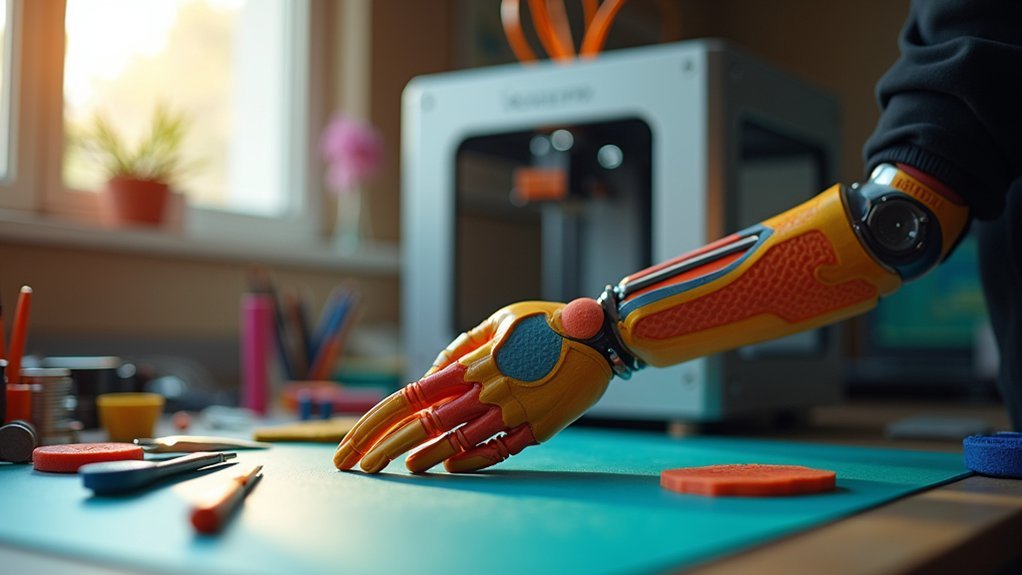
When you need a custom prosthetic, 3D printing dramatically cuts waiting times from several weeks down to just a few days. This rapid production transforms how you’ll experience prosthetic manufacturing.
3D printing revolutionizes prosthetic manufacturing by reducing production time from weeks to mere days through rapid, customized solutions.
You’ll benefit from automated design workflows that create prosthetic sockets in just three days, eliminating the extensive manual steps that slow traditional methods.
The manufacturing speed comes from utilizing precise anatomical data through high-resolution 3D scans. These quickly develop accurate digital models that are ready for immediate printing, directly addressing your patient needs without delay.
You’ll appreciate the on-demand nature of this technology, which produces custom prosthetics exactly when you need them. This streamlined workflow enhances efficiency while ensuring timely availability, reducing inventory requirements and dramatically improving your overall experience.
Cost-Effectiveness and Economic Benefits
Beyond speed improvements, 3D printing delivers substantial cost savings that make prosthetic devices accessible to more people than ever before.
You’ll find that production costs drop dramatically to just a few hundred dollars, compared to traditional manufacturing methods that often exceed thousands. This cost-effectiveness stems from streamlined processes that minimize labor and material expenses while eliminating large inventory requirements.
You can benefit from on-demand production that reduces overhead costs considerably. The rapid prototyping capabilities mean you’ll receive your prosthetic devices within days rather than weeks, cutting time-related expenses.
Most importantly, this enhanced accessibility extends to individuals in low-income areas who previously couldn’t afford traditional prosthetics, democratizing access to essential medical devices through revolutionary 3D printing technology.
Enhanced Customization and Personalization
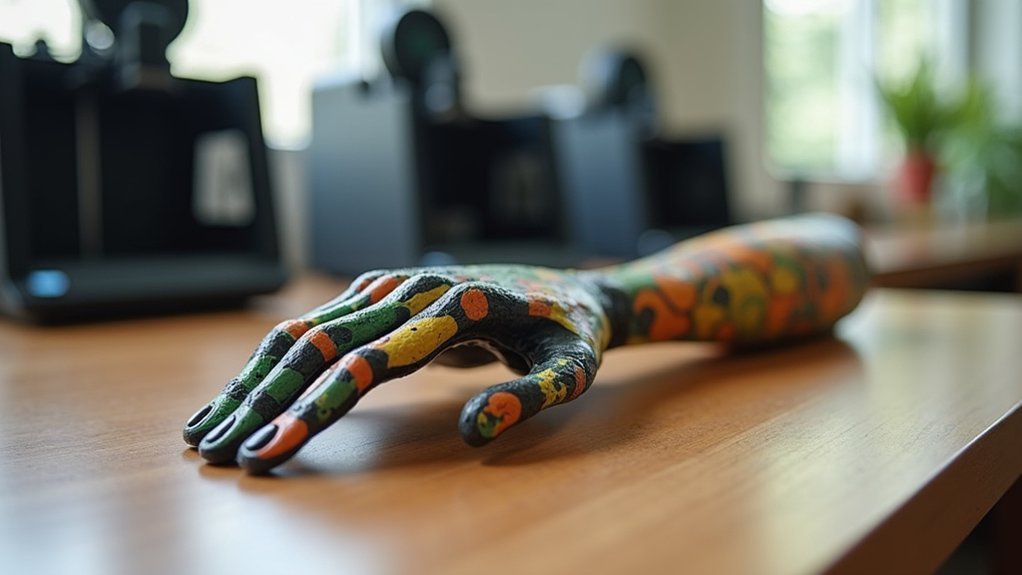
The affordability of 3D printing opens doors to another game-changing advantage: unprecedented customization that transforms how prosthetics fit and function for each individual user.
You’ll receive a prosthetic designed specifically for your anatomy, ensuring enhanced comfort and peak performance. Custom printing allows you to choose colors, patterns, and themes that reflect your personality, considerably helping improve acceptance, especially for children.
Advanced design software enables the creation of complex geometries and lattice structures that adapt to your dynamic behaviors. You can incorporate specialized features like articulated fingers and adaptive grips tailored to your unique needs.
This rapid manufacturing process reduces production time from weeks to days, allowing quick adjustments as your requirements change. Personalized prosthetics aren’t just functional—they’re expressions of your individuality.
Superior Material Properties and Durability
When you choose 3D-printed prosthetics, you’re accessing advanced materials that far exceed traditional wood and metal options in both performance and longevity.
You’ll benefit from high-performance polymers and composites that resist daily wear while maintaining their structural integrity throughout extended use.
These cutting-edge materials deliver the perfect combination of lightweight design and exceptional durability, ensuring your prosthetic won’t compromise your active lifestyle.
High-Quality Durable Materials
As 3D printing technology continues to evolve, it’s granting access to high-quality, durable materials that transform prosthetic performance and longevity.
You’ll benefit from advanced materials like nylon and thermoplastic elastomers, which deliver exceptional flexibility and strength for your custom prosthetic. These materials withstand significant wear and tear, ensuring your prosthetic handles daily use without compromising functionality.
The precision inherent in 3D printing guarantees consistent material properties throughout your device, resulting in reliable performance you can count on.
You’ll appreciate the lattice structures engineered into many designs, which maximize strength while keeping weight minimal. This combination provides comfortable, long-lasting solutions tailored to your needs.
As materials science advances, you can expect even stronger, more flexible options that’ll further enhance your prosthetic’s durability and overall functionality.
Lightweight Yet Robust
Material innovation extends beyond durability to achieve a perfect balance between weight and strength that revolutionizes prosthetic design.
3D printing enables you to benefit from advanced materials like nylon and TPU that create a lightweight structure without compromising strength and flexibility. You’ll experience reduced fatigue during daily activities since these high-quality polymers deliver exceptional performance characteristics while weighing up to 50% less than traditional alternatives.
Lattice structures enhance your prosthetic’s strength-to-weight ratio, maximizing durability while minimizing material use. This engineering approach guarantees ideal comfort during extended wear.
Through 3D printing customization, you’ll receive a device tailored to your specific needs, incorporating shock absorption and impact resistance features that match your lifestyle demands perfectly.
Complex Geometries and Design Freedom
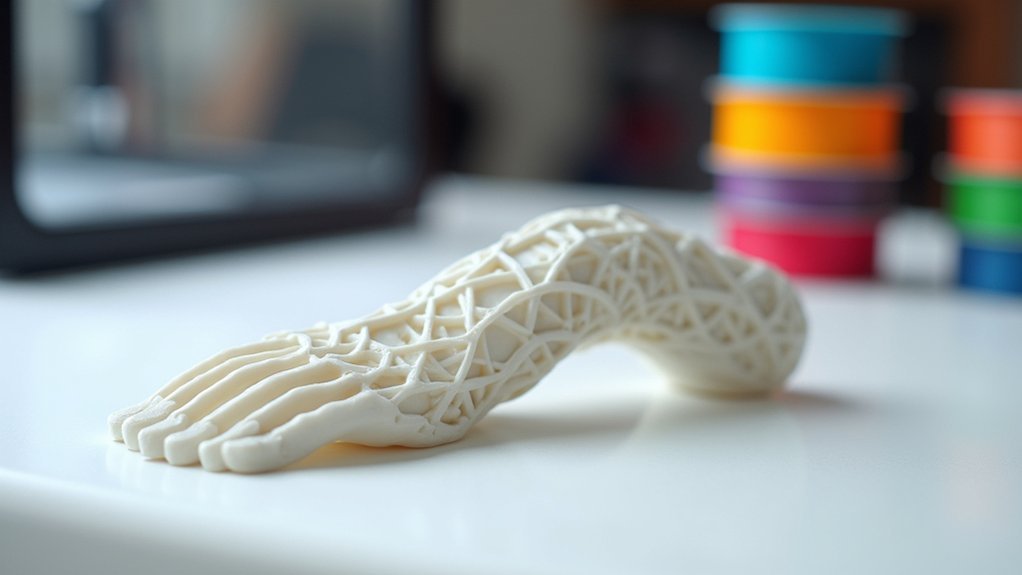
Since traditional manufacturing methods rely on subtractive processes that remove material from solid blocks, they’re inherently limited in the complexity of shapes they can produce.
3D printing breaks free from these constraints, enabling you to create intricate geometries that would be impossible with conventional techniques.
This design freedom transforms how you approach prosthetic development:
- Lattice structures enhance strength and flexibility while maintaining lightweight prosthetics that don’t compromise comfort.
- Anatomical customization allows precise tailoring to individual patient needs, ensuring ideal fit and performance.
- Advanced software like nTop enables rapid iterations of complex geometries, streamlining the design process.
- Multi-material prosthetics combine different materials strategically, enhancing durability where needed while maintaining comfort zones.
Through customization capabilities, you can modify designs easily, creating prosthetics that truly match each user’s unique requirements and lifestyle demands.
Sustainability and Environmental Impact
When you choose 3D printing for prosthetics, you’re making an environmentally conscious decision that can reduce material waste by up to 90% compared to traditional manufacturing methods.
You’ll also contribute to lower carbon emissions since additive manufacturing uses only the materials needed for each device and often incorporates recycled plastics.
This sustainable approach means you’re not just getting a custom prosthetic—you’re supporting a manufacturing process that minimizes environmental impact through efficient resource use.
Reduced Material Waste
Traditional manufacturing methods pile up waste materials like discarded puzzle pieces, but 3D printing flips this wasteful approach on its head. When you choose additive manufacturing for prosthetics, you’re embracing precise layer-by-layer construction that dramatically cuts waste production.
Here’s how 3D printing transforms sustainable practices:
- Minimize material waste by producing only what’s needed for each prosthetic
- Save up to 90% of raw materials by 2050 compared to conventional methods
- Eliminate offcuts and excess materials common in traditional machining
- Utilize recycled materials to promote circular economy principles
You’ll also reduce carbon emissions through localized production, eliminating extensive shipping requirements.
The eco-friendly approach doesn’t just benefit the environment—it creates complex geometries with minimal material consumption, proving that sustainable practices can enhance both efficiency and environmental responsibility.
Lower Carbon Emissions
Beyond reducing material waste, 3D printing revolutionizes prosthetic manufacturing by slashing carbon emissions throughout the production cycle.
You’ll find that additive manufacturing generates considerably fewer greenhouse gases compared to traditional methods, making your prosthetic production more environmentally friendly. The sustainable production process means you’re contributing to a greener healthcare sector while meeting patient needs.
When you choose 3D printing, you’re embracing technology that utilizes recyclable materials, further reducing your environmental impact.
This shift toward lower carbon emissions aligns perfectly with global sustainability goals. You’ll discover that prosthetic manufacturing through additive processes doesn’t just minimize material waste—it actively supports climate-conscious practices.
Digital Workflow Integration and Automation
As prosthetic manufacturing evolves toward complete digitization, you’ll find that integrated workflows now seamlessly connect patient scanning to final product delivery through automated design systems.
This digital workflow transformation creates precise digital models from high-resolution anatomical data, eliminating manual steps that traditionally slowed production.
Advanced software paired with 3D printing technology enables remarkable efficiency gains:
- Rapid scanning capabilities – Process multiple patients quickly, like LifeNabled’s 35 amputee scans in two days
- Automated design exploration – Quickly modify variables for ideal patient-specific comfort and functionality
- Accelerated production timelines – Complete custom-fit sockets in three days versus weeks with traditional methods
- Democratized access – GUI interfaces allow non-experts to run sophisticated design processes with patient data
This automation makes advanced prosthetic solutions accessible to more healthcare providers while maintaining precision.
Improved Patient Outcomes and Accessibility
When patients receive 3D-printed prosthetics, they experience dramatically improved outcomes through faster fitting processes and enhanced comfort that traditional manufacturing simply can’t match.
3D printing reduces production times from weeks to days, particularly benefiting children who quickly outgrow devices. The precise fitting minimizes skin irritation while enhancing comfort compared to traditional methods.
Custom prosthetics through 3D printing dramatically improve patient accessibility by reducing costs from thousands to hundreds of dollars.
This manufacturing process enables complex geometries and unique designs that cater to individual needs, resulting in better functionality for daily activities. Advanced features like articulated fingers and adaptive grips enhance performance, leading to improved quality of life for amputees seeking personalized solutions.
Frequently Asked Questions
What Are the Benefits of Using 3D Printing in Prosthetics?
You’ll get affordable prosthetics costing hundreds instead of thousands, rapid production in hours rather than weeks, perfect custom fits for your anatomy, lightweight durable materials, and personalized designs that express your unique style.
What Advantages Does 3D Printing Offer in Custom Product Design?
You’ll create complex geometries impossible with traditional manufacturing, rapidly prototype designs, reduce material waste, achieve precise customization for individual needs, and produce lightweight structures while maintaining strength and functionality throughout your development process.
How Does 3D Printing Enhance Customization in Prosthetic Design?
You’ll get prosthetics perfectly fitted to your unique anatomy through 3D printing’s precise customization capabilities. You can easily modify designs, choose personal aesthetics, and benefit from lightweight lattice structures that enhance comfort and functionality.
Why 3D Printing Is Used for Custom Medical Devices?
You’ll find 3D printing creates perfectly fitted medical devices at lower costs with faster production times. It lets you make quick adjustments, uses sustainable materials, and produces complex geometries that traditional manufacturing can’t achieve.