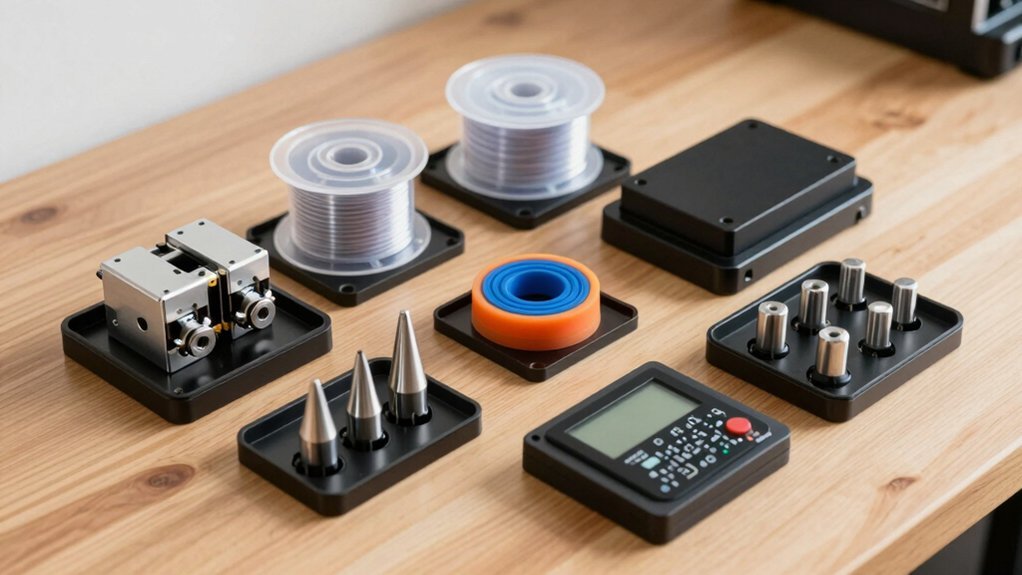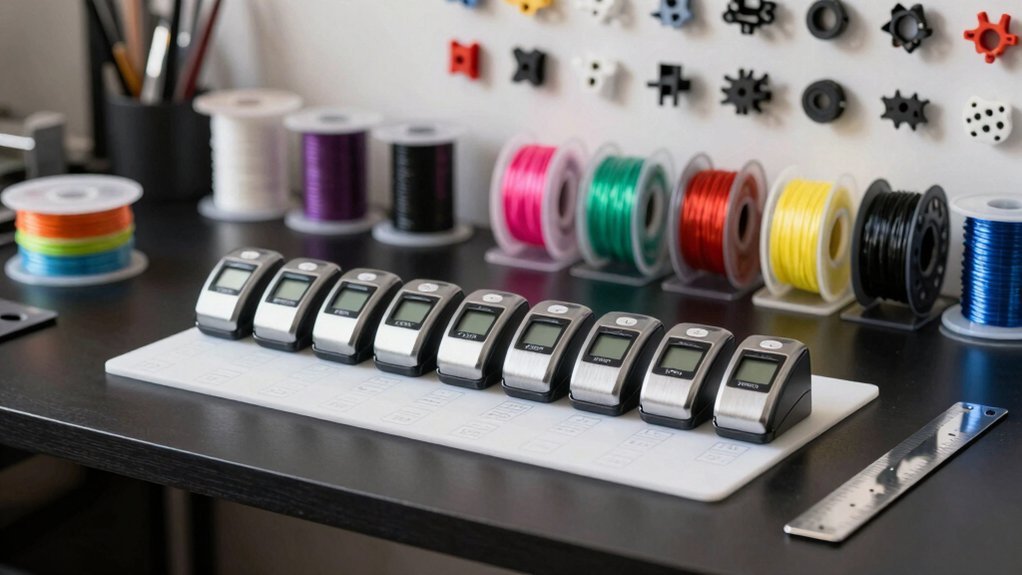

You’ll need to choose FDA-approved biocompatible materials like medical-grade PLA or PETG that demonstrate zero adverse biological reactions. Establish thorough documentation protocols including detailed batch records, material property assessments, and structured testing using test coupons to satisfy regulatory requirements without testing every device. Maintain ongoing communication with the FDA and regularly update your validation protocols based on the latest guidance to guarantee continued compliance. Understanding these foundational strategies will help you navigate the complex regulatory landscape ahead.
Understanding FDA Material Classification Requirements for Medical Device 3D Printing
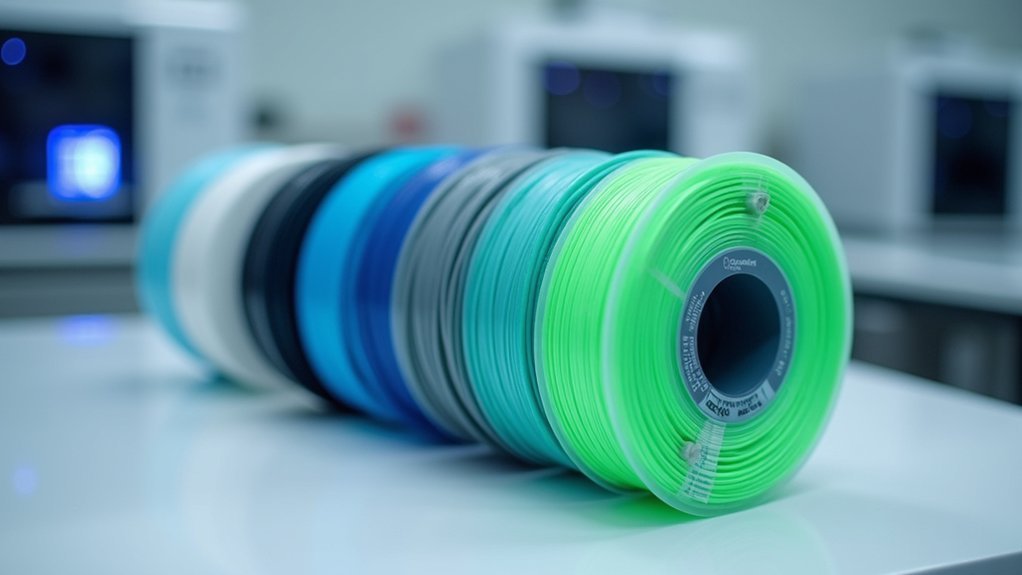
When you’re developing 3D-printed medical devices, you’ll need to navigate the FDA’s material classification system that categorizes your materials based on their intended use and associated risk levels.
This material classification determines the regulatory oversight required for your products. You must demonstrate that your 3D printing materials meet strict standards for biocompatibility, mechanical strength, and chemical stability to guarantee safety and effectiveness.
For most materials, you’ll submit a 510(k) premarket notification proving substantial equivalence to legally marketed devices. Your submission requires detailed data on mechanical, chemical, and morphological material properties.
Maintaining ongoing communication with the FDA throughout development helps guarantee compliance with evolving regulations and prevents costly delays in bringing your medical devices to market.
Selecting Biocompatible Filaments and Resins for Healthcare Applications
Selecting appropriate biocompatible filaments and resins represents one of your most critical decisions in healthcare 3D printing applications. You must choose FDA-approved materials like specific PLA and PETG grades that meet safety standards for bodily tissue contact. The FDA requires these biocompatible materials to demonstrate zero adverse biological reactions through rigorous testing.
When choosing resins, you’ll need certified materials since many common options contain toxic components that compromise patient safety. Medical-grade resins guarantee regulatory compliance and eliminate harmful substance risks.
You should verify that your selected filaments and resins won’t leach dangerous chemicals during prolonged contact with patients. Continuous monitoring of material properties maintains biocompatibility while guaranteeing your 3D-printed healthcare products meet both safety and performance requirements.
Documentation and Testing Protocols for Regulatory Compliance

Beyond material selection, you must establish thorough documentation and testing protocols that satisfy FDA regulatory requirements. Your compliance strategy should encompass extensive record-keeping of material properties, batch records, and manufacturing processes to demonstrate adherence to FDA regulations for 3D printing materials.
Implement these essential testing protocols:
- Structured property assessments – Conduct mechanical properties, chemical properties, and morphological evaluations to guarantee materials meet safety standards and performance requirements.
- Test coupon utilization – Use representative samples during manufacturing to facilitate easier compliance without testing every finished device.
- Protocol validation updates – Regularly review and validate testing protocols based on latest FDA guidance to address regulatory changes.
Document clear justifications and data collection methods for all testing outcomes to support safety and efficacy claims in FDA submissions.
Frequently Asked Questions
How to Make 3d-Printed Materials Food Safe?
You’ll need FDA-approved materials like food-safe PLA or PETG, apply protective coatings such as epoxy resins, clean thoroughly post-printing, maintain printer cleanliness, and limit food contact time for safety.
What Is the 45 Degree Rule for 3D Printing?
You should keep overhangs and unsupported features at 45 degrees maximum from vertical. This reduces support structure needs, prevents sagging, improves print quality, and saves material while maintaining successful printability.
What Filaments Are FDA Approved for 3D Printing?
You’ll find FDA-approved filaments include specific grades of PLA, PETG, and PP that meet food contact safety standards. Manufacturers like Filaments.ca offer certified materials, while ABS and ASA typically aren’t safe.
What Is the Safest Material for 3D Printing?
You’ll find PLA is your safest 3D printing material choice. It’s non-toxic, biodegradable, and doesn’t emit harmful fumes during printing. Choose natural, uncolored formulations for maximum safety.