Tip 1: Choose textured surfaces for superior first layer adhesion since rough textures create mechanical interlocking that grips your prints like velcro, while smooth surfaces offer limited anchoring. Tip 2: You’ll find textured plates make print removal easier because surface irregularities create air pockets and reduce uniform contact area. Tip 3: Match your material to surface type—precision materials work best on smooth surfaces, while materials needing mechanical grip perform better on textured plates. Understanding these fundamentals will reveal advanced optimization strategies for your specific printing needs.
How Surface Texture Affects First Layer Adhesion Quality
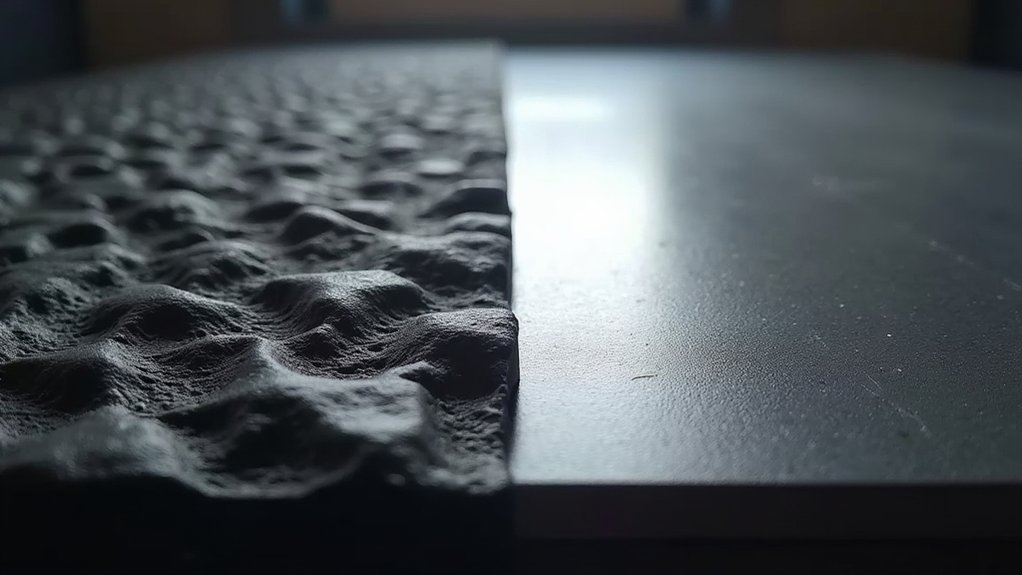
When you’re evaluating surface performance for first layer adhesion, texture becomes the determining factor between success and failure. A rough surface provides superior mechanical interlocking compared to a smooth surface, creating stronger bonds through increased physical grip.
You’ll find that surface textures effectively hide minor imperfections while delivering more uniform adhesion across irregularities. The enhanced surface area of textured finishes amplifies your adhesive’s bonding potential, greatly improving first layer adhesion quality.
Conversely, smooth surfaces often result in weaker bonds due to limited mechanical anchoring, potentially causing peeling or delamination over time.
Regardless of your chosen finish, proper surface preparation remains essential. You’ll need specific priming or treatment protocols for both textured and smooth surfaces to optimize adhesion quality under varying environmental conditions.
Comparing Print Removal Difficulty Between Textured and Smooth Plates
While textured plates create stronger initial bonds during printing, they paradoxically make print removal considerably easier than their smooth counterparts. The surface irregularities in textured plates create air pockets that help break adhesion when you’re lifting prints.
You’ll find that texture naturally reduces the uniform contact area between your print and the plate, making removal less forceful.
Smooth plates present greater challenges during print removal since they form tighter bonds with your printed material. You’ll need more careful handling and increased force to separate prints from these surfaces.
Additionally, textured plates offer superior maintenance advantages – they’re more forgiving to scratches and wear that could complicate future print removal. While smooth surfaces deliver exceptional quality, textured plates provide easier post-printing cleanup.
Material Compatibility Performance Across Different Build Surface Types
Beyond removal considerations, your choice between textured and smooth build surfaces greatly affects how different printing materials perform.
Smooth surfaces excel with precision materials requiring uniform application, minimizing air pockets and inconsistencies during bonding. However, textured surfaces increase available bonding area, enhancing adhesion for materials that benefit from mechanical grip.
Surface texture notably impacts durability of coatings and long-term performance. Textured finishes hide imperfections better and resist weathering more effectively than smooth alternatives.
Different materials react variably—paints achieve sleeker appearances on smooth surfaces, while adhesives often bond more effectively on rough textures.
Consider maintenance requirements when evaluating material compatibility. Smooth surfaces show wear more readily, requiring frequent touch-ups. Textured surfaces conceal minor damage, reducing maintenance frequency and extending your build plate’s operational lifespan across various printing materials.
Frequently Asked Questions
What Is the Difference Between Surface Finish and Texture?
You’ll find that surface finish describes your material’s overall appearance and quality, while surface texture refers to the specific microscopic patterns and roughness features you can measure on that surface.
Is Texture the Quality of a Surface?
Yes, texture’s a quality describing how a surface feels or appears through touch and sight. You’ll find it encompasses roughness, smoothness, patterns, and tactile characteristics that directly affect performance, aesthetics, and functionality in applications.
Is the Texture the Roughness or Smoothness of a Surface?
Yes, you’re correct that texture describes a surface’s roughness or smoothness. You’ll find it encompasses the full spectrum from completely smooth surfaces to highly rough ones, affecting both tactile feel and visual appearance.
What Is Smooth Render Finish?
You’ll get a sleek, even surface that reflects light uniformly with smooth render finish. It creates modern, sophisticated appearances in contemporary architecture but requires high skill during application and shows wear more prominently.