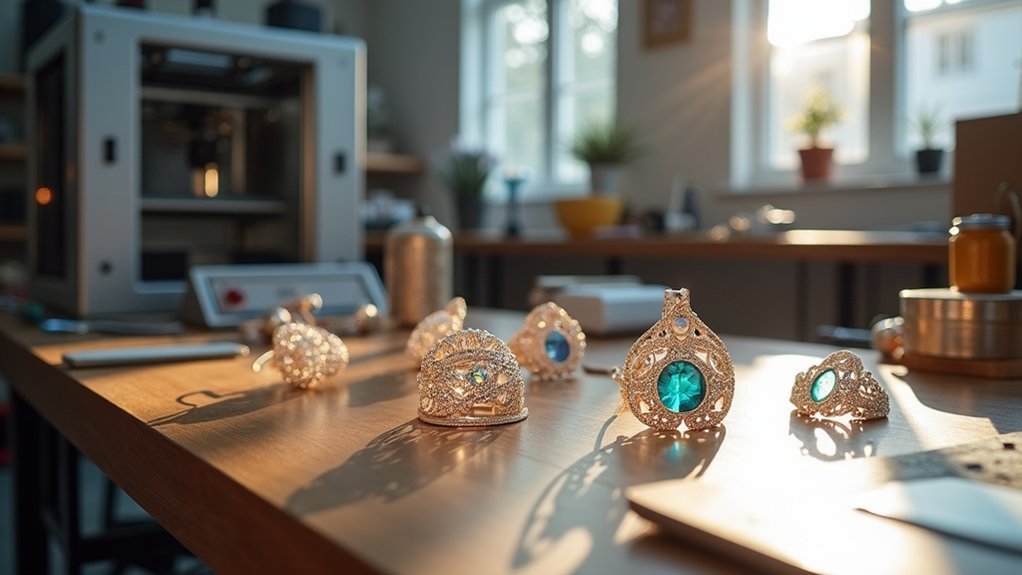
You’ll find today’s 3D jewelry printing trends center on personalized customization using advanced technologies like SLA and DLP printing. There’s a major shift toward sustainable materials including recycled metals, biodegradable resins, and lab-grown gemstones that reduce environmental impact. You’re seeing rapid prototyping capabilities that transform design timelines from weeks to days, while the market’s projected to reach $4.21 billion by 2025. Complex geometries and luxury metal applications are driving innovation as consumer demand for bespoke pieces continues accelerating these transformative developments.
Personalized and Customizable Jewelry Designs
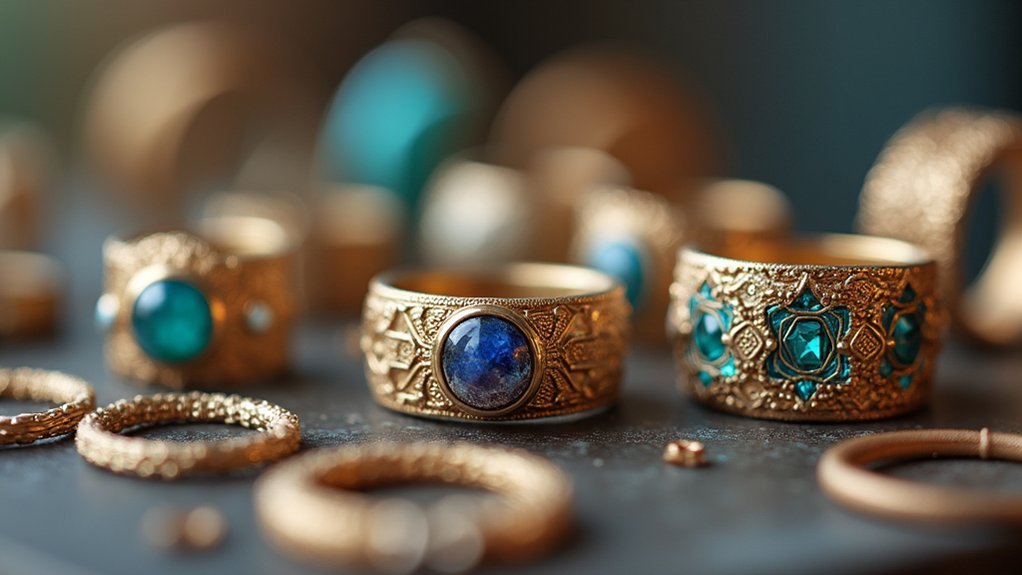
As consumers increasingly prioritize individuality over mass-produced accessories, 3D printing technology has emerged as the perfect solution for creating truly personalized jewelry.
You’ll find that this revolutionary approach enables rapid prototyping, allowing designers to quickly iterate on intricate designs tailored specifically to your preferences. The growing consumer demand for customizable designs has driven the market’s projected growth to $8.05 billion by 2029, with an impressive 17.6% CAGR.
The 3D printing jewelry market’s explosive 17.6% growth rate reflects consumers’ unstoppable shift toward personalized, made-to-order accessories.
Digital design software integration allows you to realize complex geometries and patterns that weren’t previously possible with traditional manufacturing.
You’re now able to create bespoke pieces that blend traditional craftsmanship with modern innovation. This technology also supports sustainable practices by reducing material waste, making personalized jewelry more accessible and environmentally conscious than ever before.
Sustainable Material Innovation in 3D Printing
While traditional jewelry manufacturing has long relied on resource-intensive mining and energy-heavy processes, 3D printing is revolutionizing the industry through groundbreaking sustainable material innovations.
You’ll find manufacturers increasingly turning to eco-friendly options like biodegradable resins and recycled metals, meeting your growing demand for environmentally responsible products.
Lab-grown gemstones now offer you stunning alternatives to mined stones without sacrificing beauty or affordability.
You’re benefiting from reduced material waste as 3D printing optimizes resource usage throughout production.
Forward-thinking brands are establishing transparent supply chains and implementing ethical labor practices to earn your loyalty.
These innovations align with your values while supporting the industry’s commitment to reducing its carbon footprint through durable, recyclable materials.
Complex Geometric Patterns and Intricate Details
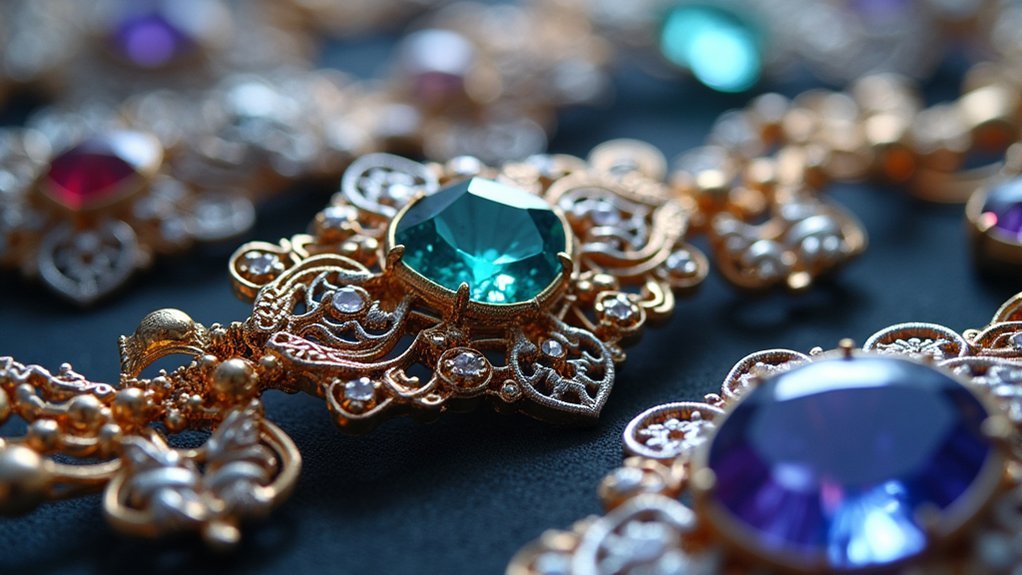
Beyond material innovations, 3D printing technology opens up unprecedented creative possibilities by enabling complex geometric patterns and intricate details that traditional jewelry-making methods simply can’t achieve.
You’ll find jewelry designers experimenting with elaborate shapes through advanced software, pushing creative boundaries like never before. Rapid prototyping lets you iterate complex designs quickly, making real-time adjustments based on feedback or exploration.
Techniques like selective laser sintering and stereolithography produce highly detailed pieces with fine resolutions, capturing textures conventional methods can’t replicate.
You can now access intricate geometries that were previously impossible, making 3D printed jewelry the go-to choice for personalized pieces. These capabilities position you at the forefront of fashion-forward accessories, offering truly unique designs tailored to individual preferences.
Smart Technology Integration in Wearable Accessories
The wearable technology revolution transforms how you experience jewelry, merging aesthetic beauty with cutting-edge functionality.
You’re witnessing 3D printing enable brands to create customized designs that seamlessly house smart technology within rings and bracelets. This integration allows your jewelry to track health metrics and deliver notifications directly to you through IoT-enabled features.
Advanced materials like flexible electronics and conductive filaments make these wearable accessories both comfortable and stylish.
You’ll find fitness trackers and communication devices elegantly embedded in sophisticated designs that don’t compromise on aesthetics.
Consumer interest in personalized, functional jewelry drives significant market growth, with the 3D printed jewelry sector projecting a 17.6% CAGR.
Smart technology integration positions these innovative accessories as the future of wearable fashion.
Luxury Metal Applications: Gold and Silver Printing
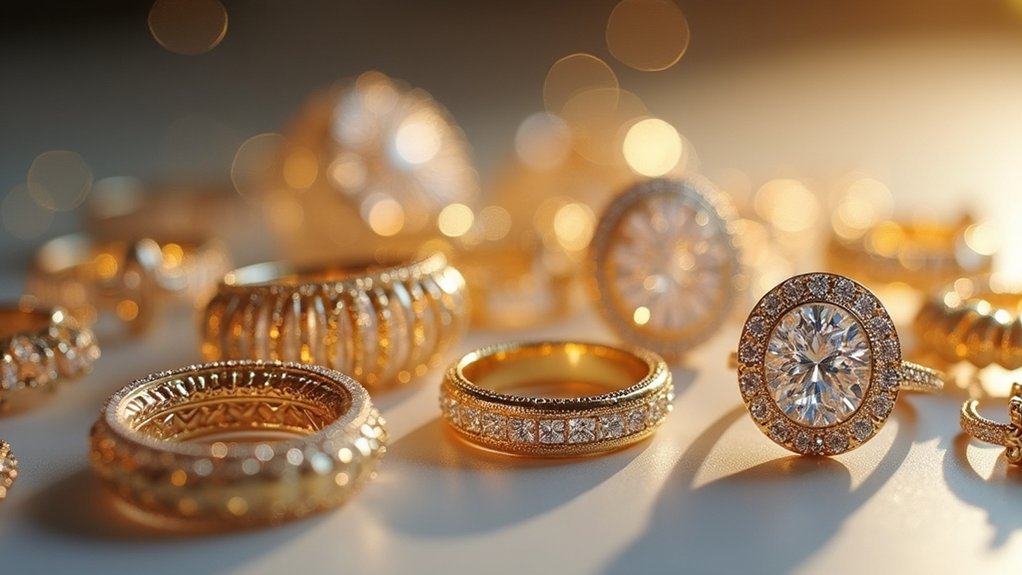
You’re witnessing a revolution in luxury jewelry as 3D printing transforms how gold and silver pieces come to life.
Advanced techniques like Selective Laser Melting now let you create intricate gold designs with exceptional detail that traditional methods can’t match.
Silver material innovations are pushing boundaries further, enabling you to produce customized luxury pieces with reduced waste and enhanced precision.
Gold Printing Techniques
When you’re exploring luxury 3D jewelry printing, gold and silver stand out as the premier metals that transform digital designs into stunning, high-end pieces. Gold printing techniques have revolutionized how you can create intricate designs that were impossible with traditional methods.
Direct Metal Laser Sintering (DMLS) leads the industry in precision manufacturing, allowing you to produce complex geometries with minimal waste. The jewelry industry increasingly emphasizes sustainable manufacturing practices as you demand eco-friendly materials in luxury pieces.
| Technique | Advantages | Applications |
|---|---|---|
| DMLS | High precision, minimal waste | Complex ring designs |
| Lost Wax Casting | Traditional finish quality | Classic jewelry styles |
| Powder Bed Fusion | Cost-effective production | Volume manufacturing |
These advanced methods guarantee your 3D printed gold jewelry meets luxury standards while supporting environmental responsibility.
Silver Material Innovations
While gold printing techniques have established the foundation for luxury 3D manufacturing, silver material innovations are reshaping how you can achieve sophisticated designs at accessible price points.
You’ll find that Direct Metal Laser Sintering enables intricate geometries previously impossible with traditional methods, maintaining exceptional durability throughout complex structures.
Designers can now experiment freely without cost constraints that typically limit gold applications. You’re seeing increased adoption of CAD/CAM integration, allowing customized pieces tailored to individual specifications with unprecedented precision.
The sustainable revolution you’re witnessing includes recycled silver materials in 3D printing processes, meeting eco-conscious luxury demands.
These innovations position silver as the preferred medium for elaborate experimental designs, combining affordability with cutting-edge manufacturing capabilities that deliver both aesthetic excellence and environmental responsibility.
Advanced Resin Materials for Avant-Garde Creations
As 3D jewelry printing evolves, advanced resin materials have emerged as the cornerstone of avant-garde creations that push traditional design boundaries.
You’ll discover that specialized photopolymers enable intricate designs with complex geometries impossible through conventional manufacturing. These innovative resins offer superior mechanical properties while delivering faster curing times, ensuring your pieces maintain both durability and aesthetic appeal.
You can now experiment with biodegradable options that minimize environmental impact without compromising quality.
The technology supports unprecedented customization levels, allowing you to craft bespoke pieces tailored to individual preferences with remarkable precision.
You’ll achieve unique surface finishes and textures that transform ordinary concepts into extraordinary wearable art, revolutionizing how 3D printed jewelry challenges creative limitations.
Stereolithography and Digital Light Processing Advancements
Since precision defines exceptional jewelry crafting, stereolithography (SLA) and digital light processing (DLP) have revolutionized how you’ll approach intricate design creation.
These 3D printing technologies offer distinct advantages for jewelry applications. SLA’s UV laser cures liquid resin layer by layer, delivering smoother finishes essential for high-end pieces. Meanwhile, DLP’s digital projector exposes entire layers simultaneously, greatly accelerating your production timeline.
Material innovations have expanded your creative possibilities considerably:
- Metal-mimicking resins that replicate platinum and gold’s lustrous appearance
- Gemstone-inspired materials delivering brilliant, translucent effects
- High-detail compounds enabling micro-textures and complex geometries
As costs decrease and accessibility improves, independent designers can now compete with established manufacturers.
You’ll find these technologies increasingly affordable, making sophisticated jewelry production viable for small businesses while maintaining professional-grade quality and unprecedented design freedom.
Rapid Prototyping for Fashion-Forward Accessories
You’ll find that rapid prototyping transforms your jewelry design timeline from weeks to days, letting you move from concept to physical piece at unprecedented speeds.
Real-time design iteration becomes possible as you can instantly test modifications, refine details, and experiment with complex geometries that traditional methods can’t achieve.
This cost-effective approach lets you validate trending designs quickly, reducing financial risk while keeping your collections fresh and responsive to market demands.
Speed Revolutionizes Design Process
When traditional jewelry design required weeks of meticulous handcrafting and multiple iterations, today’s 3D printing technology compresses that timeline into mere days.
You’ll experience unprecedented speed in transforming digital designs into physical prototypes, enabling real-time feedback and continuous refinement. This rapid prototyping revolution encourages you to experiment with intricate designs that would’ve been impossible using traditional methods.
The accelerated manufacturing processes offer you three key advantages:
- Immediate visualization – Touch and evaluate your concepts within hours
- Risk-free experimentation – Test bold geometries without expensive tooling investments
- Client collaboration – Present tangible prototypes during initial consultations
Advanced 3D printing techniques like SLA and DMLS guarantee your prototypes maintain exceptional precision and quality, while democratizing access for independent designers and small manufacturers alike.
Real-Time Design Iteration
While fashion trends shift at lightning speed, 3D jewelry printing’s real-time iteration capabilities let you stay ahead of the curve by adapting designs instantaneously.
You can modify intricate designs through CAD/CAM software and have physical prototypes within hours, not weeks like traditional methods require. This rapid prototyping approach transforms how you respond to client feedback—you’ll make adjustments on-the-fly and produce updated models immediately.
When market trends suddenly change, you won’t be stuck with outdated concepts. Instead, you can pivot your designs instantly, creating fashion-forward pieces that capture current aesthetics.
Both emerging designers and established jewelry manufacturers benefit from these accelerated design iterations, allowing everyone to experiment boldly while maintaining competitive market positioning through unprecedented responsiveness.
Cost-Effective Trend Testing
Because traditional jewelry prototyping can cost thousands of dollars per piece, 3D printing revolutionizes how you test emerging trends without breaking your budget. This cost-effective approach lets you experiment with intricate designs while minimizing production costs and material waste.
Rapid prototyping through 3D printing technology opens creative possibilities you couldn’t explore before:
- Layered geometric earrings with impossible hollow chambers that would require expensive casting molds
- Personalized rings featuring custom engravings and complex internal structures
- Statement necklaces with interlocking components that move freely within each other
You’ll discover multiple design variations become financially feasible, allowing you to respond quickly to fashion trends.
With the jewelry market’s projected $4.21 billion growth, this technology guarantees you stay competitive while offering unique, personalized accessories that consumers increasingly demand.
On-Demand Manufacturing and Direct-to-Consumer Sales
As consumer demand for personalized jewelry continues to surge, 3D printing has revolutionized how manufacturers approach production and sales strategies. On-demand manufacturing eliminates traditional inventory costs by producing pieces only when ordered, reducing waste from unsold stock. You’ll find that 70% of consumers now desire customization options, driving brands toward direct-to-consumer sales channels through e-commerce platforms.
| Traditional Manufacturing | On-Demand 3D Printing |
|---|---|
| Large inventory required | Zero inventory storage |
| 4-6 week lead times | 24-hour turnaround |
| Limited design options | Unlimited customization |
| High upfront costs | Pay-per-order model |
| Excess waste production | Zero material waste |
Advanced 3D printing technology enables rapid turnaround times, with some companies delivering within 24 hours. This combination of personalized jewelry production and direct sales is driving significant market growth toward the projected $8.05 billion valuation by 2029.
Biomimetic and Nature-Inspired Design Elements
Nature’s intricate designs have become the blueprint for 3D jewelry printing’s most enchanting creations. You’ll discover biomimetic designs that transform organic forms into stunning wearable art, pushing jewelry design beyond traditional limitations.
These nature-inspired pieces capture complex geometries that conventional methods can’t achieve.
Intricate organic forms and impossible geometries emerge through 3D printing technology, transcending the boundaries of traditional jewelry craftsmanship.
When exploring this trend, you’ll encounter three mesmerizing elements:
- Delicate leaf patterns with veined textures that shimmer like morning dew
- Flowing coral structures featuring interconnected branches and organic curves
- Butterfly wing geometries showcasing intricate cellular patterns and iridescent surfaces
You’re witnessing designers embrace sustainability trends by incorporating biodegradable resins and recycled metals into their biomimetic creations.
This approach appeals to eco-conscious consumers who want jewelry that connects them to nature while supporting environmental awareness through beautiful, meaningful accessories.
Multi-Material Printing Techniques and Color Integration
While nature provides the inspiration for stunning organic forms, today’s 3D jewelry printing technology empowers you to bring these visions to life through revolutionary multi-material techniques that weren’t possible just a few years ago. You can now combine metals and polymers in single pieces, creating intricate designs with both beauty and functionality.
| Traditional Methods | Multi-Material Printing |
|---|---|
| Single material limitation | Metals + polymers combined |
| Extensive post-processing | One-go production |
| Limited color options | Vibrant multi-hued pieces |
| Basic customization | Gradient and patterning |
Advanced printers deliver seamless color integration, allowing you to layer different colored materials for stunning results. These production methods streamline manufacturing while meeting growing consumer demand for customized pieces that reflect individual aesthetics and personal style preferences.
Miniaturization of Complex Mechanical Components
You can now create intricate jewelry pieces with moving parts and detailed mechanisms that weren’t possible with traditional manufacturing methods.
Advanced 3D printing technologies like SLA and SLS enable you to produce micro-mechanisms with precision at incredibly small scales.
These integration advances let you design adjustable rings, kinetic pendants, and other interactive jewelry components that offer both functionality and unique aesthetic appeal.
Micro-Mechanism Integration Advances
As 3D printing technology reaches unprecedented levels of precision, jewelry designers can now integrate complex mechanical components into pieces smaller than a coin.
SLA and SLS advancements enable the creation of micro-mechanisms with extraordinary detail, transforming traditional jewelry into functional art pieces.
These intricate designs feature:
- Hidden rotating compartments that reveal secret engravings or miniature photographs
- Micro-gear systems that create mesmerizing kinetic movements within pendant designs
- Miniature locking mechanisms that secure clasps through sophisticated internal mechanics
You’ll find customizable jewelry incorporating high-strength polymers and metals that withstand daily wear while maintaining complex functionality.
The jewelry market trends show increasing consumer demand for pieces that blend aesthetics with practicality.
These functional features aren’t just novelties—they’re redefining what jewelry can be, offering personalized options that reflect individual identity through both beauty and purpose.
Precision Component Manufacturing
Behind these remarkable micro-mechanisms lies precision component manufacturing—the technological backbone that makes such intricate designs possible.
You’re witnessing a revolution where advanced 3D printing techniques like Stereolithography (SLA) and Selective Laser Sintering (SLS) deliver unprecedented detail and accuracy. These technologies enable you to create complex geometries impossible through traditional methods, incorporating functional hinges and clasps without sacrificing beauty or durability.
The real game-changer is rapid prototyping, allowing you to test mechanical functionality in real-time while iterating designs quickly.
As demand for bespoke jewelry grows, precision component manufacturing enables complete customization of intricate pieces tailored to individual preferences. You’re no longer limited by conventional manufacturing constraints—you can miniaturize complex mechanical components while maintaining exceptional quality standards.
Eco-Friendly Production Methods and Waste Reduction
While traditional jewelry manufacturing generates substantial waste through cutting and carving processes, 3D printing revolutionizes production by building pieces layer by layer with minimal material excess.
You’re witnessing a shift toward sustainable production methods that prioritize waste reduction and environmental responsibility. Additive manufacturing uses only the material needed for each piece, eliminating the excess generated by traditional subtractive techniques.
Additive manufacturing transforms jewelry production by using only necessary materials, dramatically reducing waste compared to traditional cutting methods.
Modern designers are embracing eco-friendly materials that transform the industry:
- Biodegradable resins that decompose naturally without harming ecosystems
- Recycled metals sourced from post-consumer materials and electronic waste
- Lab-grown gemstones created without mining’s environmental destruction
You’ll find these sustainable approaches aren’t just environmentally beneficial—they’re becoming essential for meeting consumer demand and driving future growth in 3D printed jewelry.
Market Growth in Specialized Jewelry Retail Channels
The 3D printed jewelry market’s explosive growth—from $3.57 billion in 2024 to a projected $4.21 billion in 2025—reflects specialized retail channels’ unprecedented expansion beyond traditional brick-and-mortar stores.
You’ll find that e-commerce expansion has revolutionized how consumers access customized designs, with online platforms connecting you directly to innovative jewelers worldwide.
This market growth stems from your changing consumer preferences toward personalized, unique pieces that traditional manufacturing can’t deliver.
3D printing technology enables specialized jewelry retail channels to offer highly customizable options while maintaining sustainable production practices.
You’re witnessing retailers capitalize on silver jewelry’s popularity and eco-friendly alternatives, creating new revenue streams through digital-first shopping experiences that prioritize ethical sourcing and reduced environmental impact.
Frequently Asked Questions
How Big Is the 3D Printed Jewelry Market?
You’re looking at a rapidly expanding market worth $3.57 billion in 2024, projected to reach $8.05 billion by 2029. That’s impressive 17.8% annual growth driven by personalization demands and sustainable manufacturing preferences.
Is 3D Printed Jewelry Profitable?
You’ll find 3D printed jewelry highly profitable with the market growing at 17.6% annually. You can maximize margins through reduced production costs, faster timelines, and customization opportunities that command premium pricing.
Which Type of 3D Printing Technology Is Used in Jewelry Production?
You’ll primarily use SLA, SLS, and DLP technologies for jewelry production. SLA creates intricate details with smooth finishes, SLS builds complex geometries without supports, and DLP offers rapid prototyping capabilities for efficient manufacturing.
What Is the Current State of 3D Printing?
You’re witnessing rapid 3D printing expansion across industries, with the jewelry sector experiencing 17.8% annual growth. Advanced technologies like SLA and SLS are improving efficiency while eco-friendly materials drive sustainable manufacturing practices.

Leave a Reply