
You’ll save over $2,000 by 3D printing car armrest parts instead of buying expensive OEM replacements that cost $3,000+ versus just $896 for printed components. You can customize designs for perfect fit and exact measurements, eliminating gaps and misalignments that plague generic solutions. 3D printing offers rapid prototyping in 56 hours, allowing multiple iterations and immediate testing. With durable ABS materials and professional post-processing techniques, you’ll achieve automotive-grade quality that transforms unattainable restoration projects into realistic goals.
Cost-Effective Alternative to OEM Replacement Parts
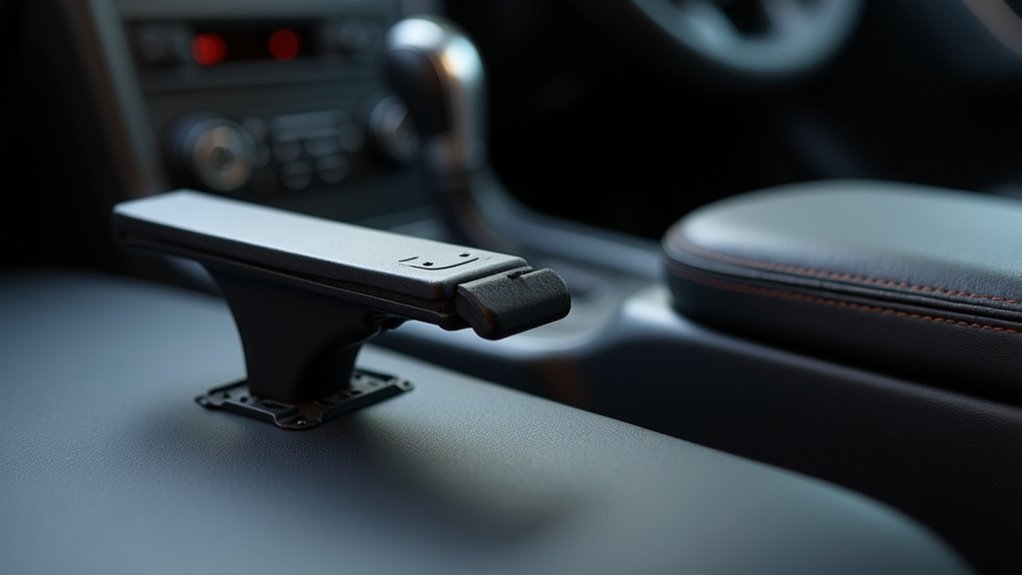
When your classic car’s armrest finally gives out, 3D printing offers a smart financial solution that won’t break the bank.
You’ll save dramatically on replacement costs, with printed parts costing approximately $896 compared to $3,000+ for traditional CNC-machined components. This represents substantial savings that make restoration projects more accessible for enthusiasts working within tight budgets.
Unlike OEM parts that require expensive manufacturing processes, 3D printing eliminates costly tooling needs associated with injection molding.
You’re not paying for the overhead of large-scale production runs or specialized equipment setup. For your custom car restoration, this technology delivers exactly what you need without forcing you to absorb unnecessary manufacturing expenses.
The affordability factor transforms previously unattainable restoration goals into realistic projects, allowing you to maintain your vehicle’s authenticity while preserving your financial resources.
Customization Options for Perfect Fit and Design
You can design armrest parts with exact measurements that match your vehicle’s specific dimensions, eliminating the frustration of ill-fitting replacements.
Your choice of materials ranges from durable ABS plastic to specialized textures that complement your car’s interior aesthetic.
This level of customization guarantees you’re not settling for generic solutions when you can create parts that perfectly align with both your functional needs and design preferences.
Tailored Dimensional Specifications
Since traditional manufacturing methods often force car enthusiasts to settle for generic, one-size-fits-all armrest solutions, 3D printing revolutionizes the customization process by enabling you to create armrest parts with exact dimensional specifications tailored to your specific vehicle.
You’ll achieve perfect measurements that match your car’s unique interior geometry, eliminating gaps and misalignments common with mass-produced alternatives.
Using CAD software, you can design printed car parts that accommodate your vehicle’s specific dimensions, whether you’re working with classic models or modern cars.
This precision guarantees your interior parts integrate seamlessly into existing spaces. You’ll customize width, height, depth, and mounting points to match your exact requirements, creating armrests that look and feel factory-original while delivering superior comfort and functionality.
Material and Texture Choices
Material selection transforms your 3D printed armrest from a basic functional component into a premium interior upgrade that matches your vehicle’s original quality and aesthetic.
ABS stands out as the ideal choice due to its exceptional strength and durability, perfectly suited for automotive applications that demand long-lasting performance.
You can achieve customized texture finishes that seamlessly blend with your existing interior design.
Whether you prefer smooth, sleek surfaces or more tactile textures that enhance grip and comfort, 3D printing technology delivers precise results.
The material flexibility allows you to match leather grain patterns, carbon fiber textures, or brushed metal appearances.
This customized approach guarantees your armrest doesn’t look like an aftermarket addition but rather an original equipment component that enhances your vehicle’s interior sophistication.
Rapid Prototyping and Quick Turnaround Times
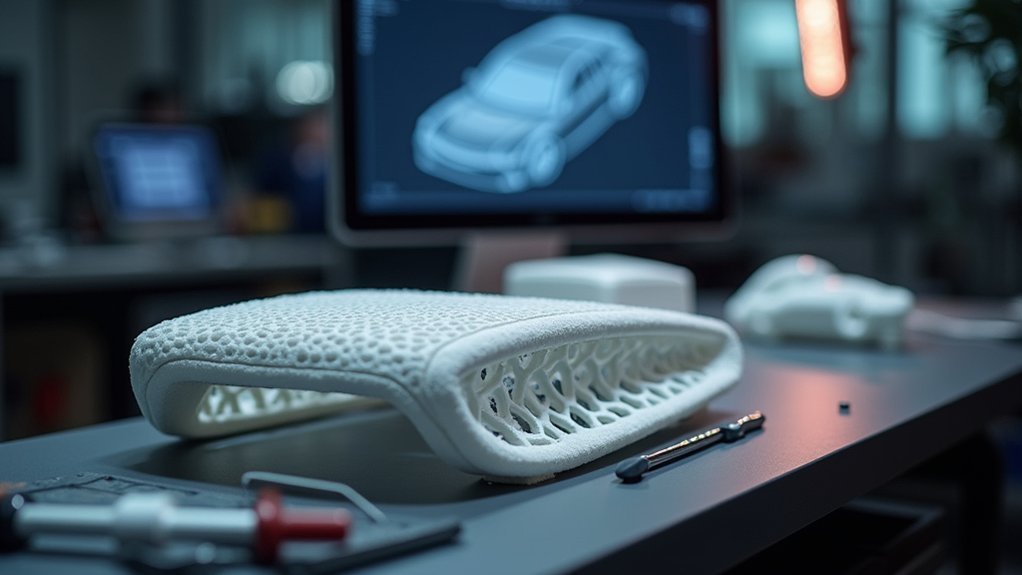
You’ll experience dramatically faster development cycles when 3D printing your car armrest parts, with complete prototypes ready in just 56 hours compared to over four days with traditional methods.
This speed advantage means you can produce and test multiple design iterations in the same timeframe it’d take to create a single CNC-machined part.
You’re able to make immediate design adjustments based on real-world testing, then have updated prototypes in your hands within hours rather than waiting days or weeks.
Accelerated Design Iterations
When you’re developing custom car armrest parts, 3D printing transforms the traditional design process by enabling rapid prototyping that cuts development time from weeks to just 56 hours.
You can leverage CAD software to make quick adjustments based on testing results or user feedback, creating accelerated design iterations that optimize your final product’s usability.
Unlike traditional manufacturing methods that require extensive tooling and lengthy lead times, you’ll benefit from 3D printing’s ability to produce printed parts with complex geometries instantly.
This flexibility allows you to modify designs on-the-fly, ensuring you achieve the perfect balance of aesthetics and functionality.
You won’t face delays when refining dimensions or adding features, making the entire development process streamlined and efficient for automotive enthusiasts.
Same-Day Part Production
Although traditional manufacturing can leave you waiting weeks for custom armrest parts, 3D printing delivers same-day production that revolutionizes your project timeline.
With advanced 3D printers like the BigRep STUDIO G2, you’ll complete parts in approximately 56 hours—that’s an 80% time savings compared to CNC machining’s four-day minimum. This rapid turnaround transforms the automotive aftermarket by enabling immediate adjustments based on your design feedback.
You’ll benefit from instant iterations without lengthy manufacturing delays.
Whether you’re restoring a classic car or customizing your current vehicle, same-day production capabilities mean you can test, refine, and finalize armrest designs quickly.
This speed advantage keeps your project moving forward while maintaining the quality and precision your vehicle deserves.
Immediate Testing Capabilities
Rapid prototyping transforms how you validate armrest designs before committing to final production. With immediate testing capabilities, you can print, evaluate, and refine armrest prototypes within hours rather than weeks. This accelerated workflow lets you gather user feedback quickly and implement changes on-the-fly, dramatically reducing development cycles.
| Testing Phase | Traditional Manufacturing | 3D Printing |
|---|---|---|
| Initial Prototype | 2-4 weeks | 56 hours |
| Design Revision | 3-6 weeks | 2-3 days |
| Fit Testing | Limited iterations | Multiple iterations |
| Material Testing | Expensive tooling required | Direct material assessment |
| User Feedback Integration | Costly modifications | Immediate adjustments |
Your printed parts undergo real-world testing immediately, allowing you to assess comfort, durability, and fitment before final production. This iterative approach guarantees ideal results while minimizing costly mistakes.
Material Durability and Strength for Daily Use
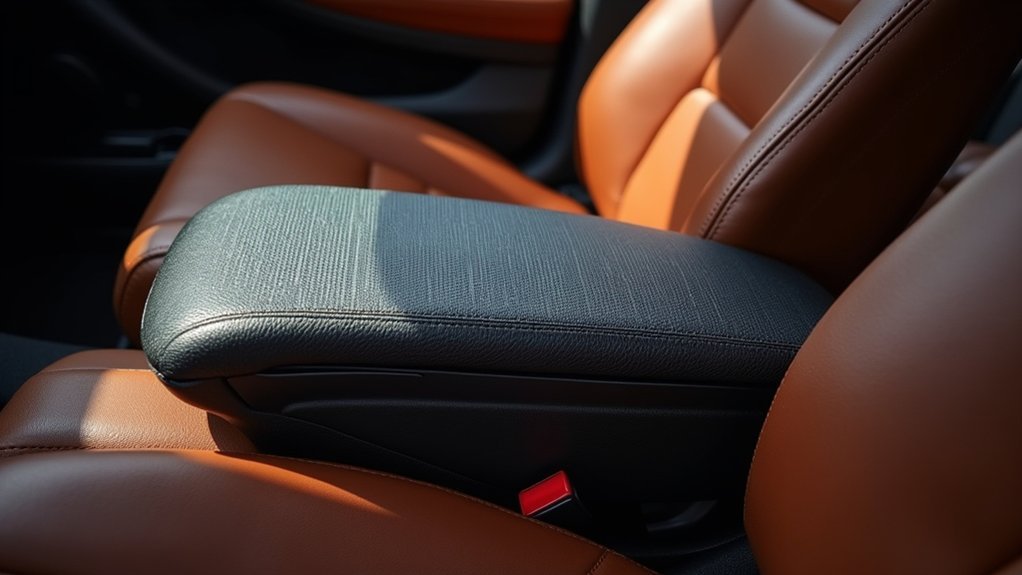
Since daily vehicle use subjects armrests to constant pressure, friction, and temperature fluctuations, you’ll need materials that can withstand these demanding conditions without compromising performance. ABS provides exceptional material durability for 3D printed armrests, delivering excellent resistance to wear while maintaining structural integrity through countless uses.
Advanced 3D printing technology creates complex geometries that enhance strength while reducing weight, ensuring your printed parts perform efficiently.
Post-processing techniques like sanding and epoxy coating further boost durability, creating surfaces that resist daily wear and environmental stresses.
With rapid prototyping capabilities, you can test designs thoroughly before final production, guaranteeing your armrests meet performance expectations.
This combination of high-strength materials and precise manufacturing delivers parts built to last.
Post-Processing Techniques for Professional Finish
While 3D printing delivers functional armrest parts, achieving a professional automotive-grade finish requires systematic post-processing techniques that transform rough printed surfaces into smooth, durable components.
You’ll need to sand your printed parts progressively using 80, 120, 180, and 240-grit sandpaper, spending approximately 15 minutes on each grade. This creates the smooth foundation necessary for coating applications.
Don’t waste time with chemical smoothing like acetone chambers—they show no noticeable improvement once you apply undercoats.
Instead, focus on applying multiple layers of primer filler and plastic adhesive paint. This combination of additive and subtractive post-processing techniques, including sanding and epoxy coating, markedly enhances your armrest’s aesthetic quality while improving mechanical strength, UV resistance, and wear protection.
Restoration Solutions for Classic and Vintage Vehicles
These polished post-processing skills become particularly valuable when you’re working on classic and vintage vehicle restoration projects. 3D printed parts offer an affordable solution when original components are damaged or unavailable. You’ll save considerably on tooling costs compared to injection molding while achieving professional results.
| Aspect | Traditional Method | 3D Printing |
|---|---|---|
| Cost | High tooling expenses | Fraction of traditional costs |
| Availability | Limited original parts | On-demand production |
| Quality | OEM standard | Comparable after finishing |
| Timeline | Extended sourcing | Immediate production |
Classic car enthusiasts particularly benefit from available EJ EH armrests. You can tackle DIY sanding and finishing yourself, transforming rough 3D printed surfaces into paint-ready components that match original specifications perfectly.
Manufacturing Process and Design Considerations
The manufacturing process for 3D printed armrest parts starts with creating a detailed CAD model that captures every dimension and curve of your target component.
Precision CAD modeling forms the foundation of successful 3D printed armrest manufacturing by capturing exact dimensions and surface contours.
Once you’ve finalized the design, specialized software slices your 3D model into hundreds of thin layers that guide the printer’s sequential building process. This additive manufacturing technique gives you remarkable design freedom, allowing intricate geometries and customization that traditional methods can’t achieve.
You’ll need approximately 56 hours to complete your printed part at roughly $896 per unit.
After printing, you’ll apply post-processing techniques like sanding and epoxy coating to enhance surface finish and durability.
This manufacturing process delivers professional-quality armrests that meet both aesthetic standards and functional requirements for your specific vehicle.
Frequently Asked Questions
Are 3D Printed Car Parts Good?
You’ll find 3D printed car parts are excellent for classic restorations. They’re cost-effective, customizable, and achieve professional finishes after proper preparation. You’ll save significant time and money compared to traditional manufacturing methods.
What Is the Most Profitable Thing to 3D Print?
You’ll find custom automotive parts like armrests most profitable to 3D print. They’re high-demand, cost under $900 versus $3,000+ traditional manufacturing, enable rapid customization, and tap into the lucrative aftermarket sector.
Is It Legal to 3D Print Car Parts?
You can legally 3D print car parts for personal use in most places, but you’ll need to check local regulations, avoid patent infringement, and guarantee safety standards are met for critical components.
Why Does Automotive Use 3D Printing?
You’ll find automotive companies use 3D printing because it cuts production costs by $2,000 per part, reduces manufacturing time by 80%, enables rapid prototyping, and creates lightweight components with complex geometries.

Leave a Reply